Language


Views: 219 Author: Yuhang Power Publish Time: 2026-07-15 Origin: Site
Content Menu
● Why Drone Maintenance Matters for FPV Motors and Power Systems
● Preventative Drone Maintenance Checklist (Pre‑Flight)
>> Pre‑Flight Preventative Checklist
● Routine Drone Maintenance for Long Motor Lifespan
>> Keep Firmware and Software Up to Date
>> Propeller and Adapter Management
>> Shaft, Bearing, and Connector Replacement
● Cleaning FPV Motors and Electronics: Practical Steps
>> Sensor, Camera, and Gimbal Care
● Battery, Heat, and Environment: Extending Electronic Lifespan
>> Heat Management for Motors and ESCs
● FPV Drone Motor Best Practices (From a Manufacturer's Perspective)
>> Install and Tuning Best Practices
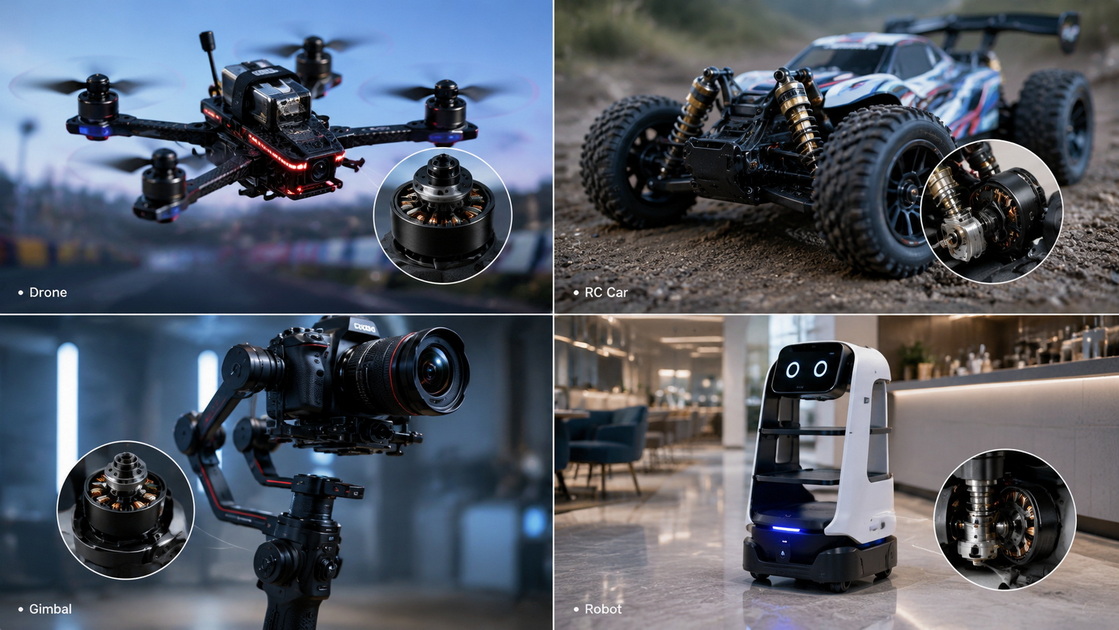
● Maintenance for Other Brushless Applications: RC Cars, Gimbals, and Robots
>> Shared Principles Across Platforms
● Building a Maintenance Schedule That Actually Gets Used
● How Maintenance Improves ROI for Commercial and Industrial Drone Operators
● When to Use OEM and Custom Brushless Solutions (OEM / ODM)
● Build a Maintenance Culture Around Your FPV Motors
As a Chinese brushless motor manufacturer (Zhongshan Yuhang Power Technology Co., Ltd.), we design and test FPV motors and power systems for drones, RC cars, gimbals, industrial fans, sweepers, and underwater robots every day. That day-to-day engineering work gives us a unique perspective on what really keeps motors running safely over thousands of cycles—and what quietly destroys them long before their design life. [youtube]

Even the best FPV motor isn't "install and forget." Electromechanical systems always face fatigue, heat, and vibration, and those forces shorten lifespan if you ignore them. From a manufacturer's standpoint, we see three main reasons drone maintenance is non‑negotiable: [coptrz]
- Safety: Worn propellers, failing bearings, or cracked mounts can lead to mid‑air failure and crashes. [drone.ciiwa]
- Performance: Dirty motors, misaligned shafts, and outdated firmware reduce thrust, responsiveness, and flight times. [youtube]
- Cost control: Routine care costs far less than replacing entire propulsion systems or aircraft after preventable failures. [coptrz]
Preventative maintenance is about catching problems before they become failures. Before every flight—especially with high‑KV FPV motors—you should follow a quick, documented checklist. [drone.ciiwa]
1. Visual propeller inspection
Check for chips, cracks, warping, or stress marks around the hub. Replace anything suspicious immediately, especially on high‑RPM FPV builds. [youtube]
2. Motor and ESC condition
Spin every motor by hand and ensure it moves freely with no grinding or interference. Look for lodged debris, bent shafts, or loose mounting screws. [youtube]
3. Battery and connector health
Inspect battery leads, XT60/XT90 or custom connectors for discoloration, corrosion, or looseness. Swollen packs or burned connectors are strong red flags. [coptrz]
4. Wiring and solder joints
Quickly scan all power and signal wiring for pinched insulation and exposed copper. Monthly, perform a deeper inspection to catch cyclic fatigue in solder joints. [youtube]
5. Firmware, compass, and sensors
Confirm firmware and flight controller software are up to date, and calibrate compass and IMU when operating in new locations or after hard impacts. [drone.ciiwa]
For usability, convert this list into a downloadable checklist PDF and show a small image of a pilot working through the steps on a tablet.
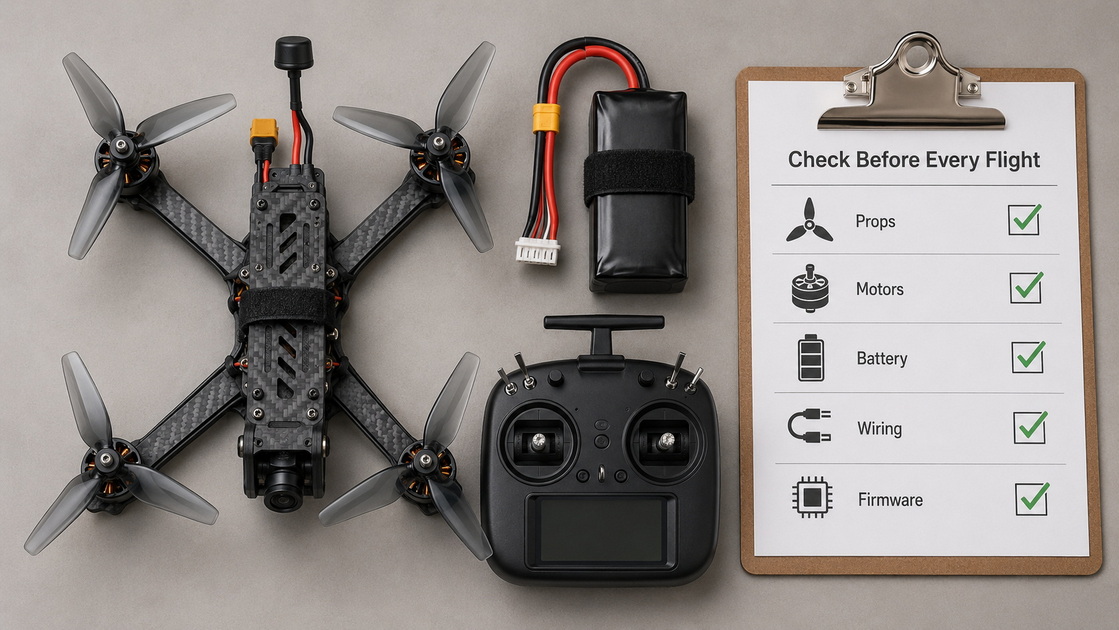
Preventative checks protect you before each flight; routine maintenance protects the long‑term health of your motors and power system. [drone.ciiwa]
Modern drones rely on firmware for stability, safety features, and efficiency. Bug fixes and tuning improvements often directly impact flight time and reliability. [drone.ciiwa]
- Schedule a monthly firmware review for flight controllers, ESCs, and remote controllers.
- Read release notes and apply only tested updates to mission‑critical fleets. [drone.ciiwa]
- Document every change so you can trace performance variations back to specific updates. [drone.ciiwa]
An embedded screen capture image of a firmware update interface or a short video tutorial here improves engagement and demonstrates practical experience.
Propellers are usually the first components to fail in a crash and the primary source of thrust efficiency. [youtube]
- Keep multiple sets of matched propellers and adapters in your field kit. [youtube]
- Retire props after significant impacts rather than reusing "almost okay" ones on high‑power FPV builds. [coptrz]
- Label prop sets by usage (training, racing, commercial work) to track wear.
A simple table helps users decide when to replace props:
| Prop condition | Recommended action |
|---|---|
| Minor surface scuffs | Clean and monitor for progression. (drone.ciiwa) |
| Visible chips or cracks | Replace immediately before flight. (youtube) |
| Hub distortion or loose fit | Retire prop and inspect motor shaft. (drone.ciiwa) |
| After hard crash | Replace full set for balanced thrust. (drone.ciiwa) |
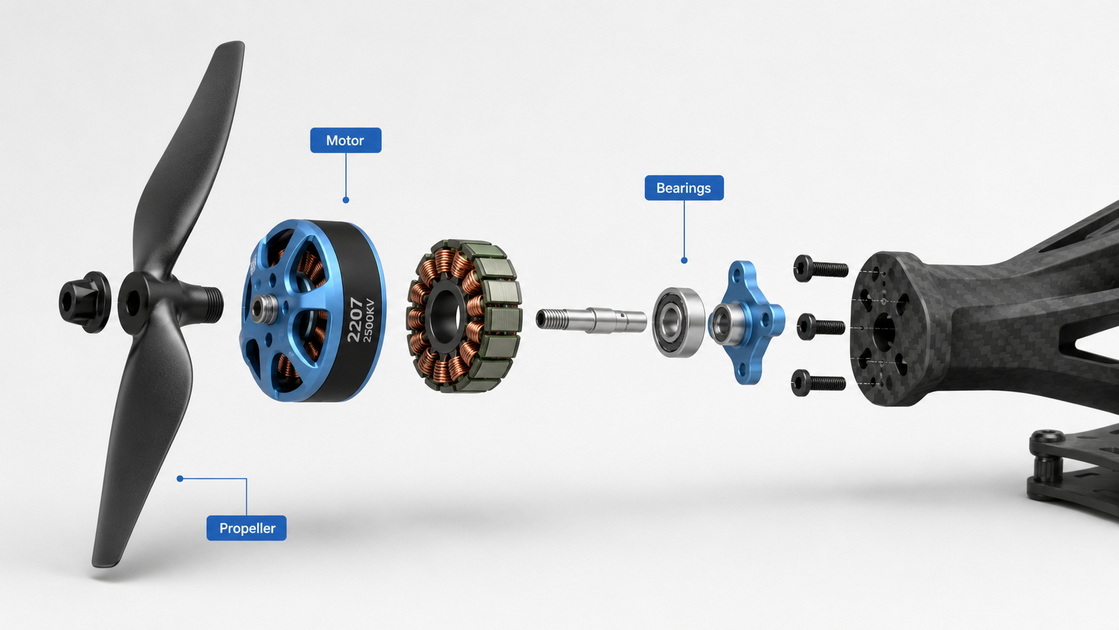
From a manufacturer's perspective, shafts, bearings, and bullet connectors are wear items that quietly degrade performance long before total failure. [coptrz]
- Replace shafts and bearings periodically on heavily used FPV drones to maintain smooth rotation and reduce vibrations. [coptrz]
- Refresh bullet connectors and re‑solder joints if you see darkening, looseness, or repeated desync events. [youtube]
- Use OEM replacement kits that match motor tolerances to avoid misalignment and imbalanced loads. [youtube]
Here, an image of a disassembled brushless motor, with bearings and shaft highlighted, builds trust and clarifies the concept for non‑engineers.
Dirt is one of the silent killers of motors and ESCs, especially in FPV racing, industrial sites, and dusty environments. [coptrz]
A consistent cleaning routine keeps your drone running cooler and reduces mechanical wear. [drone.ciiwa]
- Use a soft brush to remove dust and debris from arms, frame, and motor bells.
- Wipe surfaces with a microfiber cloth lightly dampened with isopropyl alcohol—never soak electronics. [drone.ciiwa]
- Clean propellers individually and retire any that are excessively dirty or scratched. [drone.ciiwa]
High‑quality imaging depends on clean optics and stable gimbals. [drone.ciiwa]
- Clear dust from sensors and camera lenses using an air blower or dedicated lens brush. [drone.ciiwa]
- Wipe lenses with proper lens wipes to avoid micro‑scratches that degrade image quality. [drone.ciiwa]
- Inspect gimbal movement; any stutter or resistance can indicate debris or mechanical misalignment. [drone.ciiwa]
A close‑up image showing cleaning tools (brush, blower, lens wipes) improves both trust and visual appeal.
From an engineering standpoint, heat and bad battery practices are among the biggest lifespan killers for motors, ESCs, and drones overall. [coptrz]
Industry experience and operator case studies show that batteries are often the first reason otherwise healthy drones are retired. [coptrz]
- Store batteries around 40–60% charge for long‑term storage. [coptrz]
- Avoid deep discharges; land with at least 20–25% remaining. [coptrz]
- Let packs cool fully before charging and avoid hot vehicles or direct sun exposure. [coptrz]
Excess heat shortens the lifespan of stator windings, magnets, ESC MOSFETs, and bearings. [coptrz]
- Power on the drone just before take‑off rather than letting it idle in direct sunlight. [coptrz]
- Shut down promptly after landing and avoid sitting powered on while configuring settings. [coptrz]
- After flights in hot environments, allow the system to cool with good airflow before packing into a case.
To support comprehension, include a simple diagram or thermal image showing typical hot zones on a multirotor (motors, ESCs, battery).
Our engineering and QC teams see thousands of FPV motors across R&D, production, and customer returns. Based on that real‑world experience, here are practical ways pilots can extend FPV motor lifespan.
- Match KV, prop size, and voltage to your application; overspec'd props on high‑KV motors generate excess heat and stress. [coptrz]
- Use high‑quality screws and thread‑locking compound where appropriate to prevent loose mounts and vibration. [youtube]
- Balance propellers and check for frame resonance, especially on racing quads, to reduce bearing load.
Longevity starts with the operator mindset, not just the hardware. [coptrz]
- Avoid repeated full‑throttle dives with abrupt, high‑G recoveries on the same build for hours without cool‑down.
- Fly smoothly when carrying payloads such as cameras or sensors to reduce peak loads on motors and ESCs. [coptrz]
- Respect the design envelope; if you need more thrust or payload capacity, upgrade the system instead of forcing current hardware.
Here you can add a short case study graphic: e.g., "Racing quad vs. cinematic quad—motor lifespan comparison under different flight styles."
Because we supply brushless power systems to RC cars, violent industrial fans, gimbal cameras, sweepers, and underwater robots, we see consistent patterns across platforms. [youtube]
Despite different applications, the fundamentals remain:
- Cleanliness: Dust and moisture accelerate wear in bearings and electronics. [drone.ciiwa]
- Alignment: Misaligned shafts or mounts increase friction, noise, and failure rates. [youtube]
- Cooling: Adequate airflow or thermal management is critical in confined spaces or high‑load use. [coptrz]
Too many operators rely on "gut feel" instead of a documented maintenance rhythm. Pages with clear, actionable frameworks also tend to perform better in search because they answer complete user questions. [journaleus]
- Before every flight: Run the pre‑flight preventative checklist.
- Every 10–20 flights: Perform deeper cleaning and inspect bearings, shafts, and wiring.
- Monthly: Review firmware, test batteries, and log any anomalies in performance or noise.
Turn this into a visual table or calendar graphic on the page to improve scannability and encourage bookmarking.
For commercial pilots, maintenance isn't just about avoiding crashes; it's a core part of asset management and ROI. [coptrz]
- Well‑maintained drones deliver more billable flight hours before needing major overhauls. [coptrz]
- Clean, reliable propulsion systems reduce unscheduled downtime that disrupts inspections, mapping, or cinematography. [drone.ciiwa]
- Documented maintenance logs support warranty claims and increase resale value when upgrading fleets. [drone.ciiwa]
An example ROI table can help business users:
| Factor | Poor maintenance impact | Good maintenance impact |
|---|---|---|
| Drone lifespan | Early retirement, 2–3 years typical. (coptrz) | Extended lifespan, 5–7 years realistic. (coptrz) |
| Downtime | Frequent unscheduled repairs. (coptrz) | Predictable, planned service windows. (drone.ciiwa) |
| Total cost of ownership | High replacement and repair costs. (coptrz) | Lower lifetime hardware spend. (coptrz) |
Sometimes maintenance alone is not enough—your use case may simply demand different hardware. [youtube]
- If you routinely hit thermal or performance limits, consider upgrading to motors designed for your specific payload and environment.
- OEM and ODM motor solutions allow you to customize KV, torque, shaft design, and sealing for dust‑heavy, moisture‑rich, or high‑load applications. [youtube]
- For fleets, standardized, custom power systems simplify maintenance procedures and parts stocking.
This section is an ideal place to show a technical drawing or exploded view of a custom motor and link to your OEM/ODM services page.
The longest‑lasting drones belong to pilots and teams who treat their aircraft as professional tools, not disposable gadgets. If you're ready to extend the lifespan of your FPV motors and power systems: [coptrz]
- Document your pre‑flight and routine maintenance checklists today.
- Standardize cleaning, battery care, and firmware update processes across your team.
- Talk to our engineers about choosing or customizing FPV motors and power systems optimized for your environment and duty cycle.
If you operate drones, RC platforms, gimbals, or robots and need a reliable brushless power partner, contact Zhongshan Yuhang Power Technology Co., Ltd. to discuss tailored OEM/ODM solutions that match your maintenance strategy and performance goals. [youtube]
1: How often should I replace FPV drone motor bearings?
For heavily used FPV racing or freestyle drones, inspect bearings every 10–20 flights and replace them when you notice increased noise, rough rotation, or excess motor heat under normal load. [youtube]
2: Do I need to update firmware if my drone is flying fine?
Yes—firmware updates often include bug fixes and efficiency improvements that enhance safety and flight time, but always read release notes and test updates on non‑critical platforms first. [youtube]
3: What's the best way to clean motors after dusty flights?
Use compressed air to blow out vents and motor bells, gently brush off exterior dust, and avoid aggressive liquids; then check for debris lodged around shafts and bearings. [drone.ciiwa]
4: How can I tell if a propeller is too damaged to use?
Retire any prop with visible cracks, chips, or warped blades, and always replace the full set after major crashes to maintain balanced thrust and reduce vibration. [youtube]
5: When should I consider OEM or custom motor solutions?
If heat, payload, or environment constantly push your motors and ESCs to their limits, or you operate specialized platforms like industrial sweepers or underwater robots, OEM/ODM brushless systems are often the most reliable long‑term solution. [youtube]
1. Drone.ciiwa – "Drone Maintenance 101: Cleaning, Repairs, and Upkeep for Longevity." https://drone.ciiwa.com/drone-maintenance-101-cleaning-repairs-and-upkeep-for-longevity/
2. Coptrz – "The Hidden Cost of Poor DJI Drone Maintenance and How to Avoid It." https://coptrz.com/blog/the-hidden-cost-of-poor-dji-drone-maintenance-and-how-to-avoid-it/
3. Journaleus – "Google E-E-A-T Optimization for Bloggers: Complete 2025 Guide." https://journaleus.com/articles/google-eeat-optimization-bloggers
4. Track My Visibility – "Google E-E-A-T Checklist for 2026." https://trackmyvisibility.com/blogs/ai-seo/google-eeat-checklist/


