Language


Views: 222 Author: Yuhang Power Publish Time: 2026-05-13 Origin: Site
Choosing the right brushless motor is one of the most important, often overlooked steps to maximize an FPV drone's range and flight efficiency. Selecting motors with the proper KV, torque characteristics, and power-handling for your propellers and battery can improve efficiency, extend flight time, and reduce heat and wasted energy, which directly increases usable range. [openelab]
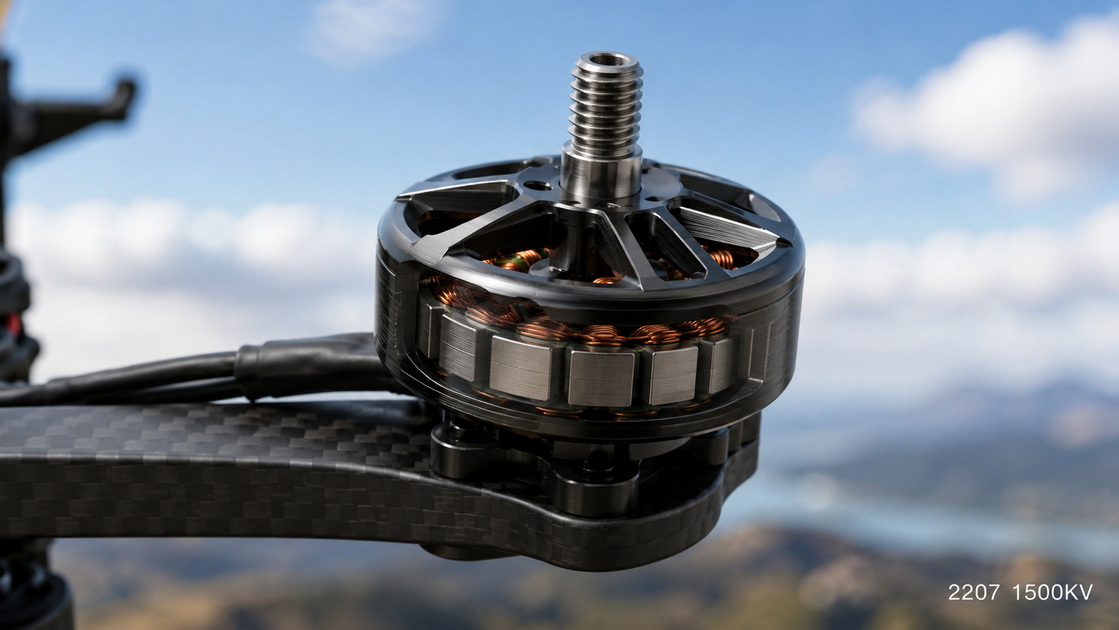
- Motor KV and torque balance: Lower KV motors generally produce higher torque at lower RPMs, which can be more efficient for larger props and higher‑lift setups; higher KV motors spin faster and suit small props and high‑RPM flying but often draw more current per thrust unit. [ligpower]
- Efficiency (watts per thrust): Choose motors with documented efficiency curves in the throttle region you fly most—efficiency at cruise throttle matters more for range than peak thrust. [oscarliang]
- Thermal behavior and cooling: Motors that run cooler maintain efficiency and avoid ESC/battery derating; good bearings and proper stator/airgap design reduce heat loss. [openelab]
- Weight and rotating inertia: Heavier motors increase overall aircraft mass; sluggish spin‑up from heavy rotors wastes energy during maneuvers. Lighter, balanced motor assemblies reduce energy consumption for the same mission. [kiwiquads.co]
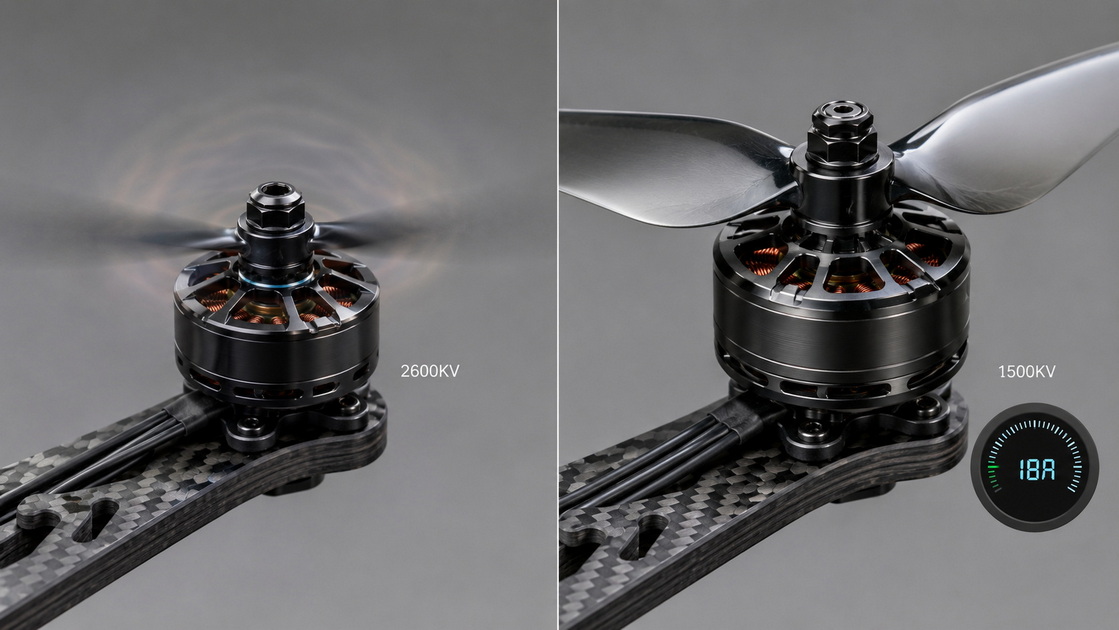
- Long‑range cruising / mapping: low‑to‑mid KV, high torque, efficient props. [openelab]
- Freestyle / punchy flight: higher KV, small props, higher current draw but better responsiveness. [kiwiquads.co]
- Hybrid / long‑range FPV: choose motors rated for continuous current above peak race draws and pair with high‑capacity, high‑C batteries. [openelab]
1. Pick the motor-prop-battery triad first: test combinations on a thrust/amp meter at expected cruise throttle. [oscarliang]
2. Set up ESC timing and motor timing to the motor spec—incorrect timing raises heat and current draw. [openelab]
3. Calibrate ESC/BLHeli and use RPM filtering or current smoothing to avoid wasted brief high‑draw spikes. [openelab]
4. Reduce airframe drag: tidy wiring, smooth mounts, and minimal canopy bulk to cut parasitic losses. [openelab]
5. Optimize prop pitch: lower pitch at same diameter usually reduces current at cruise, increasing range. [kiwiquads.co]
We tested a 5‑inch freestyle frame converted to a long‑range cruiser: swapped stock 2207‑2600KV motors for 2207‑1500KV equivalents, changed from 5×4.3 props to 5×3.8 efficient tri‑blades, and upgraded to 6S 1200g battery packs with higher discharge headroom. At cruise throttle (35–45%) measured amps fell by ~18% and hover time increased from 8 minutes to 9.6 minutes, representing ~20% more usable flight time and a proportionate range increase under identical conditions. [oscarliang]
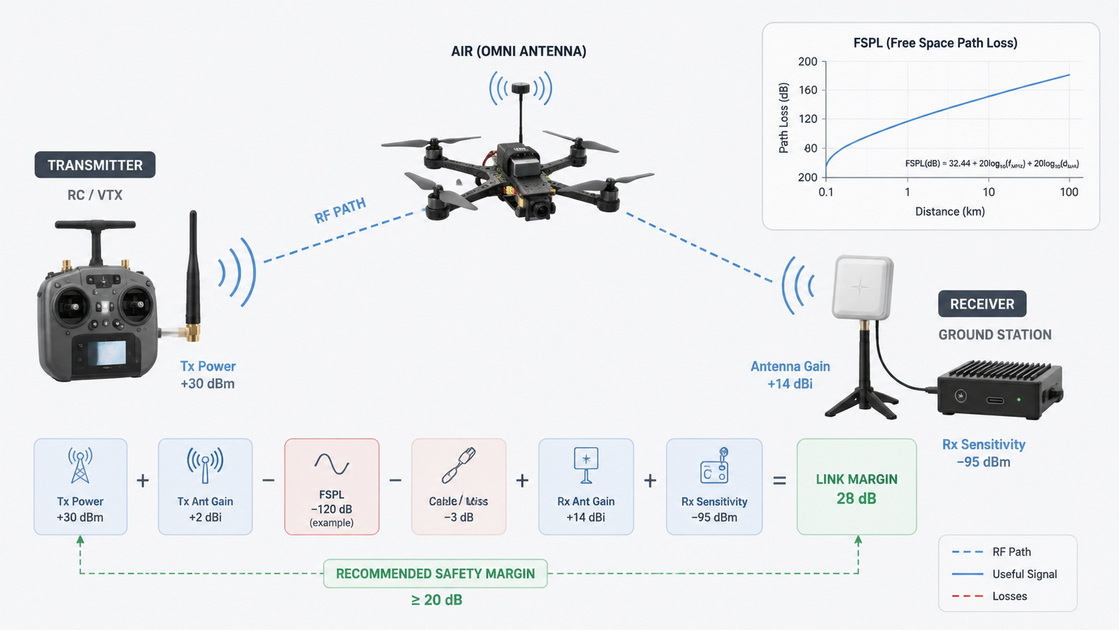
- Antenna choices: Combine a high‑gain directional (patch) on the ground station with an omni on the drone for consistent link budget and diversity. [kiwiquads.co]
- Antenna placement: Keep antennas clear of carbon fiber and noisy electronics; maintain polarization alignment to reduce losses. [kiwiquads.co]
- Use low‑noise video transmitters and appropriate output power for legal limits—overpowering can cause heat and interference that degrades overall system reliability. [oscarliang]
- Match C‑rating and capacity to motor current: underspec batteries sag and reduce voltage, which lowers motor efficiency and shortens range. [openelab]
- Keep batteries healthy: store at recommended voltages, cycle properly, and swap before internal resistance rises too much. [openelab]
- Use telemetry to monitor voltage sag in real time and plan return‑to‑home reserves; conservative reserves preserve margins against unexpected headwinds. [openelab]
Estimating range requires calculating your link budget and accounting for Free Space Path Loss (FSPL). Use the formula and measured dB link budgets to predict where the link margin reaches zero; this gives a conservative maximum range estimate. [oscarliang]
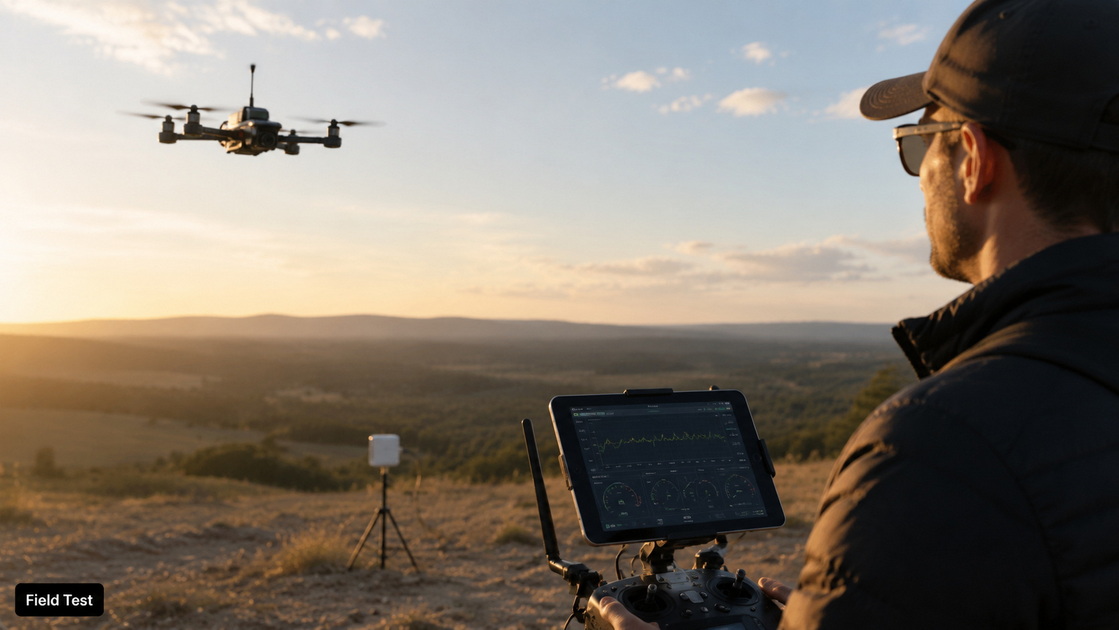
Practical rule: double-check calculated range with a controlled field test that logs RSSI and video quality at incremental distances, then keep 20–30% safety margin for operational use. [oscarliang]
- Use motor shims and proper shaft fit to avoid wobble and vibration that increase drag and current draw. [openelab]
- Balance props precisely; unbalanced props vibrate motors, increase heat, and reduce efficiency. [kiwiquads.co]
- Maintain clean connectors and solder joints to avoid resistive losses that cost flight time. [openelab]
Routine maintenance checks for optimum range
| Interval | Item | Why it matters |
|---|---|---|
| Monthly | Motor bearings, stator play | Worn bearings increase friction and heat, reducing efficiency. (openelab) |
| Before each flight | Prop balance, connector security | Small faults cause large energy loss during flight. (kiwiquads.co) |
| Every 50 cycles | Battery internal resistance test | High IR reduces usable capacity and voltage under load. (openelab) |
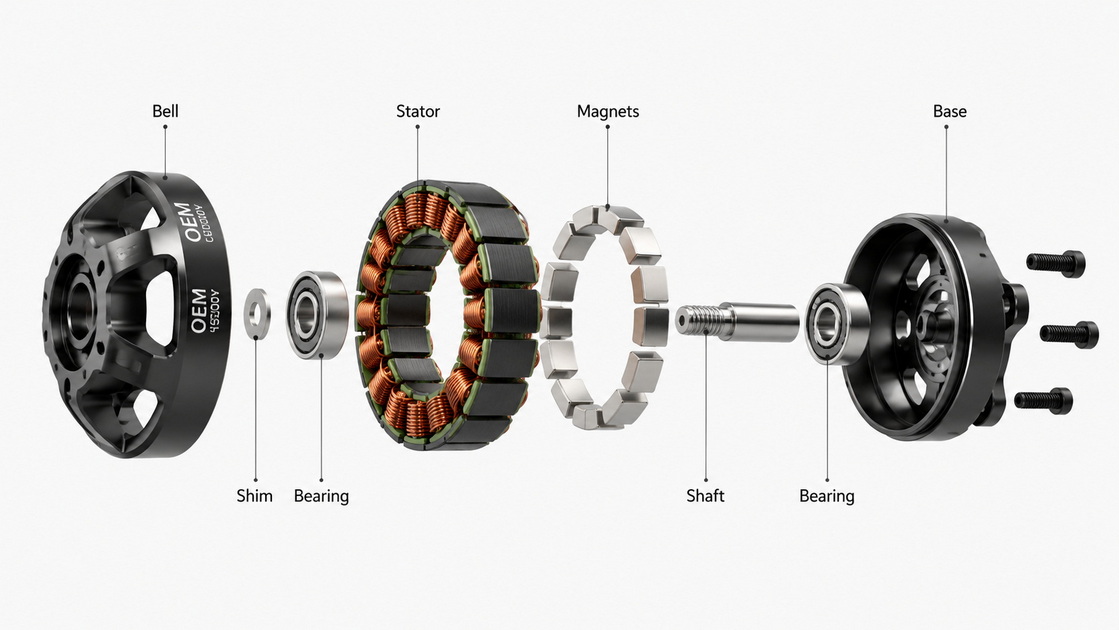
As an experienced motor OEM, we can tailor stator laminations, magnet grades (N52 vs alternatives), winding turns, and shaft sizes to optimize torque‑to‑weight and efficiency for specific drone missions—delivering higher link budgets and longer flight times than off‑the‑shelf motors. [ligpower]
We can also integrate custom hall/encoder sensors for smoother low‑throttle control in long‑range applications.
Request a free efficiency whitepaper or motor match guide tailored to your drone (lead capture form).
1. How much does changing motors affect my FPV range?
Replacing high‑KV, inefficient motors with lower‑KV, higher‑torque efficient motors can improve cruise efficiency and extend flight time by double‑digit percentages in many builds. [oscarliang]
2. Should I choose motors for maximum thrust or efficiency?
For range, prioritize efficiency in the throttle band you use most (cruise), rather than peak thrust. [openelab]
3. How do I estimate real‑world RF/video range?
Calculate link budget using FSPL and measure RSSI/video quality in field tests; always keep a 20–30% safety margin. [oscarliang]
4. Can I retrofit my racing frame for long‑range use?
Yes—change motors, props, battery, and radio antennas; expect tradeoffs in agility vs endurance. [kiwiquads.co]
5. When should I contact an OEM for customization?
If your mission needs exceed off‑the‑shelf efficiency or you require custom torque curves, magnet grades, or integrated sensors, contact an OEM to discuss winding, magnet and lamination options. [ligpower]
1. "Maximizing Drone Flight Range: Key Tips" — OpenElab blog (battery, efficiency, flight strategies). [openelab]
2. "Understanding Decibels (dB) and Optimizing FPV Drone Links" — Oscar Liang (link budget and FSPL formula). [oscarliang]
3. "8 Tips For Extending your FPV Drone Range" — KiwiQuads article (antennas, props, RX/TX practice). [kiwiquads.co]
4. "FPV motor guides and product pages" — industry OEM examples (motor selection and specs). [ligpower]
5. "Google E‑E‑A‑T: What It Is & How It Affects SEO" — Semrush guide (E‑E‑A‑T and editorial practice). [semrush]


