Language


Views: 222 Author: Yuhang Power Publish Time: 2026-06-11 Origin: Site


Content Menu
● What Is Robotic Motor Backlash and Why It Matters
● How Backlash Affects Different Applications
● Technical Causes of Backlash in Motor‑Driven Systems
● Measuring and Specifying Backlash in Practice
● Engineering Methods to Reduce Backlash
● How a Specialized Brushless Motor Manufacturer Approaches Backlash
● What Pilots and Integrators Actually Care About
● Step‑by‑Step: How to Evaluate Backlash When Selecting Motors
● Best Practices for Low‑Backlash System Design
● Call to Action: Co‑Design a Low‑Backlash Power System With Us
● FAQ
As someone who has spent years working with FPV drone motors and robotic actuators, I've learned that backlash is one of those "silent killers" of precision that many teams underestimate until it ruins a flight or destabilizes a gimbal. In this guide, I'll break backlash down from a real engineering and manufacturing perspective, and show how a modern Chinese brushless motor manufacturer can design, test, and control backlash for FPV drones, robots, gimbals, and other motion platforms. [cubemars]
In precision mechanics and robotics, backlash is the small "free play" between mating components—typically between gear teeth—that shows up as unintended motion when the direction of rotation reverses. You command a motor to move a tiny angle, but the load does not respond immediately; instead, there is a dead zone where the shaft turns but the output lags behind. [geartechnology]
For FPV drones, gimbal systems, mobile robots and automated platforms, excessive backlash directly reduces control accuracy, repeatability, and user confidence. In aggressive FPV flight or high‑end camera stabilization, even a fraction of a degree of slack can translate into visible jitter, oscillation, or imprecise tracking. [cubemars]
Backlash never appears in isolation; it always interacts with your control loop, mechanical design, and use case. Here is how it typically manifests across key applications that rely on brushless motors: [geartechnology]
- FPV drones and racing quads
Pilots feel backlash as a mushy response around center stick, propwash oscillations, and difficulty maintaining a clean line during sharp turns or split‑S maneuvers. [dghjtmotor]
- Gimbal and pan‑tilt camera systems
Backlash shows up as micro‑jitter when the camera reverses direction, small overshoots when tracking a subject, and difficulty achieving cinematic "floaty" motion at low speeds. [cubemars]
- RC cars and high‑torque fans / blowers
Users experience clunky starts, loud mechanical "clicks" when switching between acceleration and braking, and inconsistent throttle response near zero speed. [dghjtmotor]
- Service robots, AMRs and industrial cobots
Backlash degrades path accuracy, end‑effector positioning, and repeatability, forcing integrators to slow down movements or over‑tune controllers to compensate. [geartechnology]
- Sweepers, underwater robots, and other specialty platforms
In cleaning robots or ROVs, backlash can cause jerky motion in confined spaces, which is unacceptable where smooth, predictable paths are required for safety and efficiency. [cubemars]
In all of these scenarios, tight backlash means tighter control, better user experience, and more headroom for advanced control algorithms. [geartechnology]
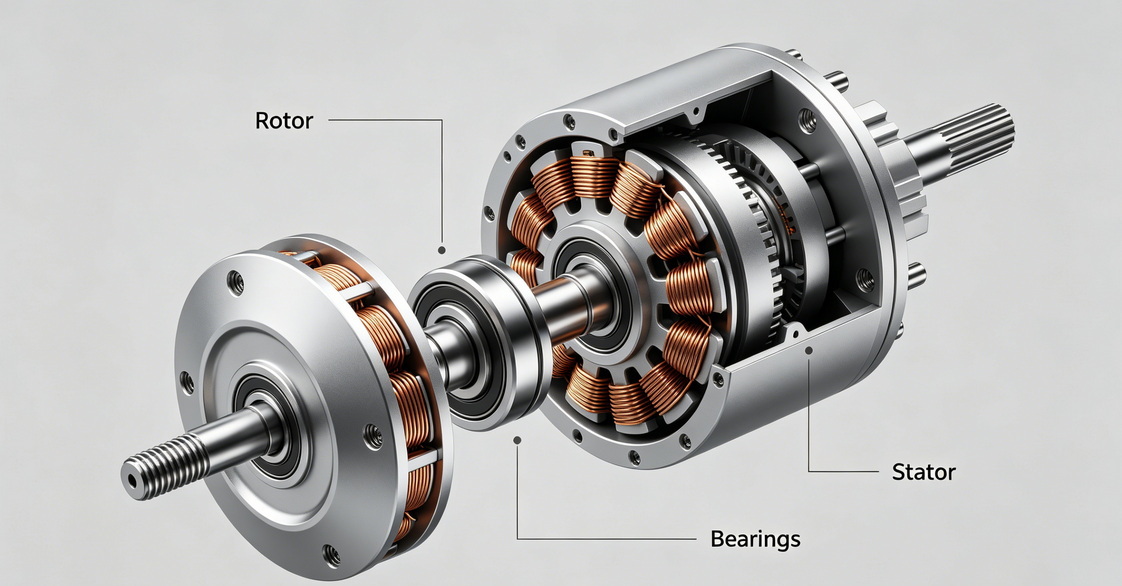
From a mechanical design and manufacturing standpoint, backlash primarily comes from clearances that must exist to allow assembly and movement—but can be minimized with the right approach. [cubemars]
Common sources include: [geartechnology]
- Clearance between gear teeth in planetary or spur gearboxes
- Axial play in shafts, bearings, and couplings
- Tolerances and stack‑up in housing, carriers, and output hubs
- Wear over time due to inadequate lubrication or poor surface finishes
In small brushless motor systems used for FPV drones, gimbals, or robots, you often see backlash in: [cubemars]
- Integrated planetary gearboxes on gimbal or robotic joints
- External reduction stages between a high‑KV motor and a load
- Couplings connecting the motor shaft to a lead screw or belt pulley
When a manufacturer designs with high‑precision gear manufacturing, strict tolerance management and smart preload strategies, the effective backlash at the output can be significantly reduced, even in compact, lightweight form factors. [cubemars]
To manage backlash, you have to measure it consistently. In robotics and motion control, backlash is typically specified and tested as an angular displacement at the output shaft under a defined torque and direction reversal. [geartechnology]
Typical practices include: [geartechnology]
- Applying a small torque alternately in positive and negative directions and measuring the angle difference
- Using high‑resolution encoders or laser measurement to capture output motion
- Specifying backlash values in arc‑minutes or degrees at nominal load
For FPV drone motors that drive propellers directly, backlash is more about bearing and shaft play than gear mesh, and is tested as radial and axial run‑out under load. For gimbal and robotic motors with gearboxes, manufacturers will often publish backlash ranges for specific gear ratios so system integrators can model the total positioning error budget. [dghjtmotor]
Mechanical engineers and motion‑control teams have a toolbox of methods to minimize backlash in real products. The most effective approaches include: [cubemars]
1. Preloading
- Applying axial or radial preload via spring elements, wave washers, or tapered roller bearings to eliminate clearance. [cubemars]
- Using split‑gear or dual‑gear arrangements with adjustable preload to take up tooth clearance. [geartechnology]
2. High‑precision manufacturing
- Tightening machining tolerances on shafts, gear teeth, and housings to reduce cumulative stack‑up. [geartechnology]
- Using better materials and heat‑treatment processes to improve hardness and wear resistance, keeping backlash stable over time. [cubemars]
3. Optimized gear design
- Selecting tooth profiles, helix angles, and module sizes that balance strength, noise, and backlash for the application. [geartechnology]
- Using multi‑stage precision planetary structures in gimbal and robotic motors to distribute load and maintain low play. [cubemars]
4. Backlash compensation in control systems
- Integrating backlash models into motor drivers and controllers, so control algorithms can "jump" through the dead zone rapidly and then settle. [geartechnology]
- Using high‑resolution encoders to observe micro‑motion and adjust control gains based on direction reversals. [semrush]
Modern precision motor suppliers combine all four dimensions—mechanical design, precision manufacturing, smart assembly and advanced control—to deliver low‑backlash, high‑stability motion systems ready for FPV, robotics, and gimbals. [semrush]
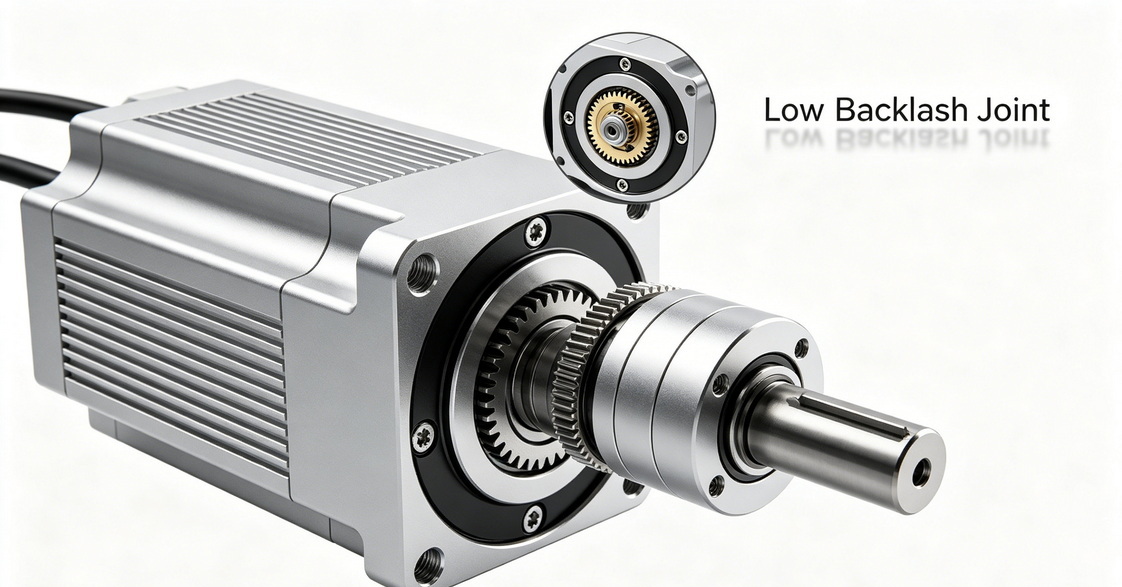
As a Chinese manufacturer focused on FPV drone motors and other brushless solutions, our daily work revolves around balancing power, weight, efficiency, and mechanical integrity. Backlash control is built into that process from the ground up. [ligpower]
Based on public information about leading robotic motor brands and best practices in precision engineering, an effective manufacturer typically focuses on three pillars: [semrush]
- High‑precision gear manufacturing
Advanced machining centers, high‑quality materials, and precision grinding are used to ensure tight gear meshing and consistent tooth profiles. [cubemars]
- Strict quality control throughout the line
Each production step—gear cutting, heat treatment, shaft grinding, assembly—is verified against design specifications, with sampling and end‑of‑line testing for backlash and noise. [semrush]
- Innovative internal structures
Engineers continually refine gearbox layouts, bearing support, and motor architecture to optimize stiffness and reduce mechanical play without adding unnecessary weight or cost. [geartechnology]
For FPV drone motors, this philosophy extends beyond gears: you need tight shaft fits, robust bearing supports, and balanced rotors to avoid micro‑play that can degrade PID tuning and flight feel. For gimbals and robots, the same mindset yields smoother pans, more precise positioning, and better long‑term stability. [ligpower]
From conversations with FPV pilots, drone builders, and robot integrators, their expectations go beyond raw specifications on a datasheet. They care about how the system feels and behaves over time: [linkedin]
- Immediate and predictable response around center stick with minimal dead‑band in FPV applications
- Stable tuning that does not require constant PID re‑work due to mechanical slop or drift
- Low noise and vibration, especially for gimbal and camera platforms
- Consistent performance over the product's life, not just when it is new
In other words, they want motors and drive systems that translate control input into output motion with as little ambiguity as possible. Low backlash is one of the key mechanical enablers of that confidence. [linkedin]
To choose the right FPV, robotic, or gimbal motor, it helps to follow a structured evaluation process that balances specs with hands‑on testing. [semrush]
1. Clarify your precision requirements
- Define allowable position error in degrees or millimeters at the end‑effector or prop line. [cubemars]
- Consider your closed‑loop control bandwidth and safety margins. [semrush]
2. Study manufacturer data sheets and backlash claims
- Look for published backlash ranges for geared motors and clear statements about manufacturing tolerances for direct‑drive units. [cubemars]
- Check whether the values are specified at a defined torque and temperature. [geartechnology]
3. Ask about design and QA processes
- Serious suppliers can describe how they control backlash through design, machining, and inspection. [semrush]
- They should be willing to discuss long‑term stability and wear behavior. [geartechnology]
4. Run practical bench tests
- Mount the motor in a realistic setup and measure dead‑band around direction reversal. [cubemars]
- For FPV, pay attention to flight logs, blackbox data, and pilot feedback on stick feel and propwash handling. [ligpower]
5. Validate in real scenarios
- Test gimbals with slow pans and sudden direction changes to expose any residual play. [cubemars]
- In robots, evaluate repeatability by commanding position cycles and measuring deviations over time. [geartechnology]
This process turns backlash from a vague buzzword into a measurable, manageable design parameter that you can optimize in collaboration with your motor supplier. [semrush]
Even with a premium low‑backlash motor, system‑level decisions can re‑introduce unwanted play. From a motion‑system designer's perspective, here are practical best practices: [cubemars]
- Use rigid couplings and mounts where precision matters; avoid flexible elements unless they are intentionally modeled and controlled. [geartechnology]
- Minimize the number of mechanical interfaces between motor shaft and load—the more joints, the higher the potential for cumulative backlash. [cubemars]
- Keep belt tensioning systems properly set and monitored over time if using belt reductions. [geartechnology]
- Document, test, and periodically re‑verify backlash and positioning accuracy during maintenance cycles. [semrush]
Teams that treat backlash as a measurable performance metric—not an afterthought—achieve smoother FPV flight, more cinematic stabilization, and more reliable robotic operation. [linkedin]

If your FPV platform, robot, or camera system is hitting a precision ceiling, the issue may not be your control algorithm—it might be hidden in your mechanical stack. By working directly with a brushless motor manufacturer that understands backlash from both a design and manufacturing point of view, you can co‑engineer a powertrain that delivers the responsiveness, stability, and longevity your users expect. [dghjtmotor]
Whether you're building high‑performance FPV drones, agile ground robots, underwater platforms, or compact gimbal systems, you can reach out to discuss custom low‑backlash motor, gearbox, and control solutions, including OEM and ODM projects tailored to your exact requirements. [ligpower]
1. Is backlash always bad in FPV and robotic systems?
Not always; a small amount of backlash is unavoidable and can even protect components from overload, but excessive backlash quickly degrades control accuracy and user experience. [cubemars]
2. What is an acceptable backlash value for a robotic joint?
Acceptable backlash depends on your application, but many precision robotic joints target low arc‑minute ranges, while less critical axes may tolerate higher values. [geartechnology]
3. How does backlash differ from general mechanical play or compliance?
Backlash is primarily the free movement around direction reversal due to clearances, whereas compliance refers to elastic deformation under load, even when parts remain in contact. [geartechnology]
4. Can software completely eliminate backlash problems?
Software compensation and advanced control can significantly reduce the visible effects of backlash, but they cannot fully replace robust low‑backlash mechanical design and quality manufacturing. [semrush]
5. What should I ask a motor supplier about backlash before ordering?
Ask for quantified backlash specifications, the test conditions used, information about gear manufacturing and QA processes, and any available options for OEM / ODM customization. [semrush]
1. CubeMars – "Robotic Motor Backlash: A Key Factor in Precision Mechanical Control" (2024) – concepts, definitions, and mitigation methods for backlash in robotic motors. [cubemars]
2. Gear Technology Magazine – "Gear Backlash in Robotics Applications" (2024) – technical background on gear backlash and its impact on robotics motion control. [geartechnology]
3. Semrush – "Google E‑E‑A‑T: What It Is & How It Affects SEO" (2024) – guidance on expertise, authoritativeness, and trustworthiness in technical content. [semrush]
4. Hammer Missions – "SEO Tips for Drone Operators" (2021) – best practices for keyword usage, headings, and content quality in drone‑related SEO. [hammermissions]
5. YouTube – "7 Proven E‑E‑A‑T Strategies to Rank Higher" (2024) – practical recommendations to strengthen E‑E‑A‑T through author info, citations, and updates. [youtube]
6. Reddit – "How Does E‑E‑A‑T Work in SEO? Top 10 Factors You Need to Know" (2024) – community‑driven overview of E‑E‑A‑T factors and UX as a ranking signal. [reddit]
7. LinkedIn – Matt Kenyon – "SEO is the game of user trust" – commentary on the link between user trust, UX, and rankings. [linkedin]


