Language


Views: 222 Author: Yuhang Power Publish Time: 2026-05-28 Origin: Site
Content Menu
● How to Choose FPV Goggles in 2026
● Digital vs Analog: Which FPV System Do You Really Need?
>> Digital FPV: Clarity and Immersion First
>> Analog FPV: Lowest Latency and Lowest Cost
● The Major FPV Goggles Ecosystems in 2026
>> DJI Digital Goggles: The Cinematic Standard
>> HDZero Goggles: Digital Built for Racing
>> Walksnail Avatar & Fat Shark: The Flexible All‑Rounders
>> Analog Goggles: Still the Best Bang for the Buck
● Key FPV Goggles Features That Actually Matter
>> Latency, Resolution, and FOV
>> Receivers, Antennas, and DVR
>> Power, Inputs, and Future‑Proofing
● A Builder's Take: Why Clean Power Matters for Video Quality
● What I Recommend by Pilot Type
>> If You're a Beginner on a Tight Budget
>> If You Fly Freestyle and Cinematic Lines
>> If You're a Racer or Gate‑Chasing Freestyler
>> If You Want Maximum Flexibility Across Fleets
● FAQ
>> 1: Are digital FPV goggles always better than analog?
>> 2: Can I use DJI goggles with analog drones?
>> 3: What is the best FOV for FPV goggles?
>> 4: How much should I spend on FPV goggles as a first‑time pilot?
>> 5: Why does my video still look noisy with good goggles?
After ten years of flying and building FPV drones, I've learned one painful lesson: your FPV goggles matter more to your flying experience than any single frame, camera, or ESC upgrade. Whether you fly a 5‑inch freestyle quad with high‑torque brushless motors, a 7‑inch long‑range cruiser, or a micro whoop, choosing the best FPV goggles in 2026 is one of the most important buying decisions you'll make. [businessresearchinsights]
In this guide, I'll walk you through how I personally evaluate digital vs analog FPV goggles, what I recommend to different types of pilots, and how to pair your video system with a clean, reliable powertrain so your feed stays rock‑solid in the air. [yohorc]

Before you look at brands and model names, you should first be clear about three things. [businessresearchinsights]
- Your FPV system: Analog, DJI, HDZero, or Walksnail Avatar.
- Your flying style: Freestyle, racing, cinematic, long‑range, or indoor whoops.
- Your budget and upgrade plan: Entry‑level, mid‑range, or long‑term flagship setup.
From a manufacturer's perspective, we always tell customers: pick a video ecosystem first, then build your drone around it with the right motors, ESCs, and flight controller to keep the video signal clean and stable. [yohorc]
Modern digital systems like DJI O3/O4, HDZero, and Walksnail Avatar deliver HD resolution, better colors, and much cleaner video than traditional analog. [businessresearchinsights]
What I like about digital goggles:
- HD image quality: Up to 1080p with sharp details and vibrant colors. [yohorc]
- Stable picture: The image stays clear until the signal drops or freezes, which looks great in cinematic footage. [yohorc]
- Onboard features: DVR recording, OSD overlays, and head tracking on higher‑end models. [businessresearchinsights]
But you should know the trade‑offs:
- Latency can be higher and variable. DJI sits roughly in the 25–40 ms range depending on signal quality. [businessresearchinsights]
- Ecosystem lock‑in: DJI goggles only work with DJI VTX units; Walksnail and HDZero each have their own ecosystem rules. [yohorc]
- Higher cost: You pay for the image quality and features, especially if you fly multiple quads.
Analog goggles still dominate in pure racing and budget builds because they offer near‑zero latency and cheap, lightweight gear. [businessresearchinsights]
Why analog is still relevant:
- Ultra‑low latency: Typically under 10 ms, ideal for tight racing tracks or tree‑proximity freestyle. [yohorc]
- Graceful signal behavior: As you fly far, you see more static instead of sudden freezes, giving you time to react. [yohorc]
- Low cost and easy repair: Cameras and VTX units are inexpensive and widely available.
Analog limitations:
- SD image quality: Softer video and visible noise compared with HD digital feeds. [businessresearchinsights]
- Less impressive for cinematic work: You'll usually want a separate HD action camera on the quad.
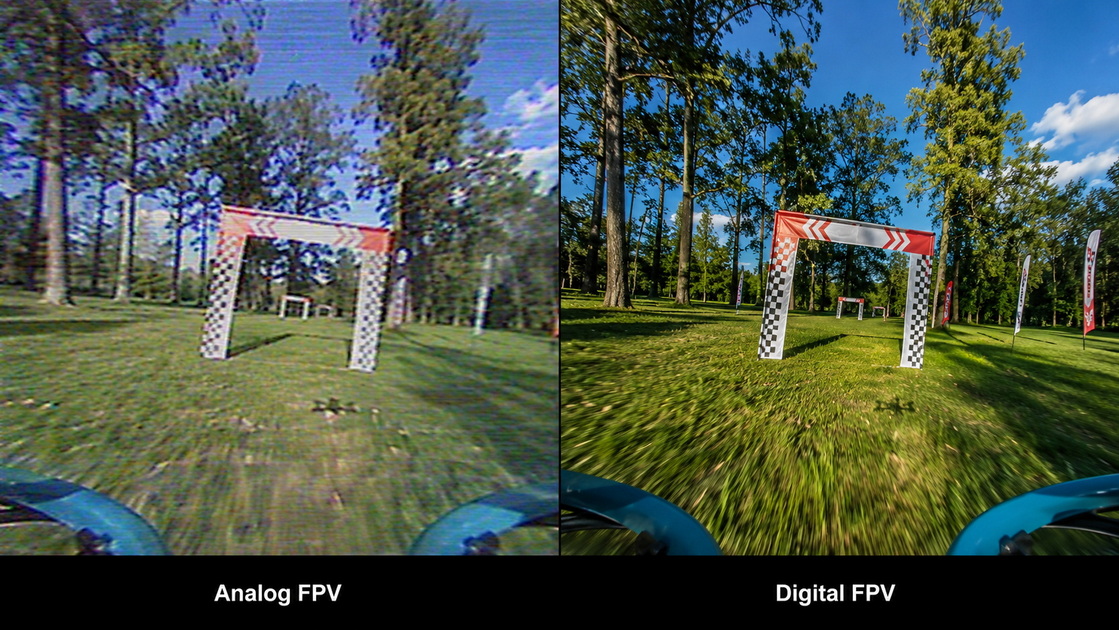
| Factor | Digital FPV Goggles | Analog FPV Goggles |
|---|---|---|
| Image quality | HD, sharp, vivid colors (yohorc) | SD, softer, visible noise (yohorc) |
| Typical resolution | Up to 1080p / 1440p (yohorc) | About 480p–600 TVL (yohorc) |
| Latency | Low–medium (14–40 ms) (yohorc) | Ultra‑low (≈5–10 ms) (yohorc) |
| Signal behavior | Stays clear, then drops/freezes (yohorc) | Gradual static build‑up (yohorc) |
| Best use cases | Cinematic, freestyle, commercial (yohorc) | Racing, budget builds, micros (yohorc) |
| Ecosystem lock‑in | Medium to high | Very low |
For cinematic and freestyle flying, DJI Goggles 2 and Goggles 3 deliver some of the clearest 1080p video and deepest signal penetration you can get today. [yohorc]
What stands out in real flying:
- Outstanding image quality: H.265 video at up to 1080p 100 fps gives extremely crisp, detailed footage. [businessresearchinsights]
- Strong penetration: Trees, buildings, and concrete are handled well until the end of range. [yohorc]
- Integrated ecosystem: Works seamlessly with DJI O3 and O4 Air Unit systems. [yohorc]
The DJI O4 system, introduced as the latest evolution, improves low‑light performance, strengthens signal penetration, and lowers latency versus the older O3 platform. For long‑range mountain cruising or commercial shots, that extra stability and bitrate noticeably smooths out the video. [yohorc]
Practical downsides:
- Closed ecosystem: Modern DJI goggles don't support analog or other digital systems like HDZero or Walksnail. [businessresearchinsights]
- Variable latency: Latency can rise as the link weakens, which is why serious racers look elsewhere. [yohorc]
If your main goal is cinematic HD and you're comfortable committing to DJI video hardware, DJI goggles remain my top digital recommendation. [businessresearchinsights]
HDZero is a digital system designed explicitly around fixed, ultra‑low latency, making it a favorite among competitive racers and pilots who also still love analog. [businessresearchinsights]
Why hardcore pilots choose HDZero:
- Locked‑in latency (~14 ms): No heavy compression, no jitter, very consistent feel on the sticks. [businessresearchinsights]
- High‑end OLED displays: Up to 1920×1080 90 Hz micro‑OLED panels in the flagship goggles. [yohorc]
- Native analog support: Expansion modules let you fly analog and HDZero from one headset. [businessresearchinsights]
- Open and flexible firmware: Community‑driven updates and customizable OSD. [yohorc]
Things to consider:
- Signal behavior: When signal weakens behind dense structures, the image breaks into blocky artifacts instead of staying clean like DJI. [yohorc]
- Cost: A full HDZero ecosystem is a premium investment, especially when you outfit multiple quads. [yohorc]
In my experience, HDZero is an excellent choice if latency and control feel matter more to you than pure cinematic image quality. [businessresearchinsights]
The Walksnail Avatar system, developed by Caddx, aims to balance HD quality with a more open, modular architecture. [businessresearchinsights]
Why I often recommend Walksnail Goggles X:
- 1080p OLED displays with excellent clarity. [businessresearchinsights]
- Wide ecosystem support: Can work with Walksnail, analog, and HDZero via HDMI input, offering unmatched flexibility. [businessresearchinsights]
- Analog support in Goggles X: You can fly older analog quads while transitioning into digital. [businessresearchinsights]
There are also box‑style Walksnail goggles (Goggles L) that hit a lower price point, but they trade refresh rate and antenna flexibility for cost. [businessresearchinsights]
If you're building a fleet that spans tiny whoops to 7‑inch cruisers and you don't want to lock into DJI, Walksnail is a smart, future‑proof choice. [yohorc]
For pure analog, several brands keep delivering reliable, refined products. [yohorc]
- Fat Shark: Historically the reference brand, with premium comfort and modular receiver bays. [yohorc]
- Skyzone: Goggles like the SKY04X Pro offer 1920×1080 OLED, SteadyView receiver, DVR, and adjustable focus, making them a great analog‑first pick. [yohorc]
- Orqa: The FPV.One Pilot remains a respected high‑end analog goggle with excellent optics and ergonomics. [businessresearchinsights]
- Eachine: Models such as EV800D and EV800DM give beginners a low‑risk entry point with built‑in diversity, DVR, and box‑style comfort. [yohorc]
If you know you'll mostly stay analog—especially in club racing or budget freestyle—a solid pair of analog goggles is still a very rational investment. [businessresearchinsights]
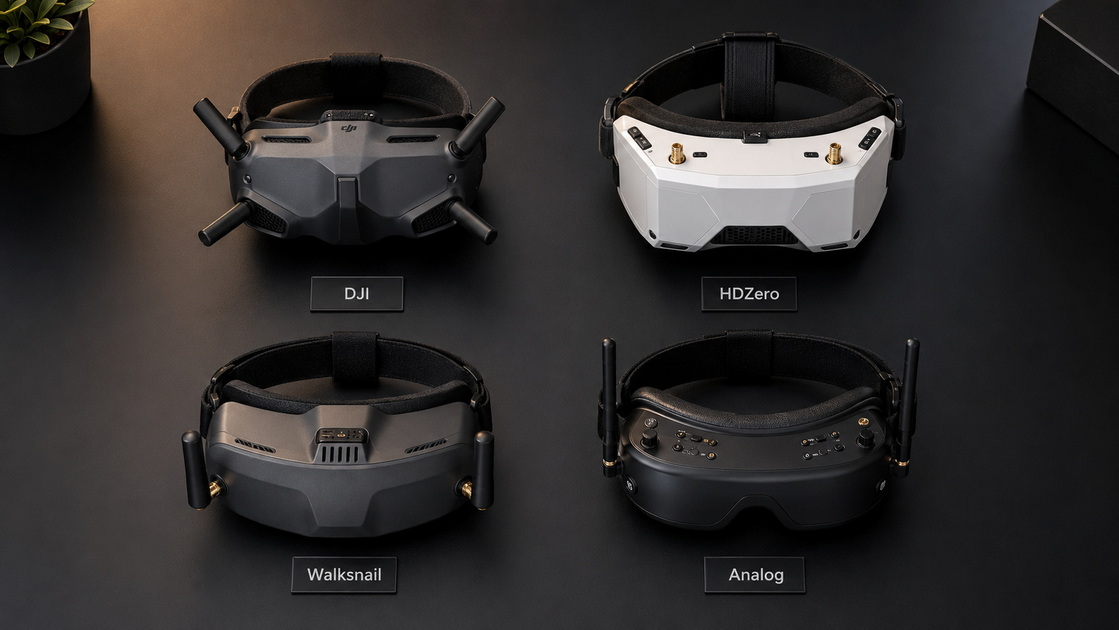
When I test goggles, I always evaluate three technical pillars together: latency, resolution, and field of view (FOV). [yohorc]
- Latency: For racing, aim for under 20 ms end‑to‑end; analog and HDZero perform best here. [businessresearchinsights]
- Resolution: For digital systems that output 720p or 1080p, higher‑resolution displays make a real difference; for analog, the difference between 720p and 1080p panels is less dramatic. [businessresearchinsights]
- FOV: Box goggles often have 50°–80° FOV, while binocular goggles range around 30°–50°. A huge FOV feels immersive but can be tiring; many experienced pilots prefer around 40°–45° in slimline goggles. [businessresearchinsights]
From a pilot's perspective, consistent low latency is more important than absolute resolution when you're proximity‑flying between trees; for cinematic flights, resolution and dynamic range matter more. [yohorc]
A goggle with impressive specs is useless if it doesn't fit your face. [businessresearchinsights]
- IPD (Interpupillary Distance): Makes sure each micro‑display lines up with your pupils; most binocular goggles offer a limited adjustable range. [businessresearchinsights]
- Diopter/focus adjustment: Essential if you normally wear glasses; many premium goggles offer between about −6 to +2 diopters adjustment. [yohorc]
- Foam and nose fit: Some faceplates push hard on the nose bridge; others have better load distribution. This varies a lot between brands and faces. [businessresearchinsights]
If possible, try goggles at local FPV meet‑ups before you invest; comfort is one area that spec sheets simply cannot fully describe. [businessresearchinsights]
Analog goggles and modules live or die by their video receiver (VRX) and antenna setup. [businessresearchinsights]
- Diversity and true diversity: Using two antennas (often one omni and one patch) dramatically improves signal stability. [businessresearchinsights]
- High‑end modules: Systems like ImmersionRC RapidFire, TBS Fusion, and Skyzone's SteadyView are widely regarded as top analog receivers with advanced signal processing. [businessresearchinsights]
- DVR (digital video recorder): Almost mandatory on mid‑ to high‑end goggles; it's invaluable for reviewing flights and finding a downed quad. [yohorc]
Modern digital goggles (DJI, Walksnail, HDZero) also include DVR, and their recordings usually accurately represent what you see in the headset, aside from platform‑specific processing and YouTube compression. [businessresearchinsights]
Good goggles are a long‑term investment, often surviving several generations of drones. [yohorc]
- Power options: Built‑in vs external batteries, input voltage range, and whether you can conveniently power them from a 2S–6S pack. [businessresearchinsights]
- HDMI and AV inputs: HDMI allows you to use external digital receivers, run simulators, or even watch DVR on a big screen in the field. [businessresearchinsights]
- Ecosystem versatility: Goggles that support multiple systems (analog + HDMI for HDZero or Walksnail) tend to age more gracefully. [businessresearchinsights]
I always recommend buying the highest‑quality goggles you can afford, because you'll keep them for years while you continuously upgrade frames, motors, and stacks. [yohorc]
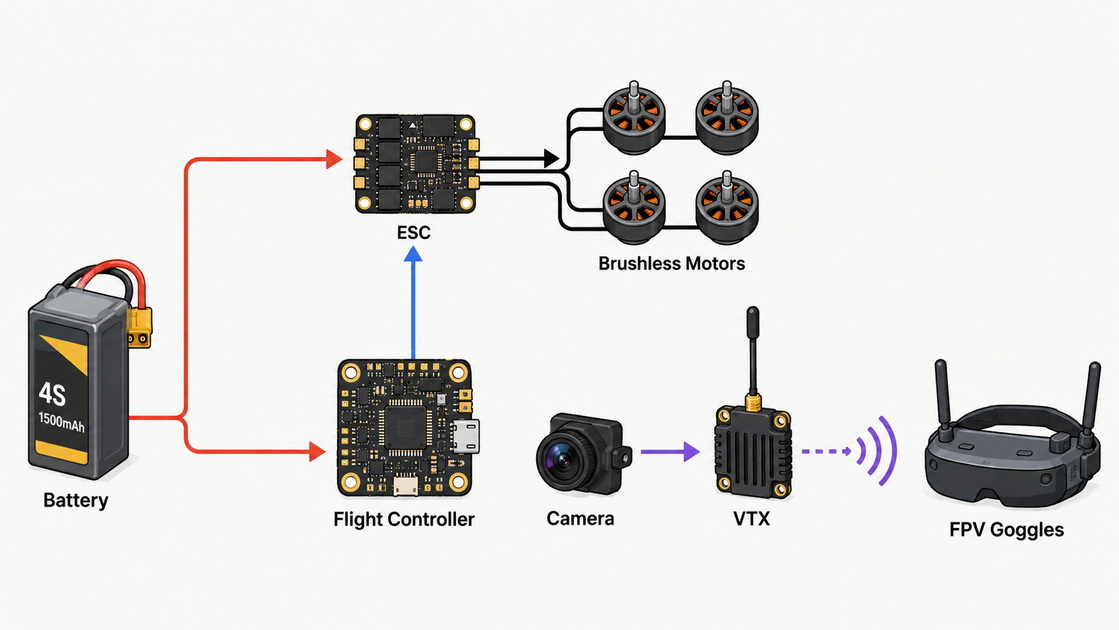
From our side as a brushless motor and power‑system manufacturer, one of the most common issues we see from customers is video noise caused by dirty power, not by the goggles themselves. [yohorc]
Even with the best FPV goggles, your video feed can show diagonal lines, flickering, or frame drops if:
- Your motors or props are unbalanced, generating electrical noise.
- Your ESC and flight controller lack proper filtering.
- Your VTX shares noisy power rails with high‑current components.
To get the most out of your FPV goggles:
1. Use dynamically balanced, high‑efficiency motors to reduce electrical noise and mechanical vibration.
2. Pair your motors with a low‑noise flight controller and ESC, ensuring enough filtering (LC filters, low‑ESR capacitors).
3. Power your VTX from a clean, regulated output whenever possible, rather than directly from noisy battery pads.
When we test new FPV power systems in‑house, we always inspect the real‑time video feed through DJI, HDZero, and analog goggles to ensure the signal stays clean even under full‑throttle current spikes. That's the level of integration you should aim for in your own builds. [yohorc]
- Start with analog box goggles like the EMAX Transporter 2 or Eachine EV800D. [yohorc]
- Focus your budget on a reliable quad and durable motors, then upgrade goggles later.
- Use DVR to review flights and accelerate your learning curve. [yohorc]
- Choose DJI Goggles 2 or Goggles 3 with the O3/O4 Air Unit for the best all‑round HD experience. [yohorc]
- Combine them with a low‑noise F7 flight controller and high‑efficiency motors to keep voltage noise out of your video feed. [yohorc]
- Prioritize prop and motor balance; you'll see the difference in onboard footage stability.
- Go for HDZero Goggles or a high‑quality analog goggle with a top‑tier VRX module. [yohorc]
- Keep latency as low and consistent as possible; image clarity is secondary to control feel.
- Use diversity patch plus omni antennas, tuned to your track environment. [businessresearchinsights]
- Pick Walksnail Goggles X or another headset that supports Walksnail, analog, and HDZero via HDMI. [yohorc]
- This lets you gradually upgrade parts of your fleet while keeping a single, future‑proof set of goggles. [businessresearchinsights]
Not always. Digital goggles are clearly better for image quality and cinematic flying, but analog or HDZero still win for pure latency and cost‑effective racing setups. [yohorc]
Current DJI Goggles 2, Goggles 3, and Goggles Integra do not support analog input, so they can't receive analog video directly. [yohorc]
Most experienced pilots prefer a moderate FOV around 40°–45° on slimline goggles, which balances immersion and the ability to read OSD data quickly. [businessresearchinsights]
If you are new, spending around 100–200 USD on decent analog box goggles is reasonable; once you know you'll stick with the hobby, upgrading to a 400–700 USD digital or hybrid headset is a better long‑term move. [yohorc]
This usually comes from dirty power or poor filtering in your build, not from the goggles themselves. Upgrading to balanced brushless motors, adding low‑ESR capacitors, and powering your VTX from clean, regulated rails often fixes the problem. [yohorc]
1. Mepsking. "Best FPV Goggles 2026 Buyer's Guide." (Accessed 2026). [yohorc]
2. Oscar Liang. "Ultimate FPV Goggles Guide: Find the Best FPV Headset for Every System." (Updated Oct 2025). [businessresearchinsights]
3. Yohorc FPV. "FPV Goggles: The Ultimate Guide (2025 Update)." (Accessed 2026). [yohorc]
4. Business Research Insights. "FPV Drone Goggles Market Size, Report, Trends By 2035." (2025). [businessresearchinsights]
5. Gushwork. "SEO for Manufacturers: A Comprehensive Guide." (2026). [gushwork]


