Language


Views: 259 Author: Yuhang Power Publish Time: 2026-06-25 Origin: Site
Content Menu
● FPV Drone Flying Laws And Safety In 2026 – A Practical Guide For Responsible Pilots
● Why FPV Flying Is Treated Differently From Line-Of-Sight Drones
● Core Legal Requirements For FPV Flying (Overview, Not Legal Advice)
>> Registration, Identification, And Remote ID
>> Visual Line Of Sight And Spotter Requirements
>> Altitude Limits, No-Fly Zones, And Crowds
● Country-Level FPV Law Snapshot (Simplified)
● Safety Issues Specific To FPV Drones And Motors
>> Energy, Kinetic Impact, And Propeller Risk
>> Motor Quality, Reliability, And Flight Safety
● Pre-Flight Safety Checklist For FPV Pilots
● Special Considerations For FPV Racing And Events
● What Happens If You Ignore FPV Laws And Safety Rules?
● How A Professional Power System Partner Supports Safe FPV Flying
● Clear Call To Action – Fly FPV Responsibly With The Right Power System
● FAQ
Flying FPV drones is one of the most immersive ways to experience unmanned flight, but it also comes with serious legal responsibilities and safety risks that every pilot needs to understand before plugging in a battery. From my work with manufacturers and FPV pilots, the safest and most rewarding flights happen when pilots treat regulations, safety checks, and reliable power systems (including motors) as part of the core FPV experience—not as an afterthought. [faa]
As a manufacturer of FPV drone motors and brushless power systems, we see first-hand how quickly FPV technology is evolving—and how often regulations and safety practices struggle to keep up. Pilots are flying faster, lower, and closer to people and infrastructure, which makes compliance and safety more important than ever. [yrdrone]
In this guide, I will walk you through the key legal requirements and safety issues in FPV flying, combining official rules with real-world best practices we share with customers of Zhongshan Yuhang Power Technology Co., Ltd.
FPV (First Person View) flying uses an onboard camera and video transmission to stream live footage to goggles or a screen, so you see from the drone's perspective instead of directly watching it. This gives you unmatched control for racing and freestyle, but it also limits your situational awareness compared with line-of-sight flying. [easa.europa]
Regulators in the US, Europe, and other regions recognize that FPV pilots:
- May not see other aircraft, people, or obstacles outside the camera view. [unmannedtechshop.co]
- Can get disoriented at high speed or behind obstacles. [easa.europa]
- Typically fly closer to the ground and in tighter spaces than camera drone pilots. [yrdrone]
That is why FPV operations often have stricter requirements, such as the need for a visual observer (spotter) and additional safety measures during races and events. [faa]
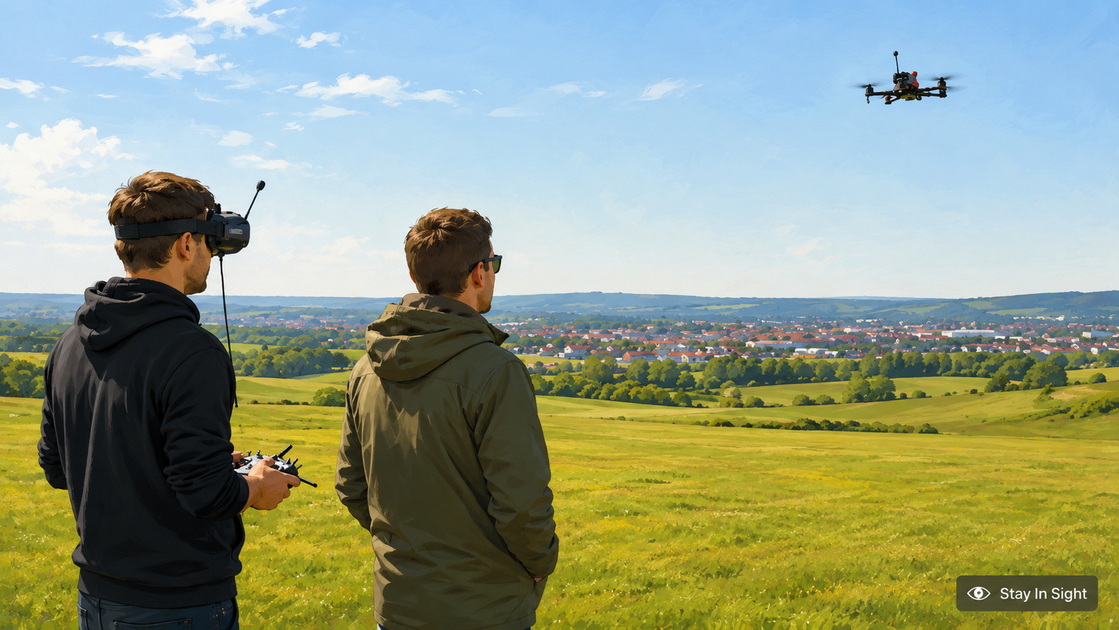
Drone rules vary by country, but most jurisdictions require FPV pilots to follow a few common principles. Always check local laws, but use this as a starting framework. [drone-laws]
Many countries now require:
- Drone registration above a certain weight threshold. [uavcoach]
- A registration number or ID label visible on the aircraft. [faa]
- For some regions, Remote ID, where the drone broadcasts identification and location information in flight. [yrdrone]
In the US, for example, small unmanned aircraft operating under Part 107 must be registered, and Remote ID requirements are being phased in for most categories of operation. Similar expectations exist or are emerging in Europe and other major markets. [easa.europa]
Most authorities require that a drone be kept within visual line of sight (VLOS) by either the pilot or a designated visual observer. Under FAA Part 107, if you use FPV goggles, you must have a visual observer who can see the drone at all times and communicate with you. [unmannedtechshop.co]
EASA guidance for FPV racing in Europe also requires a visual observer and restricts FPV freestyle to areas away from people and urban zones. UK and other national rules follow a similar logic: FPV is allowed, but someone must maintain situational awareness. [unmannedtechshop.co]
Most countries limit drone altitude to around 120–150 meters (400–500 feet) above ground level and prohibit operations near airports and sensitive infrastructure. Common rules include: [faa]
- Do not fly near or over crowds, roads, or public events. [easa.europa]
- Respect no-fly zones around airports, heliports, and government facilities. [uavcoach]
- Avoid flying directly above people who are not involved in the operation. [unmannedtechshop.co]
Online resources like UAV Coach's global law list and dedicated drone law directories help pilots check country-specific rules before traveling with FPV gear. [drone-laws]
To illustrate how similar the principles are across regions, here is a simplified snapshot.
| Region | Registration | FPV Spotter Needed | Typical Max Altitude | Key Notes |
|---|---|---|---|---|
| United States (FAA) | Required for most drones over 250 g. (faa) | Yes, when pilot uses FPV. (faa) | 400 ft AGL in most cases. (faa) | Part 107 or recreational rules; Remote ID rollout. (faa) |
| European Union (EASA) | Required depending on weight/category. (yrdrone) | Yes for most FPV flights. (easa.europa) | 120 m AGL typical. (easa.europa) | FPV racing often under "specific" category; A3 for freestyle. (easa.europa) |
| United Kingdom | Registration plus flyer ID for most drones. (yrdrone) | Spotter recommended/required for FPV. (unmannedtechshop.co) | 120 m AGL. (unmannedtechshop.co) | Follow the Drone and Model Aircraft Code. (unmannedtechshop.co) |
| Global (general trend) | Increasingly required. (drone-laws) | Common expectation for FPV. (yrdrone) | 120–150 m AGL. (yrdrone) | Stronger enforcement of no-fly zones and Remote ID. (yrdrone) |
This is not legal advice—always check official local sources before flying. [drone-laws]
Legal compliance is only one part of responsible FPV flying. Technical safety, especially around motors and power systems, is just as important. [ligpower]
FPV drones typically fly faster and carry more kinetic energy than basic camera drones, especially 5-inch and larger rigs used for freestyle and racing. High RPM brushless motors and sharp propellers can cause severe injuries on contact and can damage property if control is lost. [ligpower]
To reduce risk:
- Always remove props when working on firmware, receiver binding, or motor testing. [unmannedtechshop.co]
- Use arm switches, motor beepers, and throttle cut functions on your transmitter. [unmannedtechshop.co]
- Avoid flying near people, animals, vehicles, and fragile structures. [yrdrone]
From an engineering standpoint, motor reliability is a critical safety factor. A sudden motor failure at speed or low altitude dramatically increases crash risk. [ligpower]
High-quality FPV motors—like the ones we develop at Zhongshan Yuhang Power Technology—are designed with:
- Balanced rotors and strong shafts to minimize vibration and bearing wear. [ligpower]
- High-temp stator windings and magnets to handle aggressive throttle use. [ligpower]
- Tight quality control to catch defects that might cause mid-air failures. [ligpower]
Pilots should regularly inspect for:
- Bent shafts or loose bells after hard crashes. [ligpower]
- Excessive motor heat that could indicate over-prop or tuning issues. [ligpower]
- Unusual vibration or sound when spooling up. [ligpower]
Reliable motors do not replace safety rules, but they substantially reduce the chance of avoidable failures that can make a legal flight unsafe. [unmannedtechshop.co]

In practice, the safest FPV flights come from repeatable checklists rather than good intentions. Here's a concise pre-flight routine used by many responsible pilots: [unmannedtechshop.co]
1. Location and airspace
- Confirm it is legal to fly there (no restricted or controlled airspace, no events or crowds). [faa]
2. Aircraft condition
- Check frame, arms, and props for cracks or damage. [unmannedtechshop.co]
- Verify motors spin smoothly without grinding or wobble. [ligpower]
3. Systems and fail-safes
- Confirm correct failsafe behavior (drop or return) when signal is lost. [unmannedtechshop.co]
- Ensure voltage, RSSI, and GPS (if used) are reading correctly in the OSD. [unmannedtechshop.co]
4. VTX and frequencies
- Choose legal frequencies and power levels for your region and event. [yrdrone]
- Avoid VTX interference with other pilots. [easa.europa]
5. Observer and communication
- Brief your visual observer on where you plan to fly and emergency actions. [faa]
This checklist takes a couple of minutes but dramatically improves both safety and flight confidence. [unmannedtechshop.co]

FPV racing events introduce their own layer of rules and safety protocols. In Europe, EASA requires clubs and associations to obtain specific authorization for races with spectators, and these operations typically fall into the "specific" category of drone regulation. [yrdrone]
Common event requirements include:
- Dedicated race tracks separated from spectators and public areas. [easa.europa]
- Registered pilots and documented flight logs. [yrdrone]
- Standardized failsafe settings and VTX channels for all competitors. [easa.europa]
- Mandatory spotters and course marshals. [easa.europa]
Event organizers often work closely with national aviation authorities to ensure that local rules and international pilots' needs are both addressed. [yrdrone]
Ignoring laws and best practices is not just a theoretical risk. In many countries, pilots who violate drone rules can face:
- Fines or confiscation of equipment. [uavcoach]
- Suspension from clubs or event bans. [yrdrone]
- Liability for property damage or injuries caused by unsafe flights. [yrdrone]
In extreme cases, reckless FPV flying near airports or critical infrastructure can result in criminal charges and long-term restrictions on flying. From a community perspective, high-profile incidents can also trigger stricter regulations that affect every pilot. [faa]
As a power system supplier, our responsibility does not stop at selling FPV motors. At Zhongshan Yuhang Power Technology Co., Ltd., we support safer FPV flying by: [ligpower]
- Designing robust brushless motors optimized for FPV quads, long-range rigs, and cine-lifters. [ligpower]
- Providing OEM and ODM services that align motor specifications with payload, frame size, and battery selection. [ligpower]
- Sharing configuration guidance on propeller selection, ESC ratings, and cooling to avoid overloads. [unmannedtechshop.co]
A well-matched motor and power system reduces electrical failures, runaway heat, and desyncs that can lead to loss of control mid-flight. When combined with legal awareness and good pilot discipline, this creates a much safer environment for both pilots and the people around them. [ligpower]

If you love FPV, treating laws, safety practices, and hardware quality as part of the hobby will protect both your freedom to fly and the people around you. Before your next build or upgrade, take time to review your local regulations, refine your pre-flight routine, and ensure your motors and power system are up to the job. [faa]
When you are planning a new FPV drone, racing quad, or professional platform, you can share your frame size, target weight, battery type, and use case with our engineering team so we can recommend a matched FPV motor and power solution that supports safe and reliable flight. [ligpower]
1: Is FPV flying legal in my country?
FPV flying is legal in many countries, but conditions vary; most require registration above certain weights, respect for altitude limits, and sometimes a visual observer for FPV operations. Always consult your national aviation authority or a trusted drone law directory before flying. [drone-laws]
2: Do I always need a visual observer when flying FPV?
In regions like the US and much of Europe, FPV operations generally require a visual observer who maintains line of sight and can warn you about hazards. Club or racing permissions may formalize this requirement further. [faa]
3: What is the typical maximum altitude for FPV drones?
Most jurisdictions limit drones to around 120–150 meters (400–500 feet) above ground level, with additional restrictions near structures, airports, and critical infrastructure. Check local rules before planning high-altitude flights. [uavcoach]
4: How do FPV motors affect flight safety?
Reliable FPV motors with good bearings, balanced rotors, and proper thermal performance reduce the risk of mid-air failures and unexpected desyncs. Regular inspection after crashes, along with appropriate prop and ESC selection, is essential. [unmannedtechshop.co]
5: What should I do if my FPV drone crashes near people or property?
First ensure everyone is safe, disconnect the battery, and secure the crash site. Depending on local law and the severity of the incident, you may need to report the event to authorities or your aviation regulator, especially if there are injuries or significant damage. [faa]
1. FAA – Small Unmanned Aircraft Systems (UAS) Regulations – Part 107 (US legal framework, VLOS, altitude limits). [faa]
<https://www.faa.gov/newsroom/small-unmanned-aircraft-systems-uas-regulations-part-107>
2. Drone Laws – Drone Laws by Countries and States (Global legal directory). [drone-laws]
<https://drone-laws.com>
3. UAV Coach – Master List of Drone Laws (Organized by State / Country) (Links to national rules). [uavcoach]
<https://uavcoach.com/drone-laws/>
4. YR Drone – What Are the Global FPV Drone Laws and Risks in 2026? (Global FPV law overview, Remote ID, risk discussion). [yrdrone]
<https://yrdrone.com/blog/industry-news/global-fpv-drone-laws-risks/>
5. EASA – Drone Racing and Flying a Drone with Goggles – First Person View (FPV) (European guidance on FPV, observers, categories). [easa.europa]
<https://www.easa.europa.eu/en/light/topics/drone-racing-and-flying-drone-goggles-first-person-view-fpv>
6. Unmanned Tech – How to Fly an FPV Drone Safely (2026) (Practical safety tips, code of conduct). [unmannedtechshop.co]
<https://www.unmannedtechshop.co.uk/blogs/knowledge-base/how-to-fly-an-fpv-drone-safely>
7. Ligpower – The Ultimate FPV Drone Motors Guide 2025 (Technical guidance on FPV motors and configuration). [ligpower]
<https://www.ligpower.com/blog/the-ultimate-fpv-drone-motor-guide.html>


