Language


Views: 222 Author: Yuhang Power Publish Time: 2026-06-07 Origin: Site
Content Menu
● Why FPV Drone Motor Maintenance Matters
● How Often Should You Clean And Maintain An FPV Drone?
● Essential Tools For Safe FPV Drone And Motor Cleaning
● Step By Step: Cleaning The FPV Frame And Electronics
>> 1. Safety First Before You Touch Anything
>> 2. Remove Loose Dust And Dirt
>> 3. Inspect And Clean The Frame
● FPV Motor Cleaning: Expert Process From A Motor Manufacturer
>> Deep Cleaning FPV Brushless Motors (When Needed)
● Special Cases: Cleaning After Water, Mud, Or Salt Exposure
>> Salt Water Or Coastal Environments
● Maintaining LiPo Batteries, Props, And Camera For Reliable Flights
>> Propellers: Small Part, Big Impact
● Where A Motor Manufacturer Adds Value
● FAQ
>> 1. How do I know if a motor is beyond saving and should be replaced?
>> 2. Is it safe to use water to clean my FPV drone?
>> 3. Can aggressive brushing damage my FPV motors?
>> 4. How often should I oil FPV motor bearings?
>> 5. Does regular cleaning really improve FPV performance, or just reliability?
Keeping your FPV drone and especially its brushless motors clean is one of the easiest ways to avoid premature failures, random desyncs, and lost quads. As a manufacturer of FPV motors and multi‑application brushless power systems, we see every week how small habits in cleaning and maintenance translate directly into smoother flights, cooler motors, and longer component life. [getfpv]
FPV drones operate in some of the harshest environments for electronics: wet grass, dusty construction sites, sandy beaches, abandoned buildings, and even salty coastal air. Dust, mud, and metal particles can get pulled into your motors and electronics, slowly increasing friction, heat, and failure risk if you never clean them. [robocraze]
From the viewpoint of a brushless motor engineer, three things matter most for long‑term reliability:
- Clean, well‑lubricated bearings (low friction and low noise at high RPM). [ligpower]
- Intact insulation on motor windings (no scratched enamel or corrosion). [youtube]
- Dry, debris‑free stator and magnets, especially after crashes in mud or water. [mepsking]
If you get these three right, most quality FPV motors will outlast the airframes you mount them on.
There is no single schedule that fits every pilot, because a cinematic pilot who flies in parks and a freestyle pilot smashing bandos will stress their gear differently. Still, after working with hundreds of pilots and tuning motors for different environments, we recommend the following practical maintenance rhythm: [getfpv]
- After every flying session
- Quick visual check for loose screws, bent props, grass wrapped around motors, and obvious mud on the camera lens.
- Spin each motor by hand to feel for grinding or unusual resistance. [robocraze]
- Every 2–3 sessions
- Light cleaning with compressed air, frame wipe‑down, check motor screws, and basic frame inspection. [getfpv]
- Look for early signs of bearing wear (extra noise, heat after short flights). [robocraze]
- Every month (or after heavy crashes / harsh environments)
- Deeper cleaning: partial disassembly, bearing checks, ESC/FC inspection, LiPo health check, and prop replacement where needed. [getfpv]
If you regularly fly in sand, dust, or near the ocean, shorten these intervals—salt and fine dust are two of the fastest ways to kill motors and connectors. [mepsking]
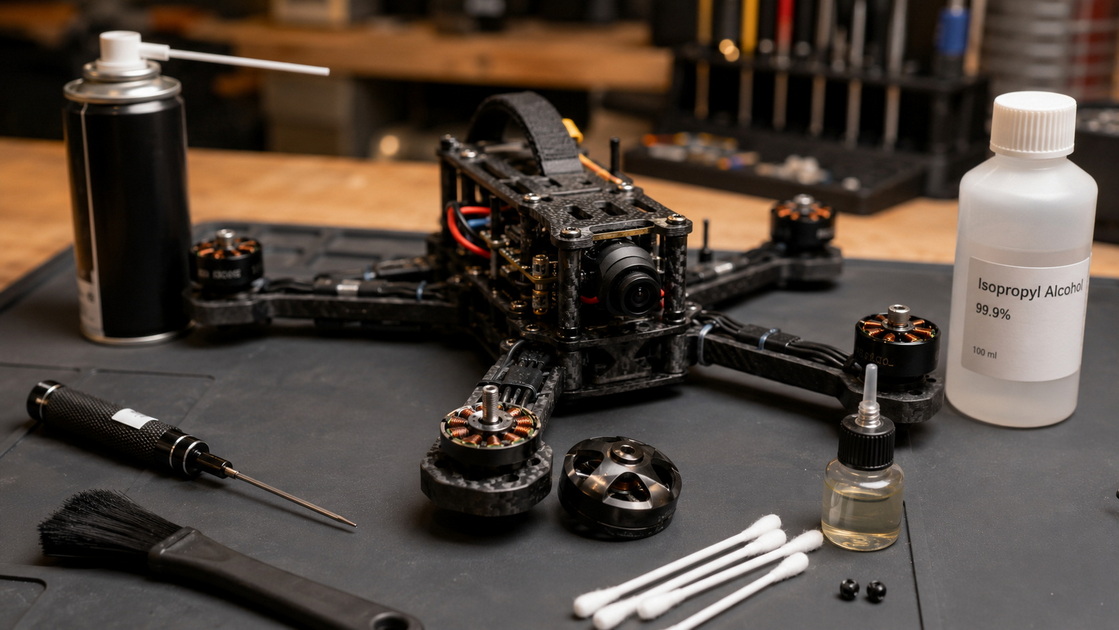
You don't need a workshop to maintain your FPV rig; a compact field kit is enough. At minimum, we recommend keeping the following in your backpack: [mepsking]
- Soft brushes (small paintbrush or makeup brush) for frame and motor bell cleaning. [getfpv]
- Compressed air for blowing debris out of tight areas and motor gaps. [youtube]
- Isopropyl alcohol (90–99% IPA) for electronics‑safe cleaning of motors, PCBs, and camera lens. [mepsking]
- Microfiber cloth and cotton buds for lenses, carbon arms, and hard‑to‑reach spots.
- Bearing‑safe oil for a tiny drop on worn bearings after deep cleaning. [robocraze]
- Hex drivers, screwdrivers, and tweezers for removing bells, frame plates, and stubborn debris. [mepsking]
Having this kit ready means you can fix most minor issues between packs instead of ending a day early due to a noisy motor or a dirty lens.
Before cleaning, always:
1. Remove the LiPo battery and keep it away from your work area. [getfpv]
2. Take off the props—never arm or test motors with props mounted on the bench. [youtube]
3. Work in a dry, well‑lit area, away from sand and direct moisture.
This sounds basic, but many burned ESCs and sliced fingers start with skipping these three steps.
Start with the easiest win:
- Use short bursts of compressed air to blow loose dirt off the frame, motors, ESCs, and VTX heatsinks. [getfpv]
- Wipe the arms, top plate, and battery pad with a microfiber cloth slightly dampened with IPA. [mepsking]
Avoid holding compressed air too close or spraying continuously to prevent condensation forming on cold components. [youtube]
Carefully check structural parts; many mid‑air failures start from minor frame damage:
- Look for cracks in carbon plates, twisted arms, worn battery straps, and bent aluminum standoffs.
- Use a dry soft brush to remove stuck dust, then IPA on stubborn grime. [getfpv]
- Tighten any loose screws and consider thread locker on screws that frequently back out.
If a carbon plate is badly cracked or delaminated, replace it—even if it "still flies"—because impact loads can transfer directly into your electronics on the next crash.
From a motor manufacturer's perspective, motors deserve their own maintenance workflow, because they are high‑RPM, high‑precision components. [ligpower]
Before disassembly, do a quick condition check:
- Free spin: Rotate each bell by hand and compare resistance across motors; any that feel rough or tight need attention. [robocraze]
- Axial and radial play: Gently wiggle the bell; excessive play compared to a new motor indicates bearing wear.
- Noise and heat in flight: Noisy motors that run noticeably hotter than others are early warning signs. [robocraze]
For light dust and grass:
- Blow through the motor from different angles with compressed air. [youtube]
- Use blue tack or similar putty to remove magnetic particles stuck to the magnets inside the bell. [reddit]
Avoid metal brushes or hard tools inside the motor; you don't want to scratch windings or magnets.
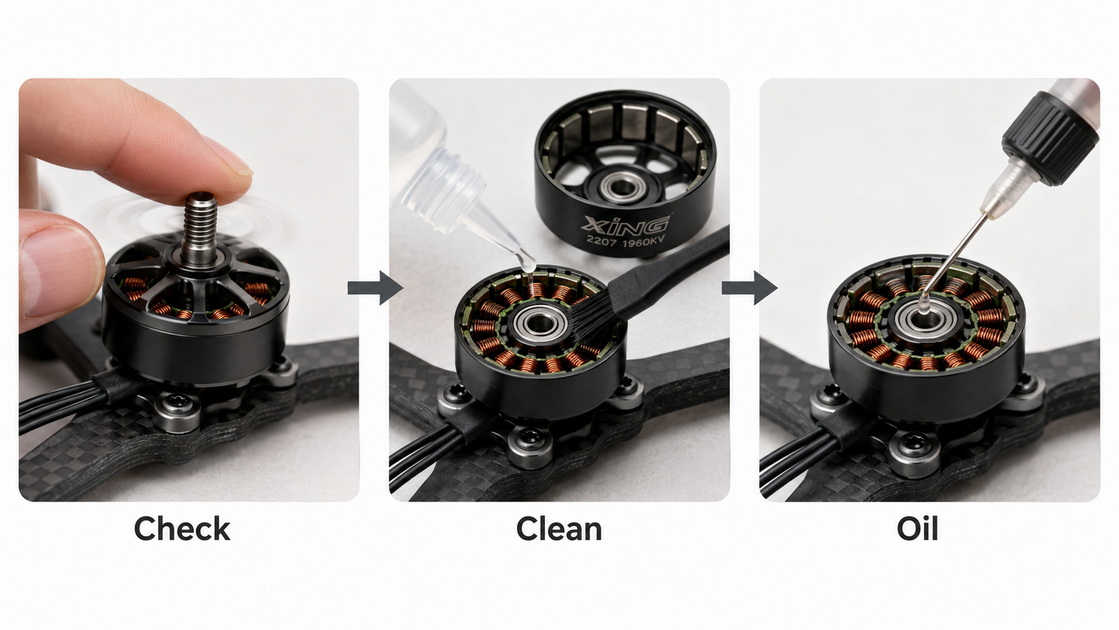
If the motor feels gritty, has visible mud, or you flew through wet grass or dirty water, do a deeper clean: [youtube]
1. Remove props and motor screws from the arm.
2. Remove the bell retention (screw or C‑clip, depending on motor design). [mepsking]
3. Carefully pull off the motor bell and inspect:
- Windings for dark spots, burnt smell, or damaged enamel.
- Magnets for chips, cracks, or loose glue.
- Bearings for rust or contamination. [mepsking]
4. Clean stator and bell with IPA (90%+), using a soft brush and tweezers for trapped debris. [mepsking]
5. Let everything dry fully, then add one small drop of bearing oil to each bearing—too much oil just attracts more dirt. [robocraze]
6. Reassemble the motor, tighten screws with appropriate torque, and check smooth rotation by hand before re‑mounting.
As a manufacturer, we recommend replacing bearings if you still feel grinding after cleaning. Bearings are cheaper than lost quads.
Not all "water events" are equal. The risk depends heavily on what kind of water your drone met.
If the drone crashes in fresh water or wet grass:
- Immediately disconnect the battery.
- Rinse off mud with fresh water only if the drone is already wet and muddy (to remove particles). [youtube]
- Then soak motors (not the entire drone) in IPA to displace water and accelerate drying. [mepsking]
- Dry thoroughly with compressed air and leave in a warm, dry place for 24 hours before powering on. [youtube]
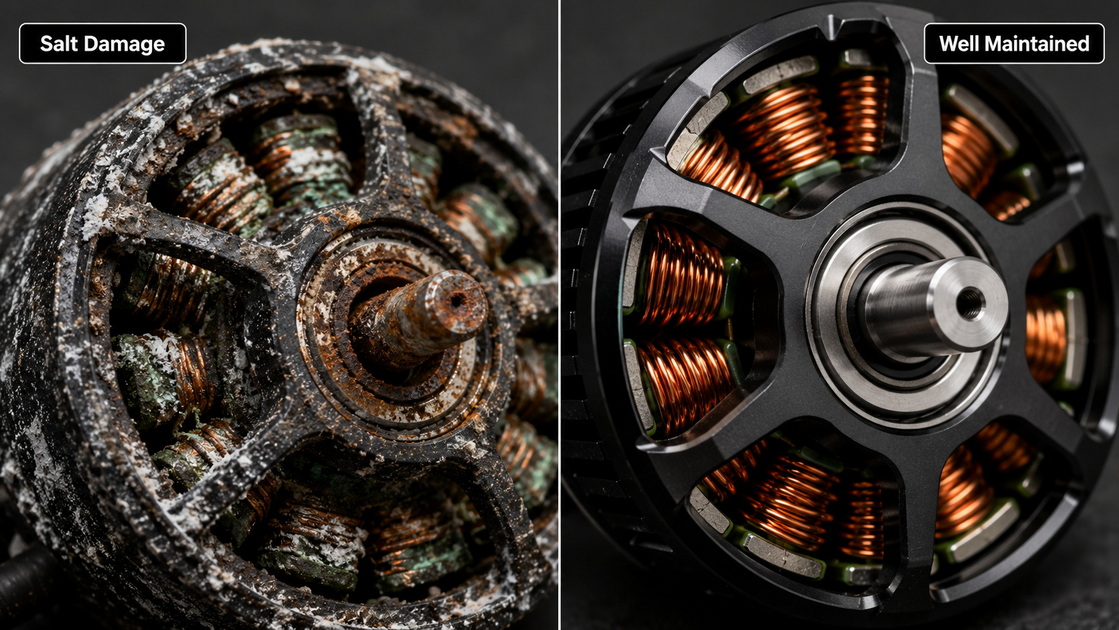
Salt is extremely corrosive to motor windings, bearings, and connectors. If your rig touches seawater or heavy salt spray: [mepsking]
1. Rinse motors immediately with fresh water to remove salt.
2. Follow with a 3–5 minute soak in high‑purity IPA. [mepsking]
3. Blow dry and disassemble motors for detailed cleaning as described above.
4. Inspect and oil bearings; replace if there is any doubt about smoothness. [robocraze]
Even with quick reaction, some motors will not fully recover after salt exposure—that's normal. In those cases, upgrading to newer, sealed or better‑coated motors is often the safest route.
Clean motors won't help if your power source is unreliable. Over time, LiPo packs age, internal resistance rises, and voltage sags faster under load. [getfpv]
Key checks:
- Age and cycle count: Keep older packs for practice and newer ones for racing or important shoots.
- Cell balance: Use your charger or meter; frequently unbalanced packs should be retired.
- Internal resistance (IR): Rising IR means more heat and less usable capacity; replace packs when IR becomes significantly higher than when new. [getfpv]
- Physical condition: Never fly swollen packs or ones with damaged heat‑shrink, connectors, or balance leads.
Even minor chips or bends can introduce vibrations that stress motors and destabilize PID tuning. [robocraze]
- Clean props with IPA, especially after grass and mud.
- Inspect hubs for micro‑cracks and blades for warping.
- Replace any prop that looks suspect; they are cheaper than motors and cameras.
A blurry or dirty feed can make you misjudge gaps and proximity.
- Use a cotton bud slightly moistened with a 1:1 mix of water and IPA to clean the lens.
- Blow off any cotton fibers afterward.
Clean, sharp video reduces pilot fatigue and improves precision.
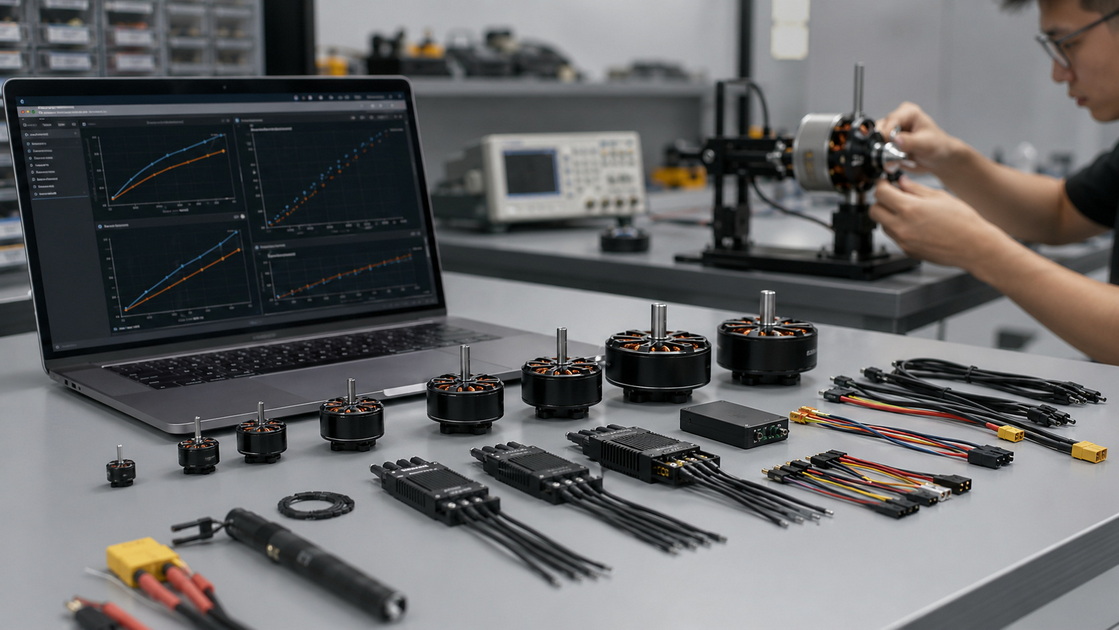
As a brushless motor and power system manufacturer serving FPV drones, RC cars, gimbals, and robotics, we design motors to tolerate real‑world abuse—but they still benefit from proper care. Based on our R&D and customer feedback, we optimize: [ligpower]
- Stator and magnet design for higher torque and efficiency at FPV‑relevant RPMs. [youtube]
- Bearing selection to balance smoothness, life, and weight for racing vs. long‑range setups. [ligpower]
- Coatings and adhesives that better resist vibration, temperature cycles, and moderate moisture.
When you maintain your motors well—regardless of brand—you allow these engineering optimizations to actually deliver their full performance over time.
If, after thorough cleaning and fresh bearings, the motor still feels rough, runs noticeably hotter than others, or shows burned windings or chipped magnets, replacement is safer than continued use. [robocraze]
Direct water cleaning is risky for electronics, but in emergency mud or salt cases, brief rinsing followed by IPA and complete drying can be effective. Never power on the quad until it is fully dry. [youtube]
Yes. Hard brushes can scratch the enamel on copper windings or chip magnets, leading to shorts and reduced torque. Always use soft brushes and avoid scraping the windings. [youtube]
Only when you notice mild roughness or noise, and only a tiny drop each time. Over‑oiling attracts dust and can make things worse. For heavily worn bearings, replacement is better than constant lubrication. [robocraze]
Both. Clean motors and props reduce vibration, improve gyro data, and allow tighter PID tuning, which translates into smoother footage, better control authority, and more consistent lap times. [robocraze]
1. Mepsking. "How to Clean Drone Motors: Step by Step Guide."
<https://www.mepsking.shop/blog/how-to-clean-fpv-bldc-motors.html> [mepsking]
2. GetFPV. "FPV Drone Maintenance and Cleaning Guide."
<https://www.getfpv.com/learn/fpv-essentials/fpv-drone-maintenance-and-cleaning-guide/> [getfpv]
3. Robocraze. "Drone Motor Maintenance: Tips to Keep Your Motors Running."
<https://robocraze.com/blogs/post/drone-motor-maintenance-tips-to-keep-your-motors-running> [robocraze]
4. FPV Know It All / YouTube. "How To Clean Quadcopter Motors."
<https://www.youtube.com/watch?v=CTa1S4G_0GA> [youtube]
5. Reddit r/fpv. "Best way to clean motors."
<https://www.reddit.com/r/fpv/comments/18k1dt6/best_way_to_clean_motors/> [reddit]
6. Drone motor specification discussion (example of performance parameters).
<https://www.ligpower.com/blog/drone-motor-specifications-and-parameters.html> [ligpower]


