Language


Views: 201 Author: Yuhang Power Publish Time: 2026-08-15 Origin: Site
Content Menu
● Why an FPV Drone Costs More Than the Drone Alone
● Consumer FPV Drones vs Custom FPV Drones
>> FPV Goggles
>> Batteries and Charging Equipment
● What Does a 5 Inch FPV Drone Cost?
● The Role of FPV Motors in Total Cost
● Ready To Fly vs Build Your Own FPV Drone
● Hidden FPV Drone Costs New Pilots Miss
>> Crash Parts
>> Batteries
>> Damage From Incorrect Configuration
● A Practical Budget Plan for Beginners
>> Under $200: Learn Control First
>> $500 to $800: Practical Analog Outdoor Setup
>> $1,000 to $1,500: Digital HD FPV Setup
● How to Avoid Spending Too Much on Your First FPV System
● How Zhongshan Yuhang Power Technology Supports FPV Power Systems
>> 1. How Much Does a Complete FPV Drone Setup Cost?
>> 2. Is It Cheaper To Build or Buy an FPV Drone?
>> 3. How Many Batteries Do I Need for FPV Flying?
>> 4. Why Do FPV Motors Matter So Much?
>> 5. Can I Start FPV With Only a Drone?
An FPV drone cost is not limited to the price of the aircraft. A complete system includes the drone, brushless motors, flight controller, ESC, video system, goggles, radio transmitter, batteries, charger, tools, spare parts, and safety equipment.
For a first-time pilot, a basic learning setup can begin below $200. A complete outdoor FPV system usually costs $500 to $1,400 or more, depending on whether you choose analog or digital video, a ready-to-fly drone or a custom build, and the level of durability and performance you need.
The most important decision is not buying the lowest-priced drone. It is choosing a compatible system that matches your flying environment, repair ability, safety needs, and long-term goals.
A small indoor FPV setup can cost $150 to $300. A practical analog outdoor setup often costs $500 to $800. A digital HD FPV system with quality radio gear, batteries, charging equipment, and spare parts can cost $1,000 to $1,500 or more.
| FPV Setup Type | Typical Total Budget | Best For | Main Consideration |
|---|---|---|---|
| Simulator And Radio | $80 to $180 | Complete beginners | No real drone included |
| Tiny Whoop Setup | $180 to $450 | Indoor practice and early skill building | Limited outdoor performance |
| Analog 5 Inch Setup | $500 to $850 | Freestyle and outdoor learning | Lower video image quality |
| Digital 5 Inch Setup | $900 to $1,500 | HD FPV, freestyle, cinematic flight | Higher initial investment |
| Long Range FPV Setup | $1,100 to $2,000 or more | Exploration and extended flight missions | Requires careful configuration and safety planning |
| Professional Cinematic FPV Setup | $1,500 to $3,000 or more | Commercial production and camera work | Includes more advanced equipment and operating requirements |
These ranges are planning estimates. Actual costs change based on local pricing, component availability, shipping, taxes, batteries, video-system choice, spare parts, and equipment specifications.
A ready-to-fly drone may appear affordable until the buyer adds the equipment required to operate it safely.
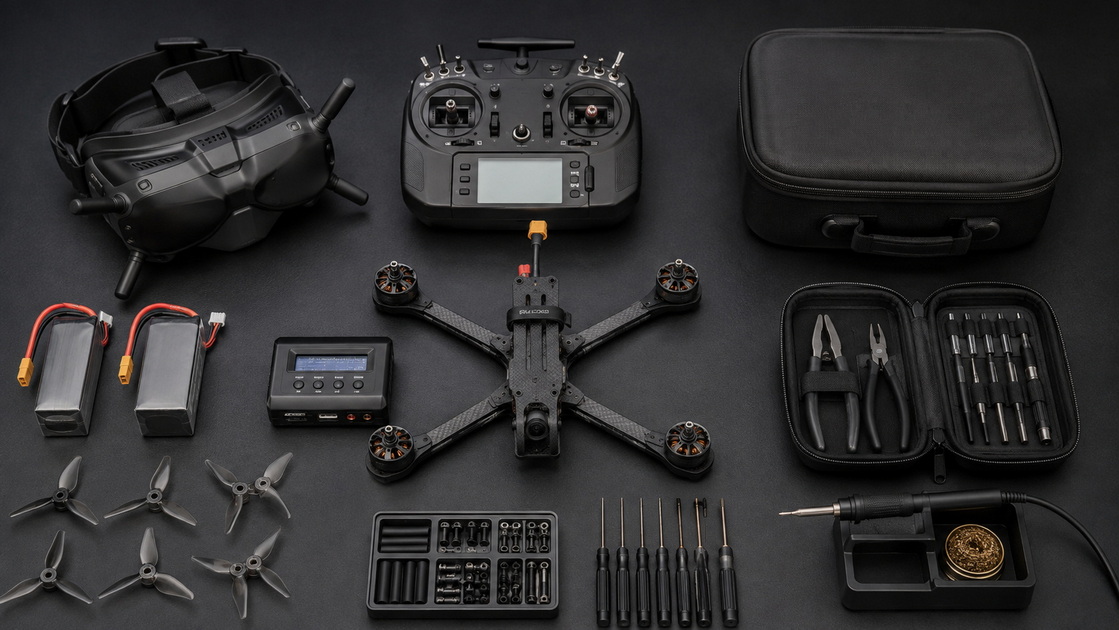
A complete FPV ecosystem usually includes:
- FPV drone
- Radio transmitter
- FPV goggles or monitor
- Batteries
- Balance charger
- Battery safety equipment
- Spare propellers
- Basic tools
- Carrying case or storage
- Replacement parts
- Simulator software for training
New pilots should budget for the complete system before purchasing a drone body. This avoids a common problem: buying a high-performance aircraft without a compatible radio, goggles, batteries, charger, or repair tools.
There are two common routes into FPV flying.
Consumer FPV drones are integrated products. They are usually supplied as a matched system with an aircraft, goggles, controller, camera, and selected safety features.
Typical characteristics include:
- Faster first-flight experience
- Integrated video system
- Straightforward initial setup
- GPS-based functions on selected models
- High image quality on selected systems
- Higher replacement and repair cost
- Less flexibility for component upgrades
- Limited customization for motors, props, ESCs, and frame geometry
A consumer FPV package can suit pilots who want a simpler entry process and prefer a manufacturer-designed ecosystem.
The main limitation is repairability. A hard crash may require specialized service, proprietary parts, or a larger replacement expense.
Custom FPV drones use individual components selected around a specific purpose. A pilot can build the drone or purchase a pre-built model using modular parts.
Typical advantages include:
- Modular repairability
- Wide component selection
- Flexible motor and propeller choices
- Adjustable performance
- Frame replacement after a crash
- Ability to reuse electronics across different builds
- Better long-term learning value
- Easier access to replacement parts
A custom drone requires more technical knowledge. However, replacing a damaged motor, ESC, arm, propeller, antenna, or camera individually can reduce long-term ownership cost.
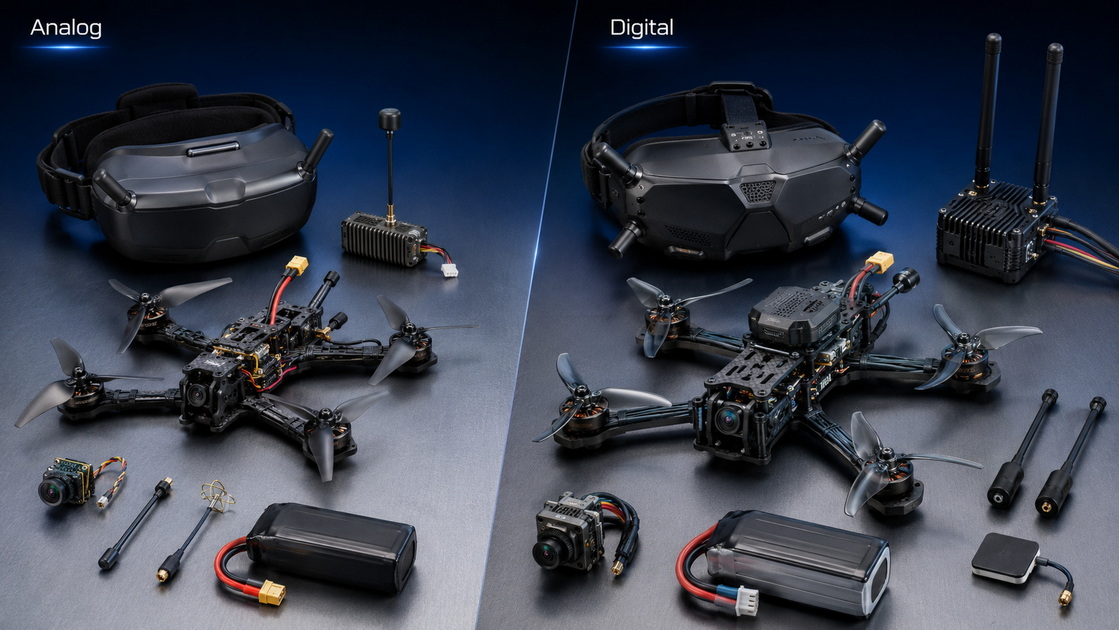
FPV goggles are often one of the largest single investments in an FPV system.
| Video System | Typical Cost | Image Quality | Best Use |
|---|---|---|---|
| Analog Goggles | $100 to $350 | Standard definition | Budget learning and freestyle practice |
| Entry Digital Goggles | $300 to $500 | Improved digital image | Pilots entering HD FPV |
| Premium Digital Goggles | $450 to $800 or more | High-definition image | Cinematic work, detailed outdoor flying, long-term use |
Analog video remains practical for beginners because equipment cost is lower and replacement parts are widely available.
Digital systems offer a clearer image, which can help pilots identify branches, wires, gates, and landing areas. The trade-off is higher cost and system-compatibility requirements.
Before purchasing goggles, confirm that they work with the selected video transmitter and camera system.
The radio transmitter is the primary flight-control link. It should be comfortable, reliable, and compatible with the receiver installed in the drone.
| Radio Type | Typical Cost | Suitable For |
|---|---|---|
| Compact Entry Radio | $60 to $100 | Simulator training and travel |
| Standard Radio | $120 to $250 | Regular FPV flying and precision control |
| Premium Radio | $250 to $500 or more | Advanced users, specialty configurations, long-term professional use |
Many FPV pilots choose radios based on the ExpressLRS protocol because it is widely supported and suitable for reliable control links. Compatibility should always be confirmed before purchase.
The radio is often a smart place to invest early. A quality transmitter can be used with simulators and multiple future aircraft.
FPV drones use high-discharge battery packs. Battery cost is often underestimated because one pack provides only a short flight session.
A practical field session may require four to eight batteries, depending on drone type and available charging time.
Typical cost areas include:
- Battery packs: $20 to $45 or more each
- Smart balance charger: $50 to $200 or more
- Power supply: $30 to $120
- Parallel charging board or accessories: $20 to $60
- Battery checker: $10 to $30
- Fire-resistant charging and storage equipment: $20 to $80
Battery safety should be part of the initial budget. Use a suitable balance charger, confirm cell count and charge settings, inspect packs for damage, and never leave batteries unattended while charging.
Custom FPV systems are repairable only when the pilot has basic tools.
A practical starter toolkit may include:
- Temperature-controlled soldering iron
- Solder and flux
- Hex drivers
- Wire cutters
- Tweezers
- Multimeter
- Heat-shrink tubing
- Zip ties
- Electrical tape
- Spare motor screws
- Battery straps
- Smoke stopper
- Propeller wrench or driver
A basic repair kit can cost $80 to $200. This investment can reduce downtime and help prevent small electrical problems from becoming major component failures.
A 5 inch FPV drone is one of the most common outdoor freestyle formats. It can provide speed, agility, camera-carrying capacity, and a broad range of component options.
| Component | Budget Analog Build | Mid Range Digital Build | Premium Cinematic Build |
|---|---|---|---|
| Carbon Fiber Frame | $30 to $50 | $50 to $90 | $90 to $140 or more |
| Brushless Motors Set | $50 to $85 | $80 to $130 | $120 to $200 or more |
| Flight Controller And ESC | $60 to $100 | $90 to $160 | $140 to $220 or more |
| Video System | $35 to $70 | $150 to $250 | $220 to $350 or more |
| Receiver | $15 to $30 | $15 to $35 | $20 to $45 |
| GPS Or GNSS Module | Optional | $20 to $45 | $35 to $70 |
| Propellers And Small Parts | $15 to $35 | $20 to $40 | $30 to $60 |
| Estimated Drone Cost | $220 to $370 | $425 to $750 | $655 to $1,085 or more |
The drone cost is only part of the budget. Add compatible goggles, radio transmitter, batteries, charger, tools, and spare parts to calculate the real ownership cost.
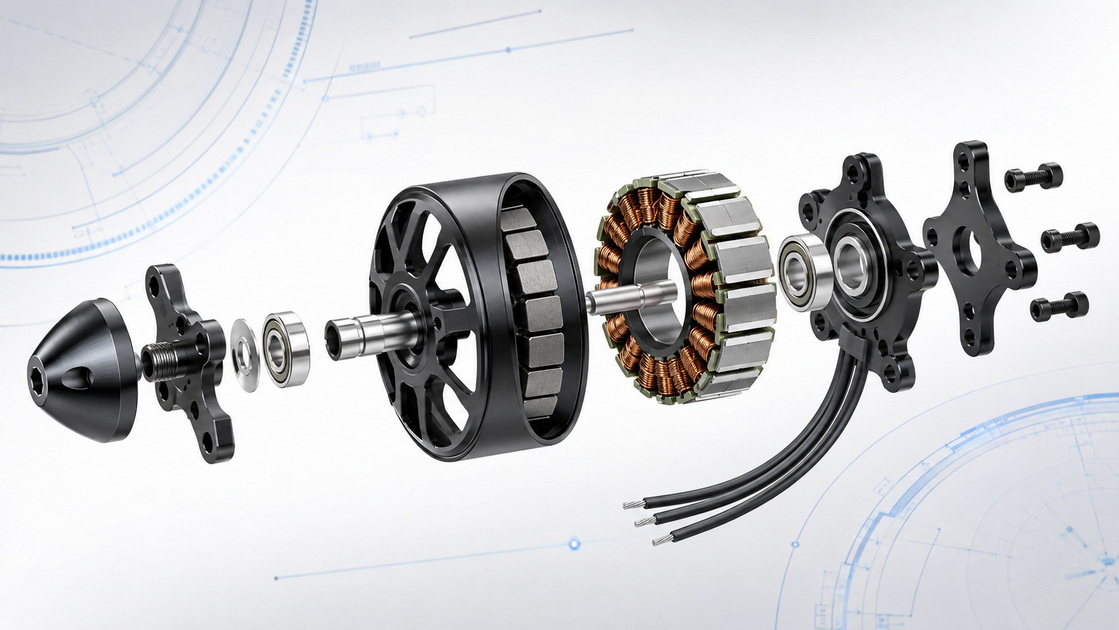
FPV motors are not only a replacement expense. They influence flight feel, battery efficiency, durability, maintenance needs, and the overall operating cost of a drone.
For a 5 inch freestyle build, motor selection is usually based on stator size, KV rating, battery voltage, propeller type, aircraft weight, and intended flight style.
Important motor considerations include:
- Stator Size: Affects torque, weight, and heat management.
- KV Rating: Helps define the relationship between battery voltage, propeller load, and target RPM.
- Bearing Quality: Influences smoothness, noise, and long-term durability.
- Bell Strength: Important for crash resistance.
- Magnet Quality: Affects torque consistency and motor efficiency.
- Winding Quality: Influences electrical performance and heat behavior.
- Shaft Design: Affects propeller retention and impact resistance.
- Dynamic Balance: Helps reduce vibration and protect flight electronics.
A very cheap motor can reduce the first purchase cost. However, inconsistent bearings, poor bell balance, weak magnets, or uneven winding quality can create vibration, excess heat, difficult tuning, shorter flight time, and more frequent replacement.
For brands and equipment developers, motor consistency is often more valuable than a single high-thrust number. Consistent KV, winding resistance, bearing quality, balance, and magnet adhesion help create reliable performance across production batches.
| Option | Upfront Cost | Setup Time | Repair Learning | Customization | Long Term Flexibility |
|---|---|---|---|---|---|
| Ready To Fly FPV Drone | Usually higher | Low | Moderate | Limited | Moderate |
| Build Your Own FPV Drone | Can be lower for components | Higher | High | Extensive | High |
| Bind And Fly FPV Drone | Moderate | Low to moderate | Moderate | Moderate | High |
| Tiny Whoop Kit | Lower | Very low | Basic | Limited to moderate | Moderate |
A ready-to-fly drone can reduce setup time. It suits pilots who want to fly quickly and prefer a factory-built system.
A build-your-own FPV drone offers stronger technical learning. It helps pilots understand the power system, receiver wiring, motor direction, flight-controller configuration, and repair process.
A bind-and-fly drone provides a practical middle option. It arrives assembled but still uses modular components that can be repaired or upgraded.
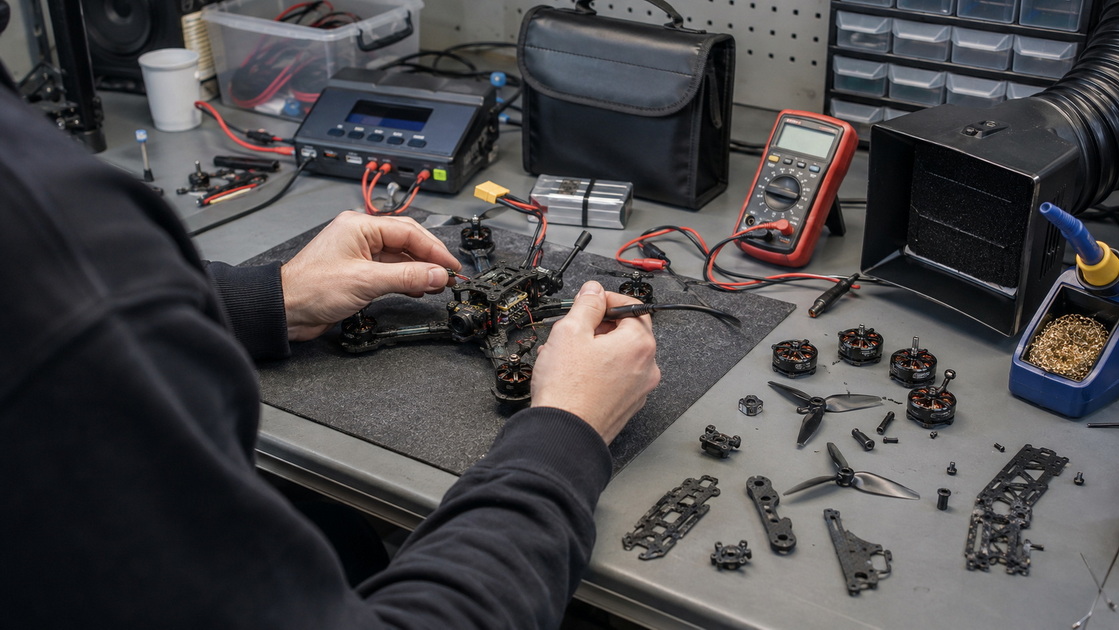
The first drone price is rarely the final cost.
Crashes are part of FPV learning. Plan for:
- Propellers
- Motors
- Motor bells
- Arms or frame plates
- Antennas
- Cameras
- Video transmitters
- Battery straps
- Screws
- Landing pads
- Capacitors
- Solder and wire
A beginner should keep a small spare-parts kit before the first outdoor session.
Many new pilots buy one or two batteries and discover that their flight session ends quickly.
A larger set of correctly matched packs improves practice time and reduces waiting between flights.
For international component orders, consider:
- Freight charges
- Battery-shipping restrictions
- Import duty
- Local tax
- Brokerage fees
- Delivery delays
- Warranty return costs
Battery shipping can be more complex than shipping motors, frames, or electronics. Plan purchases early rather than ordering urgently before a trip or product launch.
A component can fail because of incorrect setup rather than poor manufacturing.
Common causes include:
- Wrong motor direction
- Incorrect propeller installation
- Incorrect battery voltage
- Unmatched motor KV and battery configuration
- Insufficient ESC current rating
- Poor solder joints
- Incorrect receiver wiring
- Missing capacitor
- Loose motor screws contacting windings
- Overly aggressive propeller selection
Using a smoke stopper during the first power-on can help reduce the risk of major damage from wiring mistakes.
A low-cost entry path can include:
- Compact radio transmitter
- FPV simulator
- Basic practice accessories
- Optional indoor micro drone
This approach lets new pilots learn stick control, throttle discipline, orientation, and recovery habits before flying a faster outdoor quadcopter.
A typical analog setup may include:
- Analog 5 inch bind-and-fly or custom drone
- Basic analog goggles
- Standard ExpressLRS-compatible radio
- Four to six batteries
- Balance charger
- Propellers and basic tools
This can be a practical path for pilots who want outdoor freestyle performance while keeping the total investment controlled.
A digital setup may include:
- Digital 5 inch FPV drone
- Compatible digital goggles
- Standard radio transmitter
- Batteries and charger
- Repair toolkit
- Spare propellers and replacement parts
- Optional GPS or GNSS module
This route suits pilots who value clearer image transmission, improved obstacle visibility, cinematic-footage potential, and a system that can support future upgrades.
Use these steps before placing an order:
1. Choose one flight purpose. Start with indoor practice, freestyle, racing, cinematic flying, or long-range exploration. Do not try to build one drone for every mission.
2. Select the radio protocol first. Confirm the transmitter and receiver ecosystem before buying a drone.
3. Choose the video system second. Verify that goggles, camera, and video transmitter are compatible.
4. Match the battery system. Confirm whether the drone is designed for 1S, 2S, 4S, 6S, or another configuration.
5. Check motor and propeller compatibility. Do not select KV based only on a high number.
6. Budget for six flight packs. More practice time often provides greater value than a small upgrade to one component.
7. Buy basic tools before your first crash. A simple toolkit avoids unnecessary downtime.
8. Keep a repair reserve. Set aside 10% to 20% of the initial drone cost for props, hardware, and minor repairs.
9. Use a simulator before outdoor flying. This can reduce expensive early crashes.
10. Avoid incompatible bargain components. A lower price is not a saving if the part cannot be integrated safely.
Before flying, check current requirements in your country and the rules that apply to your location, aircraft weight, and flying purpose.
In the United States, recreational pilots must complete the required recreational safety test and carry proof. Recreational aircraft at or above the applicable weight threshold generally require registration. Commercial drone operations require the appropriate remote-pilot certification.
Safe FPV operation also requires:
- Flying in a suitable location
- Keeping people and animals away from propellers
- Inspecting props and motor screws before flight
- Using an observer when required
- Checking local airspace rules
- Charging batteries on a non-flammable surface
- Inspecting LiPo packs for swelling or damage
- Storing batteries safely when not in use
- Disconnecting batteries before working on the aircraft
A powerful FPV drone can generate significant thrust within seconds. Treat every armed aircraft as a serious machine.
Zhongshan Yuhang Power Technology Co., Ltd. develops, manufactures, and supplies brushless motors and power-system solutions for FPV drones, multirotors, RC vehicles, high-speed fans, gimbals, aircraft, sweeping robots, underwater robots, and other professional equipment.
For FPV brands, equipment developers, and OEM buyers, the company can support customized brushless motor projects based on target thrust, KV rating, stator size, mounting pattern, voltage range, propeller size, weight target, operating environment, and durability requirements.
A practical motor-development process should include specification review, prototype evaluation, performance testing, vibration inspection, temperature monitoring, sample approval, and batch-consistency control.
A well-matched brushless motor system can improve efficiency, throttle response, reliability, and product differentiation across FPV and professional equipment platforms.
The real cost of an FPV drone is the cost of building a reliable flying system, not simply the price of one quadcopter.
A beginner can start with a simulator and radio, then move to an indoor tiny whoop or an analog outdoor setup. A more experienced pilot may choose a digital 5 inch drone, a long-range configuration, or a specialized cinematic platform.
Choose equipment based on the type of flying you want to do most often. Invest in reliable radio gear, safe charging equipment, compatible batteries, and a small repair kit. Then select a drone and motor system that can be maintained, repaired, and improved as your skills grow.
For FPV brands and equipment developers, prepare a detailed power-system brief. Define thrust targets, voltage, propeller size, flight profile, expected operating conditions, test requirements, and production quantity. Zhongshan Yuhang Power Technology can support customized brushless motor and OEM or ODM power-system projects built around those requirements.
A basic indoor or simulator-based entry setup may cost $150 to $300. A practical analog outdoor system often costs $500 to $800. A digital HD FPV system with goggles, radio, batteries, charger, tools, and spare parts often costs $1,000 to $1,500 or more.
Buying a ready-to-fly or bind-and-fly drone saves setup time. Building can improve long-term value because pilots learn how to repair and replace individual components. The lower-cost option depends on whether you value immediate use or repair knowledge and customization.
Four to six batteries are a practical starting point for many pilots. Six to eight packs can provide a more productive outdoor session, depending on flight time, charging availability, and battery capacity.
Motors affect thrust, throttle response, flight efficiency, heat, vibration, durability, and crash performance. Correct motor size and KV selection help the drone work safely with the chosen battery, propellers, ESC, and frame.
No. You normally also need a compatible radio transmitter, goggles or monitor, batteries, charger, safety equipment, and basic repair tools. A simulator is also highly recommended for beginners.
1. [YRDrone — How Much Does an FPV Drone Cost in 2026?]
2. [Federal Aviation Administration — Recreational Flyers]
3. [Federal Aviation Administration — How to Register Your Drone]
4. [Federal Aviation Administration — Become a Certificated Remote Pilot]


