Language


Views: 212 Author: Yuhang Power Publish Time: 2026-08-19 Origin: Site
Content Menu
● Why Source Fixed Wing Motors for France?
● How to Evaluate a Fixed Wing Motor Supplier
>> Factory and Production Capability
>> Research and Development Capability
● Top Fixed Wing Motor Manufacturers and Suppliers Serving France
>> Zhongshan Yuhang Power Technology Co., Ltd.
>>> Core Strengths
>> SERMAT
>>> Core Strengths
>>> Core Strengths
>>> Core Strengths
>> Crouzet
>>> Core Strengths
>>> Core Strengths
● Fixed Wing Motor Supplier Comparison
● Key Technical Requirements for Fixed Wing Motors
>> Magnets
>> Bearings
>> Shaft and Propeller Interface
>> Materials Changed After Sample Approval
>> Inconsistent KV Between Batches
>> Unclear Certification Scope
>> Choosing by Maximum Static Thrust Only
● An Important Testing Insight
>> Define the Aircraft Requirement
>> Request a Complete Technical Package
>> Conduct a Structured Sample Evaluation
>> 1. How can I verify whether a supplier's ISO certificate has expired?
>> 2. Is CE marking enough for a fixed-wing UAV motor sold in France?
>> 3. What information should be included in a fixed-wing motor test report?
>> 4. What is a reasonable MOQ for customized fixed wing motors?
>> 5. Should I source the motor, ESC, and propeller from the same supplier?
France is an important European market for fixed-wing UAVs, electric aviation projects, long-endurance surveillance platforms, mapping aircraft, industrial inspection drones, and defense-related systems. For professional buyers, selecting a fixed wing motor supplier requires more than comparing catalogue prices, KV values, or claimed thrust figures.
The most suitable supplier is the one that can consistently support your aircraft's real operating conditions. This includes thrust requirements, cruise efficiency, thermal behavior, vibration control, production consistency, documentation, component traceability, and delivery reliability.
French suppliers are particularly strong in aerospace-grade engineering, custom electromechanical design, propulsion integration, actuators, control systems, and technical support for demanding projects. Meanwhile, overseas brushless motor manufacturers can offer greater flexibility for OEM development, lower production costs, shorter iteration cycles, and more accessible minimum order quantities.
For procurement teams, the most practical approach is often to select suppliers based on the complexity, volume, and compliance requirements of each project rather than choosing based on location alone.
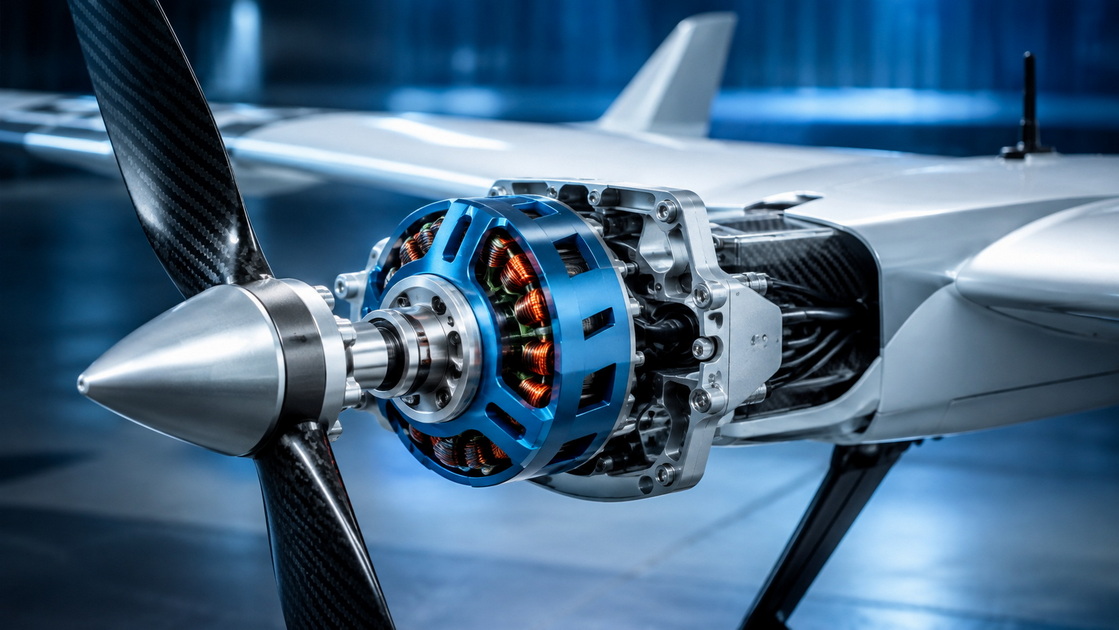
France has a mature aerospace and aviation supply chain, supported by established aircraft manufacturers, aerospace engineering companies, drone developers, defense contractors, research institutions, and industrial automation specialists.
The country is especially relevant for projects involving:
- Long-endurance fixed-wing UAVs
- Industrial inspection and surveying aircraft
- Mapping and agricultural drone platforms
- Surveillance and security UAVs
- Electric and hybrid-electric aviation systems
- Specialized aerospace actuation and motion-control systems
- High-reliability propulsion and power-management projects
French manufacturers often provide strong engineering support for lower-volume, technically complex, or highly customized applications. They may be especially suitable for projects that require detailed drawings, controlled documentation, traceability, prototype testing, and integration with broader aircraft systems.
However, buyers sourcing small and medium brushless outrunner motors for RC aircraft, commercial UAVs, VTOL platforms, FPV aircraft, robotics, or export brands may also benefit from working with specialized Asian manufacturers. These suppliers often offer more flexible OEM/ODM options, faster customization cycles, competitive costs, and more suitable production models for growing brands.
Before selecting a supplier, professional buyers should assess the company's manufacturing controls, engineering competence, commercial flexibility, and ability to support long-term production.
A qualified motor supplier should have clear control over its production process, including:
- Incoming material inspection
- Stator lamination preparation
- Copper winding
- Rotor and magnet assembly
- Bearing installation
- Shaft machining or shaft assembly
- Dynamic balancing
- Electrical testing
- Final inspection
- Batch labeling and traceability
- Export packaging
Buyers should confirm whether the company is a real manufacturer, an assembly workshop, a trading company, or a combination of these models. The answer affects quality control, engineering response speed, cost structure, and the supplier's ability to manage customized designs.
For fixed-wing applications, suppliers should be able to discuss more than standard motor dimensions. They should understand the relationship between:
- Stator size and torque output
- KV value and propeller selection
- Battery voltage and current draw
- Winding turns and operating efficiency
- Magnet grade and thermal stability
- Motor weight and aircraft endurance
- Shaft design and propeller mounting
- Cooling airflow and motor temperature
- ESC timing and motor performance
- Cruise efficiency versus maximum static thrust
A supplier with real engineering capability should be able to recommend a motor configuration based on aircraft weight, propeller diameter, battery specification, expected cruise speed, required endurance, and target thrust-to-weight ratio.
A fixed wing motor supplier should have a documented inspection process covering both electrical and mechanical performance.
Typical inspection items include:
- KV test
- No-load current test
- Phase resistance test
- Rotor runout inspection
- Shaft concentricity inspection
- Bearing noise inspection
- Dynamic balancing test
- Motor weight check
- Cable length and connector inspection
- Cosmetic inspection
- Packaging inspection
For long-endurance UAV platforms, buyers should also request sustained-load thermal testing rather than relying only on brief full-throttle bench-test data.
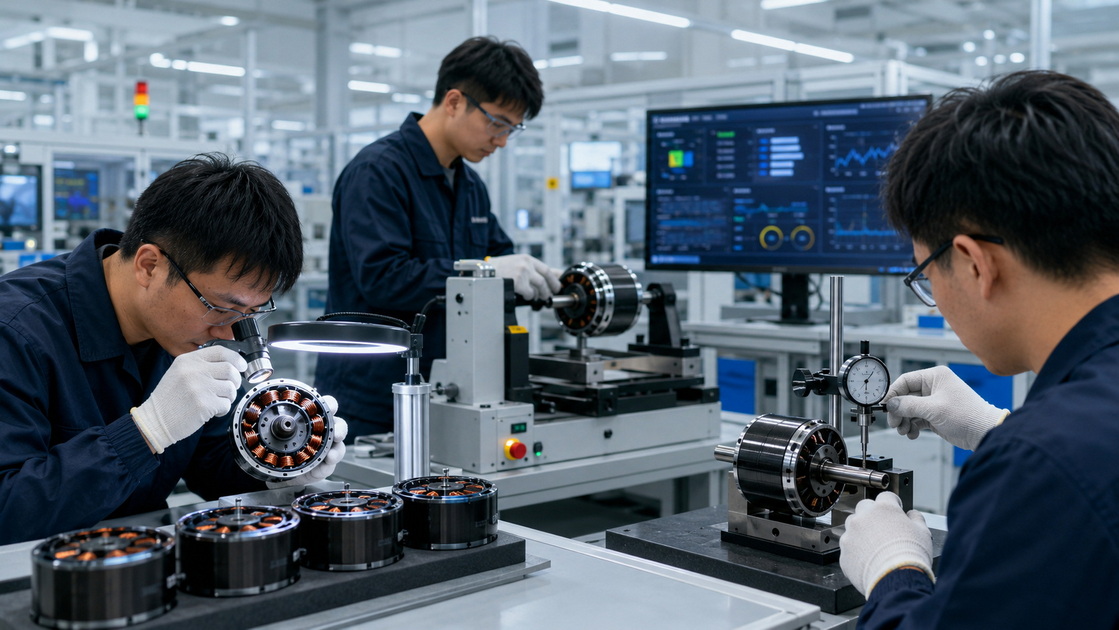
A motor supplier may provide a good first sample but still struggle with stable mass production. Buyers should ask about:
- Standard production lead time
- Sample lead time
- Annual production capacity
- Raw-material sourcing
- Safety stock for magnets, bearings, and copper wire
- Peak-season delivery capability
- Change-control procedures
- Production batch traceability
- Spare-parts availability
- Warranty and failure-analysis process
A stable supplier should notify customers in advance if there are planned changes to materials, bearings, magnets, winding wire, production locations, or major manufacturing processes.
Founded: 2021
Location: Zhongshan, Guangdong, China
Main Markets: Global OEM, ODM, UAV, RC aircraft, robotics, industrial equipment, and export-oriented brands
Main Products: Fixed wing motors, UAV motors, FPV motors, RC vehicle motors, gimbal motors, robot motors, and customized brushless motor systems
Zhongshan Yuhang Power Technology Co., Ltd. is a brushless motor manufacturer focused on product development, production, and customized power-system solutions. The company serves customers in UAV, fixed-wing aircraft, FPV, RC vehicles, gimbal cameras, robotic equipment, underwater robots, sweepers, industrial equipment, and other professional applications.
For buyers seeking a supplier with practical customization support, flexible communication, and a production model suitable for small and medium brands, Yuhang Power is a relevant option.
The company is particularly suited to projects requiring customized fixed wing motor designs, including adjustments to KV value, winding configuration, shaft length, mounting pattern, cable length, connectors, laser marking, branding, packaging, and performance matching.
Its value is not limited to supplying a standard motor from an existing catalogue. It is more suitable for buyers who need a responsive manufacturing partner during product development, prototype testing, pilot production, and regular-volume production.
- Flexible OEM and ODM support for brushless motor projects
- Suitable for small and medium-sized UAV and RC brands
- Custom KV, winding, shaft, mounting, cable, connector, and packaging options
- Support for fixed-wing UAV, FPV, robotic, gimbal, and industrial motor applications
- Faster engineering communication for iterative product development
- Practical production approach for export-oriented customers
- Suitable for private-label and customized-brand motor programs
- Fixed-wing UAVs
- RC airplanes
- VTOL aircraft
- Mapping and surveying drones
- Agricultural UAVs
- Industrial inspection drones
- FPV aircraft
- Robotic equipment
- Gimbal camera systems
- Underwater robots
- Customized brushless power systems
Yuhang Power can support customization in the following areas:
- Motor KV value
- Stator configuration
- Winding turns
- Motor shaft length and diameter
- Mounting hole pattern
- Cable length
- Connector type
- Motor color
- Laser logo
- Packaging design
- Brand labeling
- Propeller and battery matching support
- Customized motor performance requirements
For buyers developing a new fixed-wing platform, the recommended process is to provide aircraft weight, battery voltage, target thrust, propeller range, installation dimensions, target endurance, and estimated annual quantity. This enables the manufacturer to evaluate whether an existing motor can be adapted or whether a more specific customized configuration is required.
Established: More than 45 years of electromechanical engineering experience
Location: France
Main Markets: Aerospace, defense, UAV, industrial, transportation, and specialized equipment
Main Products: Brushless motors, electric actuators, cylinders, generators, control electronics, and custom electromechanical systems
SERMAT is a French engineering and manufacturing company specializing in custom electric motors, electromechanical systems, actuators, generators, and associated electronics. Its product range is relevant to aerospace, defense, UAV, industrial, and other high-reliability applications.
The company is particularly suitable for projects where a standard fixed wing motor is not enough. These may include applications with strict environmental requirements, specialized payload requirements, constrained installation space, extended operating duration, or unusual thermal conditions.
SERMAT's engineering approach considers the mission profile, aircraft type, payload, environmental conditions, torque, voltage, power, thermal limitations, and weight restrictions of a project.
- French engineering and manufacturing capability
- Strong focus on custom electromechanical solutions
- Suitable for UAV, aerospace, and defense-related projects
- Ability to develop specialized brushless motor systems
- Support for electric actuators and associated control electronics
- Suitable for lower-volume, technically demanding programs
- Engineering support for environmental and thermal constraints
- Long-endurance surveillance UAVs
- Border monitoring drones
- Defense-related UAV projects
- Industrial inspection aircraft
- Specialized electric actuators
- Custom propulsion and control systems
- Aerospace electromechanical programs
SERMAT is best suited for built-to-spec projects requiring engineering input. Its services may include custom motor design, actuator development, electrical integration, thermal analysis, mechanical adaptation, and system-level support.
Location: France with international operations
Main Markets: Commercial aviation, defense, electric aviation, hybrid-electric aircraft, aerospace OEMs, and advanced propulsion programs
Main Products: Aircraft electrical systems, electric motors, generators, batteries, electrical distribution systems, wiring, and power-management solutions
Safran Electrical & Power is a major aerospace electrical-systems organization. It is not a standard supplier of low-cost catalogue fixed wing motors for RC aircraft or small commercial drones. Instead, the company serves advanced aerospace programs requiring aircraft-grade electrical architecture, electric propulsion, power distribution, batteries, generators, wiring systems, and engineering support.
The company is relevant for large aerospace organizations, electric-aircraft developers, defense programs, and projects requiring advanced electrical-system integration.
Safran's strengths lie in system-level design, qualification support, power management, aircraft electrical systems, and electric or hybrid-electric propulsion.
- Aerospace electrical-system expertise
- Electric and hybrid-electric propulsion capability
- Large-scale engineering and production resources
- Aircraft electrical distribution and power-management solutions
- Support for qualification and production engineering
- International aerospace supply-chain experience
- Suitable for high-value, technically complex aircraft programs
- Electric aircraft
- Hybrid-electric aircraft
- Advanced fixed-wing UAVs
- Defense aviation platforms
- Aircraft power-distribution systems
- Electric propulsion integration
- Aerospace battery and energy-management systems
Safran Electrical & Power is most relevant for large, high-complexity, built-to-spec aerospace projects. Its offering focuses on integrated electrical and propulsion systems rather than standard small outrunner motors.
Founded: 1919
Location: Angoulême, France, with global operations
Main Markets: Industrial automation, HVAC, energy, mobility, industrial equipment, and electrification projects
Main Products: Electric motors, generators, drives, automation systems, and motion-control equipment
Nidec Leroy-Somer is a long-established electric-motor manufacturer with strong industrial and engineering capabilities. The company is more closely associated with industrial motors, generators, drives, and larger motion systems than with small fixed wing UAV brushless outrunner motors.
Nevertheless, it can be relevant for industrial drone infrastructure, heavy-duty robotic systems, UAV ground equipment, test benches, electric generators, and specialized higher-power motor applications.
- Long history in electric motor manufacturing
- Global manufacturing and engineering presence
- Industrial motor and generator expertise
- Suitable for industrial electrification projects
- Strong capability in drives and motion systems
- Potential fit for larger power-range requirements
- Industrial UAV support systems
- Ground-control equipment
- Electric test benches
- Robotics
- Heavy-duty industrial equipment
- Motion-control systems
- Generators and industrial drives
Nidec Leroy-Somer is more appropriate for industrial motor and drive projects requiring larger-scale engineering support, custom specifications, or integration with industrial systems.
Founded: 1921
Location: France with international operations
Main Markets: Aerospace, transportation, industrial automation, energy, medical equipment, and specialized control systems
Main Products: Motion-control components, switches, sensors, controllers, actuators, and automation equipment
Crouzet is a French engineering company with expertise in automation, sensing, motion control, actuation, and aerospace-related components. It is not primarily a supplier of fixed-wing propulsion motors, but it can be highly relevant to UAV manufacturers that require reliable supporting systems.
For fixed-wing UAV projects, Crouzet may be considered for actuator systems, control interfaces, sensors, switches, embedded automation, and related mechatronic components.
- Long operating history in aerospace and industrial applications
- Motion-control and automation expertise
- Suitable for high-reliability components
- Supports aerospace-adjacent applications
- Strong expertise in sensing, switching, and actuation
- Useful for integrated UAV subsystem development
- UAV control systems
- Payload actuation
- Flight-control interfaces
- Sensor integration
- Switching systems
- Electric actuators
- Industrial automation systems
Crouzet is suitable for customized motion-control and automation requirements, particularly where fixed-wing UAV projects need more than propulsion components alone.
Founded: 1961
French Market Presence: Local sales and engineering support in France as part of the international maxon Group
Main Markets: Robotics, medical devices, industrial automation, aerospace, precision motion, and specialized equipment
Main Products: Brushless DC motors, DC motors, gearheads, encoders, controllers, and integrated motion systems
maxon is known for precision motors and integrated motion-control systems. It is generally more suitable for compact, high-precision, and controlled applications than for cost-sensitive fixed-wing propulsion systems.
For UAV manufacturers, maxon can be a suitable supplier for gimbal systems, stabilized payloads, sensors, compact actuators, robotic mechanisms, camera-control systems, and precision drive assemblies.
- High-precision brushless motor expertise
- Integrated motor, gearhead, encoder, and controller systems
- Suitable for compact and high-reliability applications
- Strong engineering support for custom motion systems
- Useful for payload, gimbal, and actuator applications
- Suitable for complex mechatronic system requirements
- UAV gimbals
- Camera stabilization systems
- Payload actuation
- Precision robotic systems
- Compact electric actuators
- Sensor positioning systems
- Specialized motion-control assemblies
maxon can support customized precision motors, gearheads, encoders, controllers, and complete motion systems for specialized UAV and aerospace-adjacent applications.
| Supplier | Main Focus | Production Model | Typical MOQ Approach | Suitable Project Type | Customization Scope |
|---|---|---|---|---|---|
| Zhongshan Yuhang Power Technology Co., Ltd. | Brushless motors and customized power systems | Flexible OEM and ODM manufacturing | More suitable for samples, pilot orders, and growing brands; confirm by model | Fixed-wing UAV, RC aircraft, VTOL, FPV, robotics, industrial OEM | KV, winding, shaft, mount, cable, connector, logo, packaging |
| SERMAT | Custom motors, actuators, and electromechanical systems | Project-based engineering and specialized production | Usually quotation-based according to project complexity | Aerospace, defense, long-endurance UAV, specialized systems | Custom motor, actuator, electronics, mechanical and thermal design |
| Safran Electrical & Power | Aircraft electrical systems and electric propulsion | Large aerospace system integration | Program-based | Electric aircraft, hybrid-electric aircraft, defense, advanced aviation | Integrated electrical systems, propulsion, batteries, power management |
| Nidec Leroy-Somer | Industrial motors, generators, drives | Global industrial manufacturing | Depends on power range and customization | Industrial equipment, UAV ground systems, robotics, test equipment | Industrial motors, drives, generators, motion systems |
| Crouzet | Motion control, sensing, switching, actuation | Engineering and component manufacturing | Project-based | UAV controls, actuators, industrial automation | Motion control, sensors, switches, actuators, embedded systems |
| maxon | Precision motors and motion systems | Precision engineered products and custom solutions | Product- and project-dependent | Gimbals, payloads, robotics, precision actuators | Motors, gearheads, encoders, controllers, integrated drives |
A fixed wing motor should not be selected only according to its KV value or stator diameter. Two motors with the same nominal size can perform very differently because of variations in materials, winding quality, bearing selection, balancing quality, magnet grade, rotor clearance, and manufacturing consistency.
The stator is the stationary steel core around which copper wire is wound. Its lamination quality affects efficiency, heat generation, and magnetic performance.
Buyers should ask about:
- Electrical steel grade
- Lamination thickness
- Insulation coating
- Stator stack height
- Lamination consistency
- Eddy-current-loss control
- Stator surface treatment
A poor-quality stator can increase heat generation and reduce endurance even when the motor's advertised KV appears correct.
Most brushless fixed wing motors use permanent magnets, commonly neodymium-based materials. Magnet quality affects torque, efficiency, operating temperature, and resistance to demagnetization.
Buyers should request confirmation of:
- Magnet grade
- Maximum operating temperature
- Magnet dimensions
- Magnet bonding method
- Rotor assembly method
- Demagnetization resistance
- Quality-control process for magnet installation
Winding quality has a direct impact on electrical resistance, heat, efficiency, and consistency between production batches.
Important questions include:
- Copper-wire grade
- Wire insulation class
- Winding method
- Number of turns
- Fill factor
- Phase resistance tolerance
- Winding tension control
- Winding insulation protection
A motor with inconsistent winding resistance may create different current draw and temperature behavior across the same production batch.
Bearings are often overlooked during sourcing, but they strongly affect service life, noise, vibration, and long-duration reliability.
Buyers should confirm:
- Bearing brand
- Bearing model
- Bearing size
- Sealed or open design
- Lubrication type
- Radial clearance
- High-speed suitability
- Replacement policy
For long-endurance fixed-wing UAVs, bearing stability can become a major reliability factor after repeated flight cycles.
The shaft and propeller mounting system should be evaluated according to the propeller diameter, torque load, flight vibration, and intended operating environment.
Check:
- Shaft material
- Shaft diameter
- Shaft hardness
- Surface treatment
- Runout tolerance
- Prop adapter design
- Fastener type
- Thread direction
- Retention method
A motor may perform well electrically but still create safety risks if the shaft, prop adapter, or fastening method is not suitable for the aircraft's vibration level.
One of the most common sourcing risks is that the prototype sample uses better components than later production batches. Suppliers may change magnets, bearings, winding wire, adhesives, shafts, or cables to reduce cost.
To prevent this, include the approved material list in the technical specification and require written approval before changes are made.
Key components that should be controlled include:
- Magnet grade
- Bearing brand and model
- Shaft material
- Copper wire specification
- Stator lamination material
- Rotor adhesive
- Cable gauge
- Connector type
- Surface treatment
- Packaging method
A motor may be advertised with a high peak-current figure without explaining the test duration, ambient temperature, cooling conditions, propeller, battery voltage, ESC settings, or motor temperature.
Peak-current data alone does not predict whether the motor will operate safely during a real UAV mission.
Instead, request a test table showing:
- Voltage
- Propeller size
- Throttle percentage
- Current
- Input power
- Thrust
- RPM
- Motor temperature
- ESC temperature
- Test duration
- Ambient temperature
KV variation can affect propeller matching, current draw, flight time, ESC compatibility, and motor synchronization.
For multi-motor aircraft or larger production programs, buyers should define acceptable tolerance limits for:
- KV
- Phase resistance
- No-load current
- Motor weight
- Shaft runout
- Rotor balance
- Cable length
Batch inspection reports should be available for important production orders.
A supplier may present an ISO certificate that belongs to a different legal entity, expired facility, parent company, or unrelated production location.
Before approving a supplier, check:
- Legal company name
- Factory address
- Certificate number
- Certification body
- Scope of certification
- Issue date
- Expiry date
- Whether the quoted factory is included
- Whether the certificate covers the relevant manufacturing activity
Maximum static thrust is useful, but it is not the most important metric for every fixed-wing aircraft.
A fixed-wing UAV usually spends much of its flight time at partial throttle. For endurance applications, cruise efficiency, current draw, winding temperature, propeller operating point, and cooling airflow are often more important than full-throttle thrust.
A motor that performs well during a short bench test may become inefficient or overheat during a long cruise mission.
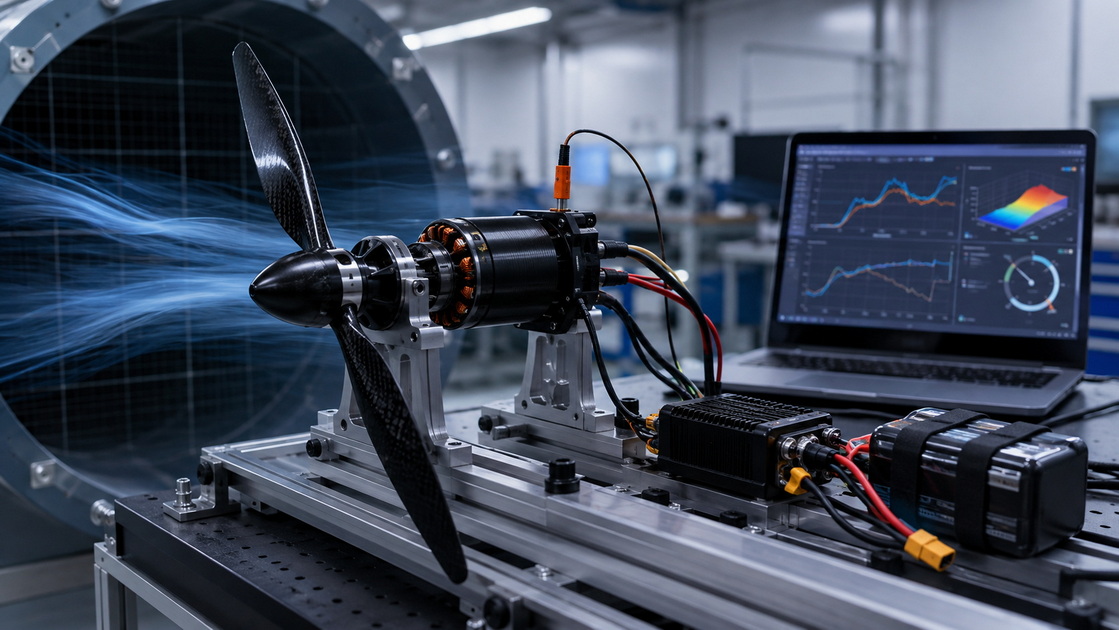
For fixed-wing UAV development, the most useful test is often a mission-point test rather than a full-throttle static test.
A mission-point test evaluates the motor under the actual operating conditions expected during normal flight. This may include a specific propeller, battery voltage, throttle range, cooling airflow, payload condition, and test duration.
For example, instead of asking only for maximum thrust at 6S battery voltage, buyers can request:
Test the motor with the specified propeller at 6S, 45% throttle, and 60% throttle for 15 minutes. Provide thrust, RPM, current, input power, motor temperature, ESC temperature, and efficiency results.
This type of test provides more useful data for aircraft endurance planning and helps identify whether a motor is truly suitable for a fixed-wing mission.
Before contacting suppliers, prepare the following information:
- Aircraft takeoff weight
- Payload weight
- Battery type and voltage
- Battery capacity
- Required endurance
- Target cruise speed
- Maximum speed
- Required thrust-to-weight ratio
- Propeller diameter and pitch range
- Installation dimensions
- Ambient temperature range
- Operating altitude
- Cooling airflow conditions
- Estimated annual order quantity
The more complete the information provided, the more accurate the supplier's motor recommendation will be.
A professional supplier should be able to provide:
- Product drawing
- Motor dimensions
- Weight
- KV value
- Phase resistance
- No-load current
- Voltage range
- Continuous-current recommendation
- Peak-current recommendation
- Recommended propeller range
- Thrust and efficiency test data
- Motor material summary
- Bearing specification
- Shaft specification
- Quality-control process
- Packaging information
- Sample lead time
- Production lead time
- Warranty policy
Buyers should test more than one sample unit from the same batch.
The evaluation should include:
- Dimensional compatibility
- Mounting-hole fit
- Shaft runout
- Rotor vibration
- KV consistency
- No-load current
- Static thrust
- Cruise-point efficiency
- Sustained-load temperature rise
- Bearing noise
- ESC compatibility
- Propeller adapter reliability
- Cable and connector quality
For larger production programs, retain one signed and approved golden sample as a physical reference for future production batches.
A factory audit can be conducted through an in-person visit, a third-party inspection company, or a live video review.
Important areas to inspect include:
- Raw-material warehouse
- Stator preparation
- Winding process
- Rotor assembly
- Magnet installation
- Bearing installation
- Dynamic balancing
- Electrical testing
- Quality-control station
- Finished-goods warehouse
- Packaging process
- Batch labeling system
The most useful audit is not a showroom presentation. It is a review of the real production line and quality-control process.
For imports into France and other European markets, buyers should clarify:
- Product HS code
- Incoterms
- Customs documentation
- Commercial invoice requirements
- Packing list requirements
- Country-of-origin information
- RoHS or REACH documentation where applicable
- Shipment insurance
- Packaging protection
- Warranty replacement procedures
- Transit-time expectations
Motor-only shipments are generally simpler than shipments that include lithium batteries. If batteries are included in a propulsion-system order, dangerous-goods shipping requirements, packaging rules, labeling, and freight options must be reviewed in advance.
France remains a valuable market for aerospace engineering, high-reliability electromechanical design, UAV system integration, and advanced electric-flight projects. Companies such as SERMAT and Safran Electrical & Power are suitable for specialized aerospace, defense, and high-complexity programs, while suppliers such as Nidec Leroy-Somer, Crouzet, and maxon support industrial motors, precision motion, control systems, and related UAV subsystems.
For fixed-wing UAV brands, RC aircraft manufacturers, industrial drone integrators, and companies seeking flexible brushless motor customization, Zhongshan Yuhang Power Technology Co., Ltd. provides a practical manufacturing option. Its focus on fixed wing motors, brushless motor development, responsive OEM/ODM support, and adaptable production makes it suitable for customers that need both technical communication and commercially realistic production flexibility.
A well-defined motor specification, a structured sample-validation process, and clear batch-control requirements remain the most reliable foundation for stable long-term sourcing.
Request the full certificate and verify the company name, factory address, certificate number, certification body, scope, issue date, and expiry date. Where possible, check the issuing certification body's public certificate database. Confirm that the certificate covers the manufacturing factory supplying your motors.
No. CE marking does not automatically prove that a motor is suitable for aviation, long-endurance UAV operation, or safety-critical applications. It may be relevant for certain product and market requirements, but buyers should also review test reports, traceability, material control, manufacturing consistency, and system-level compliance requirements.
A useful report should include motor model, KV, voltage, propeller model, throttle level, current, input power, RPM, thrust, efficiency, motor temperature, ESC temperature, ambient temperature, test duration, and measurement method.
MOQ depends on the level of customization. A simple logo, cable length, connector, or packaging change may require a relatively low MOQ. A new stator, winding configuration, shaft design, or housing may require tooling investment and a higher MOQ. Buyers should request separate quotations for samples, pilot orders, regular production, and any non-recurring engineering or tooling cost.
A matched motor, ESC, and propeller system can reduce compatibility risk during early development because the components can be tested together. However, buyers should retain independent specifications for each component and qualify alternative suppliers when possible to reduce supply-chain dependence.
1. [Zhongshan Yuhang Power Technology Co., Ltd. – About Us]
2. [SERMAT – Brushless Motors for Drones]
3. [SERMAT – Electric Motors, Cylinders and Actuators]
4. [Safran Electrical & Power – Official Company Profile]
5. [France's Drone Production and Industrial Policy Context]


