Language


Views: 241 Author: Yuhang Power Publish Time: 2026-08-22 Origin: Site
Content Menu
● How to Evaluate a Fixed Wing Motor Manufacturer
● Top Fixed Wing Motors Manufacturers in China
>> 1. Zhongshan Yuhang Power Technology Co., Ltd.
>>> Main Strengths
>> 2. T-Motor
>>> Main Strengths
>> 3. SunnySky
>>> Main Strengths
>> 4. EMAX
>>> Main Strengths
>>> Main Strengths
>> 6. iFlight
>>> Main Strengths
>> 7. Xnova
>>> Main Strengths
>> 8. Dualsky
>>> Main Strengths
>> 9. Racerstar
>>> Main Strengths
>> 10. GARTT
>>> Main Strengths
● Fixed Wing Motor Technical Requirements
>> KV Rating
>> Stator Size
● Compliance and Documentation
>> Similar Specifications With Different Real Performance
>> Low-Quality Bearing Substitution
>> Incomplete Shipping Planning
>> Prepare a Complete Request for Quotation
>> Request Production Documents
● FAQ
>> 1. How Can I Verify Whether a Motor Manufacturer's ISO Certificate Is Valid?
>> 2. What Technical Data Should I Request Before Selecting a Fixed Wing Motor?
>> 3. How Can I Compare Motors From Different Manufacturers Fairly?
>> 4. Can a Manufacturer Customize a Fixed Wing Motor for a Specific Aircraft?
>> 5. What Causes Fixed Wing Brushless Motor Failures?
China is one of the world's most important manufacturing centers for brushless motors used in fixed-wing UAVs, RC airplanes, FPV wings, VTOL platforms, gimbal systems, robotics, underwater equipment, high-power fans, and other electric-drive products.
The country's advantage comes from well-developed manufacturing clusters in Guangdong, Shenzhen, Zhongshan, Dongguan, Huizhou, and the wider Pearl River Delta region. These regions provide access to brushless-motor components, including neodymium magnets, copper wire, silicon-steel laminations, bearings, aluminum-alloy parts, shafts, electronic speed controllers, propellers, connectors, and testing equipment.
For international buyers, sourcing from China can offer strong flexibility in product selection, customization, production scale, and component integration. A qualified manufacturer can support not only standard brushless motors but also complete power-system solutions that combine motors, ESCs, propellers, mounting accessories, connectors, and application-specific technical recommendations.
However, choosing a Fixed Wing Motor supplier requires more than comparing motor size, KV rating, and unit price. Two motors with similar published specifications may perform differently because of magnet quality, copper-wire grade, bearing selection, stator-lamination quality, dynamic balancing, winding consistency, thermal control, and inspection standards.
For this reason, buyers should evaluate each supplier through its engineering capability, manufacturing control, communication efficiency, quality process, testing data, production stability, and support for customized projects.
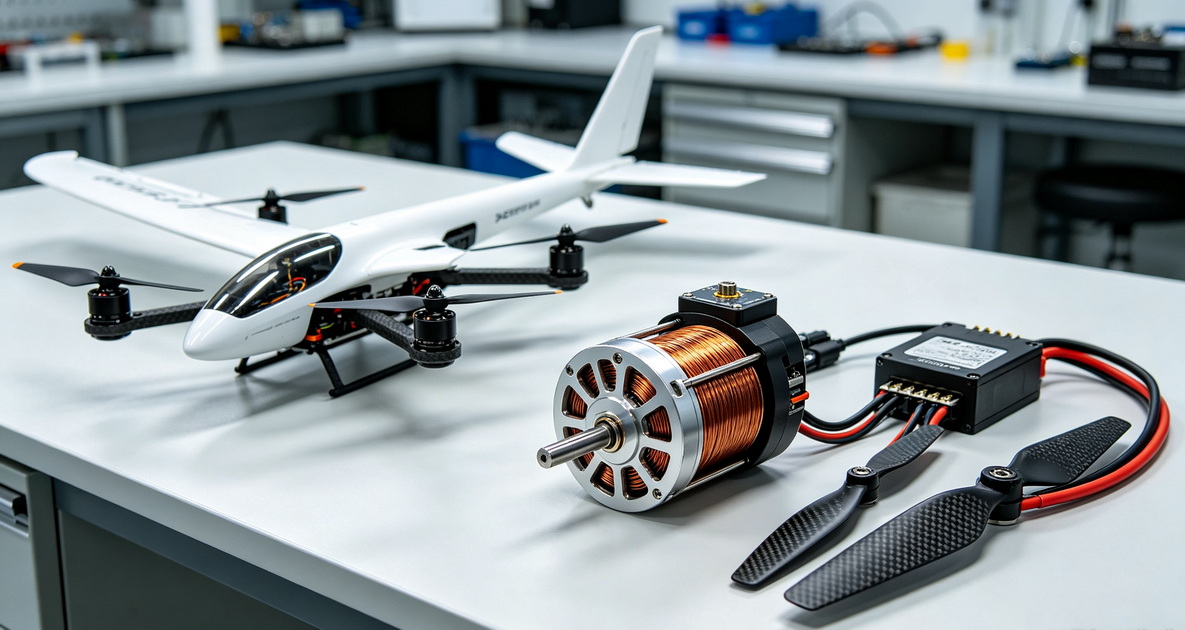
A dependable Fixed Wing Motor manufacturer should be able to explain how its motors are designed, manufactured, tested, packed, and supported after delivery.
A suitable supplier should understand the complete relationship between motor specifications and aircraft performance.
Important technical factors include:
- Stator diameter and stator height
- KV rating
- Battery voltage
- Propeller diameter and pitch
- Thrust requirement
- Torque characteristics
- Continuous-current rating
- Burst-current rating
- Motor efficiency
- Recommended ESC rating
- Aircraft weight
- Target flight duration
- Shaft diameter
- Motor mounting pattern
- Cooling conditions
- Vibration requirements
For fixed-wing aircraft, the correct motor selection depends on aircraft weight, payload, cruising speed, takeoff requirements, propeller configuration, battery voltage, and desired flight endurance.
A supplier should ask for application data before recommending a motor. If a manufacturer recommends a product only from the KV number without checking aircraft weight, propeller size, and battery configuration, the recommendation may not match the real operating conditions.
Motor performance depends heavily on material selection and component consistency.
Buyers should confirm:
- Magnet grade and working-temperature rating
- Copper-wire quality and insulation class
- Silicon-steel lamination thickness
- Stator insulation treatment
- Bearing material and supplier
- Bearing lubrication specification
- Aluminum-alloy grade for the motor bell and base
- Shaft material and surface treatment
- Rotor balancing method
- Adhesive and epoxy specification
- Motor-wire length
- Connector type
- Corrosion-protection requirements
Two motors may look almost identical externally while having significantly different performance and service life. Lower-cost products may use weaker magnets, thinner copper wire, less precise bearings, lower-quality laminations, or less consistent balancing.
A well-managed manufacturer should have clear inspection steps from raw materials to finished products.
Typical checks include:
- Magnet inspection
- Bearing inspection
- Copper-wire inspection
- Shaft inspection
- Aluminum-part inspection
- Stator-lamination inspection
- Winding inspection
- Soldering inspection
- Rotor dynamic balancing
- No-load-current test
- KV test
- Resistance test
- Noise test
- Vibration test
- Temperature test
- Final appearance inspection
- Packaging inspection
For professional UAV, aviation, robotics, or industrial-equipment projects, buyers should ask whether motors are tested individually or through batch sampling.
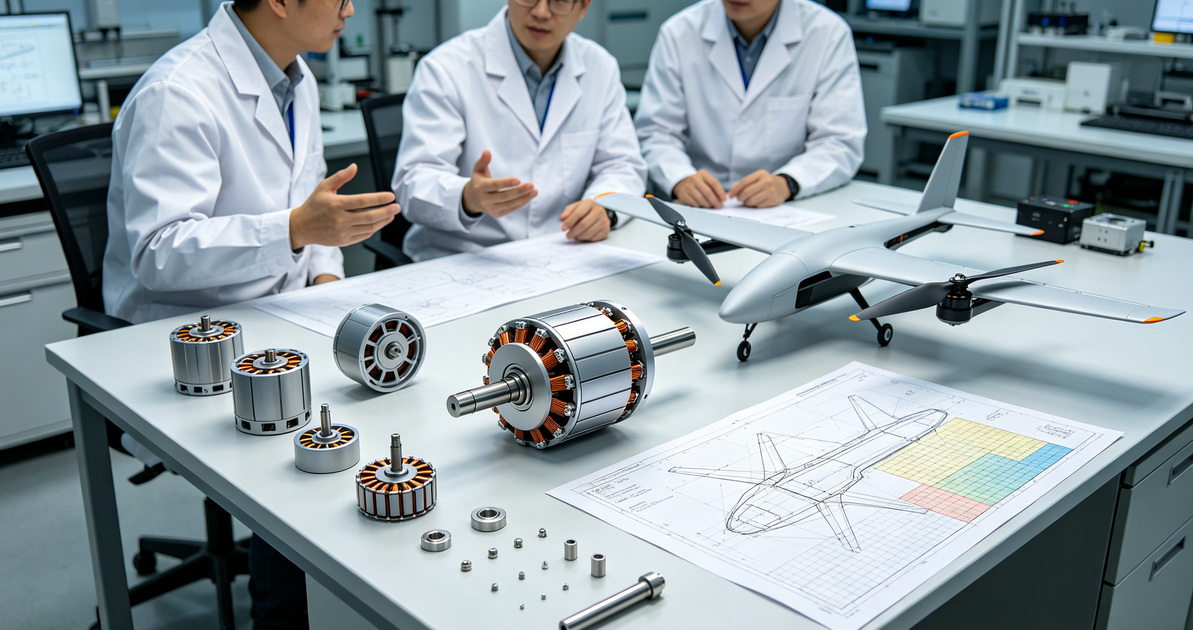
Long-term supply reliability is important for brands planning repeat orders, product launches, or ongoing equipment production.
Buyers should confirm:
- Standard-product lead time
- Custom-product lead time
- Monthly production capacity
- Peak-season delivery planning
- Raw-material inventory management
- Alternate component sources
- Product-change notification procedure
- Batch traceability process
- Warranty policy
- Failure-analysis process
- Spare-parts availability
Zhongshan Yuhang Power Technology Co., Ltd. is a China-based manufacturer focused on the research, development, production, and sales of brushless motors. The company supports applications including fixed-wing aircraft, drones, FPV platforms, RC vehicles, gimbal cameras, underwater robots, cleaning robots, high-power fans, and other professional equipment.
The company is positioned as a practical manufacturing partner for brands seeking customized brushless-motor solutions rather than only standard catalog products. Its team supports OEM and ODM requirements for motor configuration, performance matching, cable specification, shaft design, mounting layout, labeling, packaging, and related power-system components.
Zhongshan Yuhang Power Technology Co., Ltd. is especially suitable for small and medium-sized brands that need flexible communication, efficient project follow-up, and technical support during product development. It can be considered for buyers that require fixed-wing motors adapted to a specific aircraft platform, payload requirement, battery system, propeller size, endurance target, or mounting structure.
- Brushless motor research, development, and manufacturing
- Fixed-wing aircraft and UAV motor applications
- Complete power-system solution support
- OEM and ODM customization options
- Flexible communication during development projects
- Support for small and medium-sized brands
- Application-based motor matching
- Motor solutions for drones, RC aircraft, gimbals, robotics, and marine equipment
- Manufacturing location in Zhongshan, Guangdong
The company is a suitable option when the buyer needs technical discussion before production. For example, a fixed-wing UAV developer may require a motor with a specific KV range, shaft length, mounting-hole arrangement, cable length, thermal requirement, propeller match, or connector configuration.
Instead of selecting a standard motor only by model number, buyers can discuss the complete aircraft requirement and develop a more suitable propulsion solution.
- Fixed-wing UAVs
- RC airplanes
- FPV wings
- VTOL aircraft
- Mapping and survey drones
- Inspection UAVs
- Long-endurance aircraft
- Gimbal-camera systems
- Underwater robots
- Cleaning robots
- Industrial automation equipment
- High-power fan systems
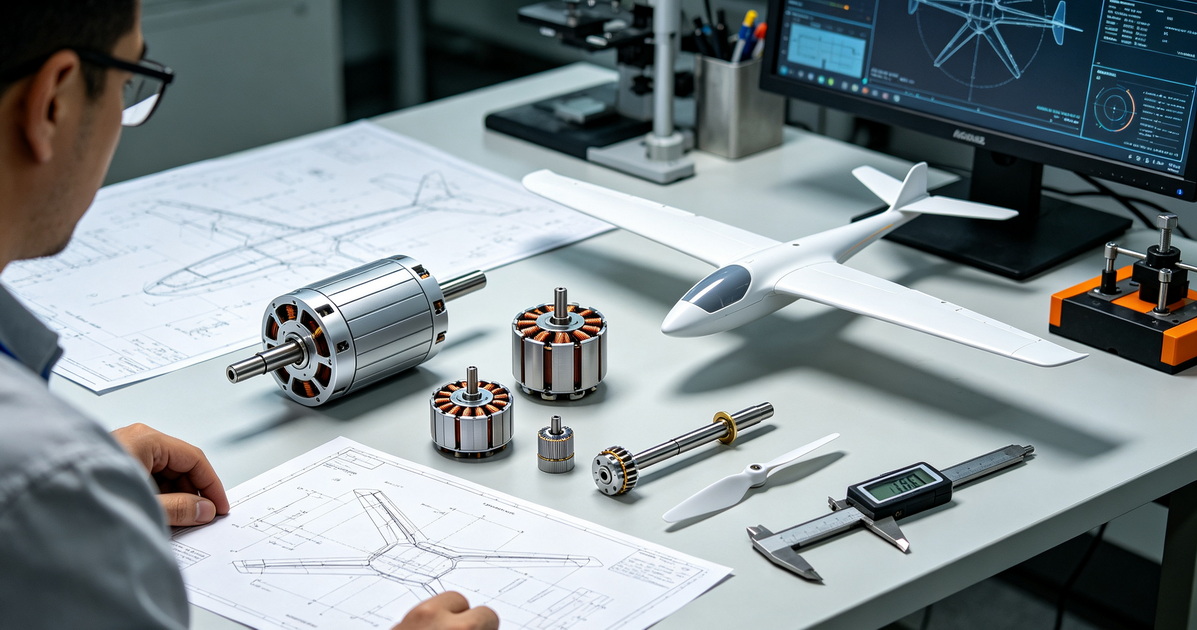
T-Motor is a Chinese manufacturer of brushed motors, brushless motors, gimbal motors, and related power-system components. The company offers products for UAVs, RC aircraft, FPV platforms, industrial drone systems, gimbal applications, and other electric-drive projects.
Its product portfolio includes motors, electronic speed controllers, propellers, and related components used in aviation and unmanned systems. T-Motor is often considered by buyers requiring standardized motor platforms for fixed-wing aircraft, multirotor drones, VTOL systems, and performance-oriented RC applications.
- Broad brushless-motor product portfolio
- Fixed-wing and UAV motor options
- Motor, ESC, and propeller integration
- Relevant for RC aircraft and industrial UAV systems
- Technical customization support
- Suitable for higher-performance power-system projects
- Product options for professional and hobby aviation markets
T-Motor may be suitable for buyers looking for established motor series and a broad ecosystem of compatible power-system components. Buyers should still confirm propeller compatibility, thermal performance, lead time, and customization options for each specific project.
- Fixed-wing UAVs
- VTOL aircraft
- RC airplanes
- FPV aircraft
- Agricultural drones
- Industrial inspection UAVs
- Professional propulsion systems
- Gimbal systems
SunnySky is a brushless-motor brand associated with Zhongshan LangYu Model Co., Ltd. It is known in the drone, UAV, RC aircraft, and hobby-model market. Its product portfolio includes motor options for fixed-wing aircraft, multirotor drones, FPV platforms, helicopters, and other electric aviation applications.
SunnySky offers dedicated fixed-wing motor options and is often considered by buyers seeking standard motor configurations with broad aftermarket availability.
- Dedicated fixed-wing motor range
- Strong relevance to RC and UAV applications
- Broad selection of stator sizes and KV ratings
- Suitable for hobby, FPV, and general UAV projects
- Available through international sales channels
- Practical for testing multiple motor options during prototype development
SunnySky can be a useful supplier for buyers who need available, standardized motor options for testing and product development. It may be particularly relevant for RC aircraft, lightweight UAVs, electric gliders, FPV wings, and training aircraft.
- RC airplanes
- Fixed-wing drones
- Electric gliders
- FPV wings
- Training aircraft
- Lightweight UAVs
- Hobby aviation products
- Prototype aircraft development
EMAX is a manufacturer and brand offering brushless motors, electronic speed controllers, servos, propellers, flight controllers, and other RC and FPV components.
The company is widely associated with FPV products, but selected motor configurations may also be applicable to fixed-wing RC airplanes, FPV wings, hybrid aircraft, and compact UAV platforms.
- Broad RC and FPV component range
- Brushless motors, ESCs, propellers, and servos
- Suitable for consumer and hobby aviation channels
- Relevant for compact electric aircraft
- Practical for buyers sourcing multiple compatible components
- Suitable for distribution and branded component programs
EMAX may be most suitable for consumer-facing products, RC aircraft, FPV platforms, and hobby distribution channels. Buyers sourcing motors for professional fixed-wing UAVs should request detailed test information, batch-consistency data, and project-specific support before production.
- FPV wings
- RC airplanes
- Compact electric aircraft
- Consumer drone systems
- RC aircraft kits
- Hobby aviation products
- Entry-level UAV platforms
BrotherHobby is a Chinese brushless-motor brand primarily recognized for FPV drone motors. Its products are commonly used in racing drones, freestyle systems, cinematic platforms, and custom-built aerial equipment.
For fixed-wing applications, BrotherHobby may be relevant for compact FPV wings, high-speed RC aircraft, hybrid aircraft, and projects requiring high power in a relatively small motor size.
- Performance-focused brushless motors
- Strong connection with FPV applications
- Suitable for compact high-power requirements
- Relevant for high-speed electric aircraft
- Appropriate for specialized prototype projects
- Useful for custom aircraft builders and FPV brands
Buyers should validate long-duration operating temperatures, propeller compatibility, vibration behavior, and continuous-current limits before using FPV-oriented motors in endurance-focused fixed-wing aircraft.
- FPV wings
- High-speed RC aircraft
- Hybrid VTOL systems
- Racing aircraft
- Compact UAV prototypes
- Performance-oriented electric aircraft
iFlight is a Chinese FPV-drone and component brand offering motors, frames, electronics, propellers, and complete FPV products. Although it is primarily associated with multirotor drones, its motor products can also be relevant to compact fixed-wing aircraft, FPV wings, and hybrid UAV systems.
- Integrated FPV component ecosystem
- Motors, propellers, frames, and electronics
- Suitable for compact performance-oriented aircraft
- Relevant for FPV wings and prototype development
- Useful for buyers sourcing compatible drone components
- Practical for consumer and hobby product programs
iFlight may be most suitable for buyers sourcing standard components for performance-focused aircraft. Projects requiring custom winding, specialized shafts, high-load endurance performance, industrial sealing, or detailed traceability should be reviewed directly with the supplier.
- FPV wings
- Compact fixed-wing aircraft
- Hybrid drone platforms
- RC aircraft kits
- Consumer UAV products
- Prototype aircraft projects
Xnova is a performance-oriented brushless motor brand relevant to RC helicopters, high-power electric systems, and model-aircraft applications. Its products are often considered by hobby users and aircraft developers that prioritize high output, precision, and performance consistency.
For fixed-wing buyers, Xnova may be relevant for specialty aircraft, aerobatic models, high-output propulsion systems, and premium RC aviation products.
- Performance-oriented brushless-motor positioning
- Suitable for high-power electric systems
- Relevant to RC aircraft and specialty aviation
- Suitable for precision-focused projects
- Appropriate for premium hobby and model-aircraft applications
Xnova may be a suitable choice for projects where output performance, motor response, and high-speed operation are more important than low unit cost.
- Aerobatic RC aircraft
- High-performance electric airplanes
- Specialty fixed-wing models
- High-output propulsion systems
- Premium hobby aviation products
Dualsky is a Chinese RC power-system brand offering brushless motors, ESCs, batteries, servos, and related aircraft components. It is relevant to electric fixed-wing RC aircraft, including training airplanes, gliders, sport aircraft, and aerobatic models.
- RC aircraft power-system product range
- Motors, ESCs, batteries, and servos
- Suitable for distributors and hobby aviation brands
- Relevant to fixed-wing electric aircraft
- Useful for buyers seeking compatible system components
- Product range for multiple RC aircraft sizes
Dualsky may be a practical option for buyers sourcing standardized power systems for RC aircraft. Buyers with professional UAV requirements should verify product traceability, long-term availability, motor reliability, and customization support.
- RC trainers
- Electric gliders
- Sport aircraft
- Aerobatic models
- Hobby fixed-wing aircraft
- RC power-system packages
Racerstar is a budget-oriented brand offering RC and brushless-motor products for hobby users and entry-level applications. It may be relevant to basic fixed-wing RC aircraft, educational kits, prototype builds, and price-sensitive consumer products.
- Budget-focused motor options
- Broad hobby-market availability
- Suitable for entry-level applications
- Practical for prototype testing
- Relevant for educational and training products
- Useful for cost-sensitive product programs
Racerstar can be considered for non-critical applications where low cost is a key purchasing factor. Buyers should conduct detailed sample testing before using these motors in long-duration, heavy-payload, commercial, or safety-sensitive aircraft.
- Entry-level RC aircraft
- Beginner fixed-wing platforms
- Educational kits
- Hobby aircraft projects
- Prototype testing
- Low-cost consumer products
GARTT is a brand associated with RC aircraft, helicopters, drones, and electric-power components. Its products may be relevant for RC airplanes, sport aircraft, training aircraft, gliders, and consumer-oriented electric aviation products.
- RC aviation-related power products
- Suitable for hobby fixed-wing applications
- Relevant for distributors and RC product brands
- Standard motor options for electric aircraft
- Suitable for consumer-oriented aviation products
GARTT can be considered for general RC and hobby fixed-wing projects. Buyers requiring professional UAV propulsion systems should verify product test data, production consistency, customization capability, and application-specific reliability through physical samples.
- RC airplanes
- Electric sport aircraft
- Training aircraft
- Gliders
- Consumer fixed-wing products
- Hobby aviation distribution
| Manufacturer | Main Focus | Fixed Wing Motor Applications | OEM and ODM Support | Suitable Buyer Profile |
|---|---|---|---|---|
| Zhongshan Yuhang Power Technology Co., Ltd. | Custom brushless motors and power solutions | Fixed-wing UAVs, RC aircraft, drones, robotics | High | Small and medium-sized brands, specialized equipment manufacturers |
| T-Motor | UAV and RC power systems | Fixed-wing UAVs, VTOL platforms, RC aircraft | Medium to high | Established UAV and performance aircraft brands |
| SunnySky | Brushless motors for UAV and RC markets | Fixed-wing drones, RC airplanes, FPV wings | Medium | RC brands, distributors, prototype developers |
| EMAX | FPV, RC, and electronics components | FPV wings, compact aircraft, RC products | Medium | Consumer and hobby product buyers |
| BrotherHobby | Performance FPV motors | High-speed wings, hybrid aircraft, compact UAVs | Medium | FPV and performance aircraft brands |
| iFlight | FPV drone systems and components | FPV wings, compact fixed-wing aircraft | Limited to medium | Component buyers and prototype developers |
| Xnova | High-performance brushless motors | Aerobatic and specialty RC aircraft | Medium | Premium hobby and high-performance aircraft projects |
| Dualsky | RC power systems | RC airplanes, gliders, sport aircraft | Medium | RC distributors and hobby aviation brands |
| Racerstar | Budget RC motor products | Entry-level fixed-wing products | Limited | Cost-sensitive consumer and education projects |
| GARTT | RC aviation power components | RC planes, sport models, gliders | Limited to medium | Hobby-market distributors and product brands |
KV refers to the approximate motor speed per volt under no-load conditions. It does not independently determine motor power, torque, efficiency, or suitability for a specific aircraft.
In general:
- Lower-KV motors are commonly used with larger propellers and higher-voltage battery systems.
- Higher-KV motors are commonly used with smaller propellers and higher RPM requirements.
- The correct KV depends on battery voltage, propeller size, propeller pitch, aircraft weight, expected speed, and target current draw.
An unsuitable KV selection can lead to poor takeoff performance, excessive current draw, low endurance, overheating, unstable ESC operation, or premature battery stress.
Motor stator dimensions are commonly described using numbers such as 2212, 2814, 3520, and 5055.
The first number generally refers to stator diameter, while the second refers to stator height.
Larger stators usually support higher torque and power potential, but actual performance also depends on winding design, magnet quality, cooling, propeller match, battery setup, and operating conditions.
The highest thrust number is not always the most useful performance indicator.
For endurance-oriented fixed-wing aircraft, buyers should consider:
- Cruise current
- Cruise throttle
- Input power
- Thrust at normal operating conditions
- Motor temperature
- ESC temperature
- Propeller efficiency
- Battery discharge rate
- Noise level
- Flight-duration performance
A long-endurance survey drone usually needs a different power system from a high-speed FPV wing or aerobatic RC aircraft.
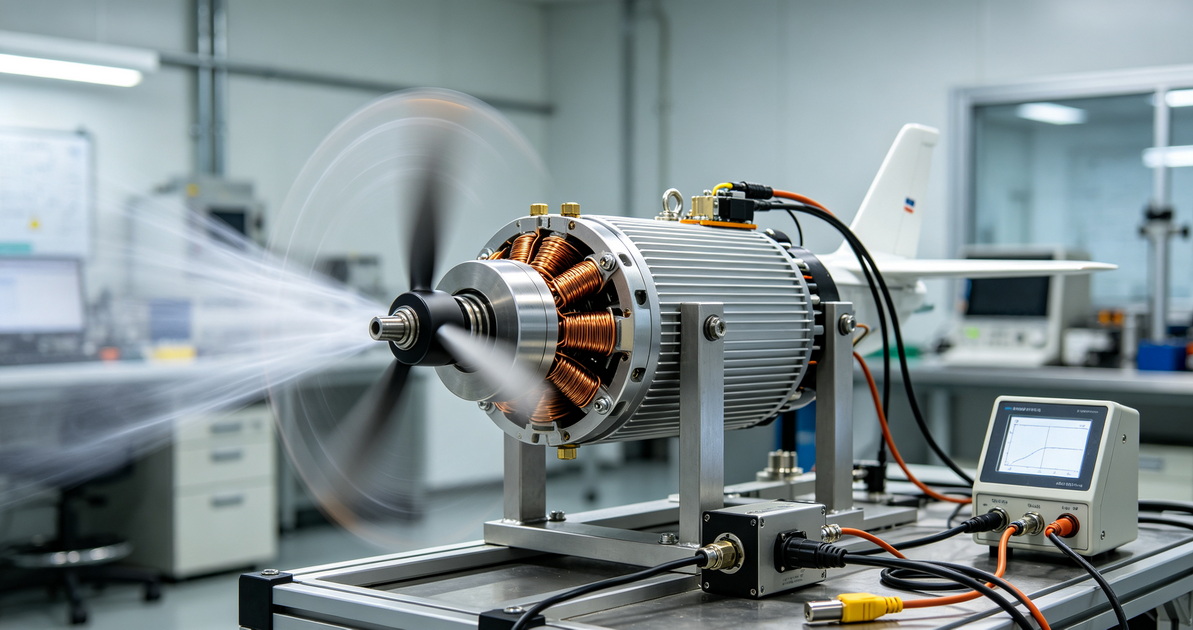
High motor temperature can reduce magnet strength, damage winding insulation, shorten bearing life, weaken adhesives, and lower overall efficiency.
Motor samples should be tested under realistic conditions, including:
- Intended battery voltage
- Intended propeller
- Normal aircraft payload
- Expected ambient temperature
- Typical cruise throttle
- Continuous operating duration
- Repeated takeoff cycles
- Cooling airflow conditions
Depending on the target market, application, and product configuration, buyers may require different documents.
Possible documentation includes:
- RoHS declaration
- REACH declaration
- Material declaration
- ISO 9001 certificate
- Product inspection report
- Motor test report
- Packaging specification
- Batch traceability records
- Warranty policy
- Factory audit report
- Country-of-origin documentation
- Export shipping documentation
A standalone brushless motor may not automatically require CE marking. The applicable requirements depend on how the motor is integrated, marketed, packaged, and supplied as part of a complete product or system.
Buyers should confirm compliance requirements with their importer, laboratory, product-compliance advisor, or legal representative in the destination market.
Two manufacturers may list a motor as 3510 700KV, but the actual performance can differ due to magnet grade, winding configuration, copper fill, stator-lamination quality, bearings, air-gap tolerance, balancing, and testing conditions.
To avoid this risk, request:
- Motor-resistance data
- No-load-current data
- Recommended voltage
- Recommended propeller range
- Thrust test data
- Current-draw data
- Efficiency data
- Motor-temperature data
- Continuous-current rating
- Burst-current rating
- Test conditions
Bearings influence motor noise, vibration, lifespan, efficiency, and stability. A low-quality bearing may work during initial bench testing but fail after prolonged high-speed operation.
To reduce risk, specify the bearing requirement in writing. Request the bearing type, supplier, size, grade, lubrication method, and supporting sample evidence.
A motor may generate sufficient thrust while still transmitting vibration into the airframe. This can affect camera systems, gimbals, flight controllers, sensors, and the structural lifespan of the aircraft.
Buyers should request dynamic-balancing information and test sample motors with the intended propeller, mount, and aircraft structure.
Motor test data is not meaningful unless the test conditions are clearly defined.
Buyers should confirm:
- Propeller model
- Propeller material
- Battery voltage
- ESC model
- Ambient temperature
- Test duration
- Throttle setting
- Measurement equipment
- Motor mounting method
Motors are generally easier to ship than lithium batteries, but complete power-system packages may include batteries, electronics, magnets, propellers, and accessories with additional transportation requirements.
Buyers should confirm invoice descriptions, HS codes, carton marking, packing method, shipping documents, destination-country requirements, and battery transport rules where applicable.
Many buyers focus on maximum thrust at full throttle. For a fixed-wing aircraft, the more valuable data is often performance at the normal cruise-throttle range.
A fixed-wing UAV does not usually operate at full throttle throughout the flight. An endurance aircraft may spend much of its operating time between 35% and 65% throttle.
A motor can produce an impressive maximum-thrust figure but perform inefficiently during continuous cruise operation. It may draw too much current, generate excess heat, produce vibration, or reduce total flight time.
Before approving mass production, request a test table covering several throttle levels. The data should include:
- Throttle percentage
- Static thrust
- Current draw
- Input power
- Motor temperature
- ESC temperature
- Battery voltage
- Propeller model
- Ambient temperature
- Test duration
- Vibration observation
This information supports a more realistic propulsion-system decision.
A Fixed Wing Motor request for quotation should include:
- Aircraft type
- Aircraft takeoff weight
- Target payload
- Battery voltage
- Battery capacity
- Desired flight duration
- Cruising speed
- Takeoff requirement
- Propeller diameter
- Propeller pitch
- Target thrust range
- Target KV range
- Motor diameter and length limits
- Shaft configuration
- Mounting-hole dimensions
- Cable length
- Connector requirement
- Environmental conditions
- Estimated order quantity
- Delivery date
- Required documentation
A reliable sourcing process usually follows these steps:
1. Share aircraft requirements and technical targets
2. Receive a preliminary motor recommendation
3. Order motor samples
4. Complete bench testing with the intended battery and propeller
5. Test the motor on the actual aircraft platform
6. Adjust KV, winding, shaft, cable, mounting, or connector details if needed
7. Approve a pre-production sample
8. Place a pilot order
9. Begin mass production after pilot approval
For custom fixed-wing projects, buyers should avoid placing large orders before completing real aircraft testing.
Before production begins, request:
- Approved motor drawing
- Approved sample record
- Motor specification sheet
- Performance test report
- Material requirements
- Inspection standard
- Packaging specification
- Product-label requirement
- Batch-traceability method
- Warranty policy
- Defect-handling process
Before shipment, confirm:
- Commercial-invoice product description
- HS code
- Country-of-origin marking
- Carton size and gross weight
- Packing quantity
- Pallet requirements
- Shipment method
- Destination import requirements
- Insurance responsibility
- Spare-parts plan
- Replacement process for confirmed defects
Selecting a Fixed Wing Motor manufacturer requires a detailed review of engineering support, raw-material control, performance data, testing methods, production stability, and communication efficiency.
A reliable supplier should be able to provide more than a catalog specification. It should understand the aircraft application, recommend a suitable motor-and-propeller combination, support sample testing, control production quality, and maintain stable delivery for repeat orders.
Zhongshan Yuhang Power Technology Co., Ltd. is a relevant supplier for buyers seeking flexible brushless-motor development, customized OEM and ODM support, efficient communication, and complete power-system solutions for fixed-wing aircraft, UAVs, RC products, gimbals, robots, and other professional applications.
T-Motor, SunnySky, EMAX, BrotherHobby, iFlight, Xnova, Dualsky, Racerstar, and GARTT may also be suitable options depending on the intended aircraft type, performance target, order volume, customization needs, and required level of supply-chain support.
A carefully planned sample process, consistent technical documentation, and application-based testing can reduce sourcing risk and support more stable product performance over the full lifecycle of a fixed-wing aircraft program.
Request the original certificate PDF, legal company name, factory address, certificate number, certification body, scope, issue date, and expiry date. Verify the certificate through the issuing certification body or its public database. Ensure the certificate applies to the actual production site.
Request KV, stator size, motor resistance, no-load current, operating voltage, continuous current, burst current, recommended propeller range, thrust data, current draw, efficiency data, motor weight, shaft size, mounting pattern, temperature limit, and full test conditions.
Use the same battery voltage, propeller model, ESC settings, throttle range, ambient temperature, and test duration. Compare thrust, current draw, power input, efficiency, motor temperature, ESC temperature, vibration, noise, and performance at realistic cruise-throttle conditions.
Yes. Common customization options include KV, winding configuration, shaft length, mounting pattern, cable length, connector type, bearing selection, labeling, packaging, and propeller-performance matching. Confirm the final configuration through samples before approving mass production.
Common causes include incorrect propeller selection, excessive current, insufficient cooling, overheating, poor rotor balancing, low-quality bearings, damaged winding insulation, loose connections, incorrect ESC settings, and operation beyond the motor's continuous-duty rating.
1. [Zhongshan Yuhang Power Technology Co., Ltd.]
2. [T-Motor]
3. [T-Motor Custom Motor Services]
4. [SunnySky]
5. [SunnySky Fixed Wing Motors]
6. [EMAX Model]


