Language


Views: 222 Author: Yuhang Power Publish Time: 2026-05-20 Origin: Site
After testing FPV power systems and radio links in everything from 5‑inch freestyle quads to long‑range rigs and micro whoops, I've learned one hard truth: the wrong FPV receiver will waste more good motors than any bad tune ever will. You can run the best FPV drone motors and a perfectly tuned flight controller, but if your link is unstable, your quad simply cannot fly the way you designed it to. [reddit]
In this guide, I'll walk you through how FPV receivers work, the main protocols in 2026, and how to choose the right RX for your flying style and radio—with practical advice drawn from real pilots and OEM integration projects. [youtube]
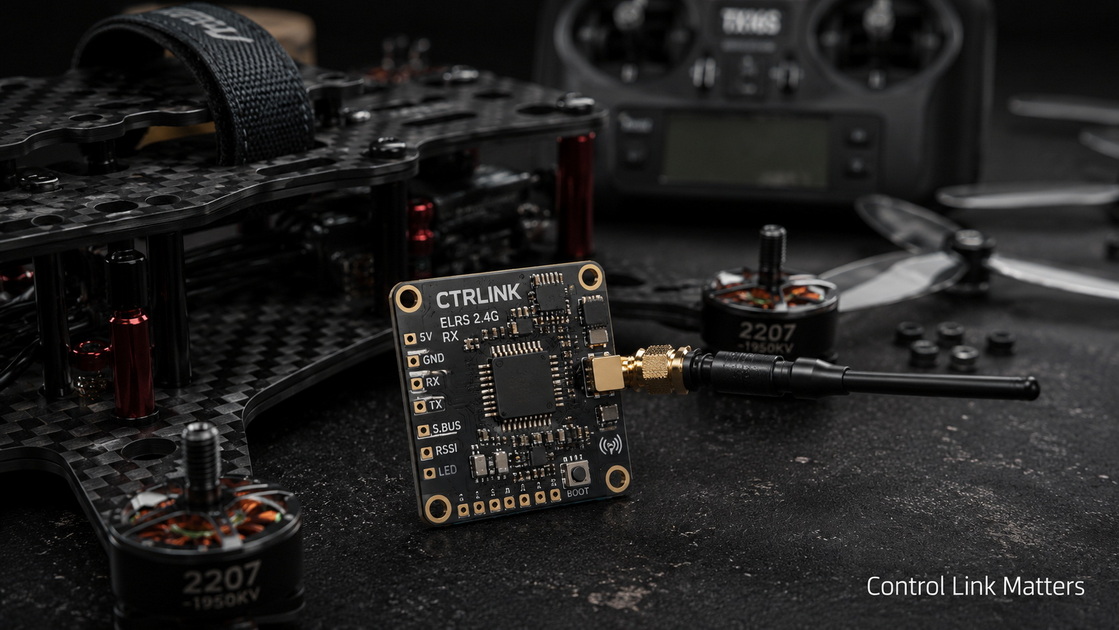
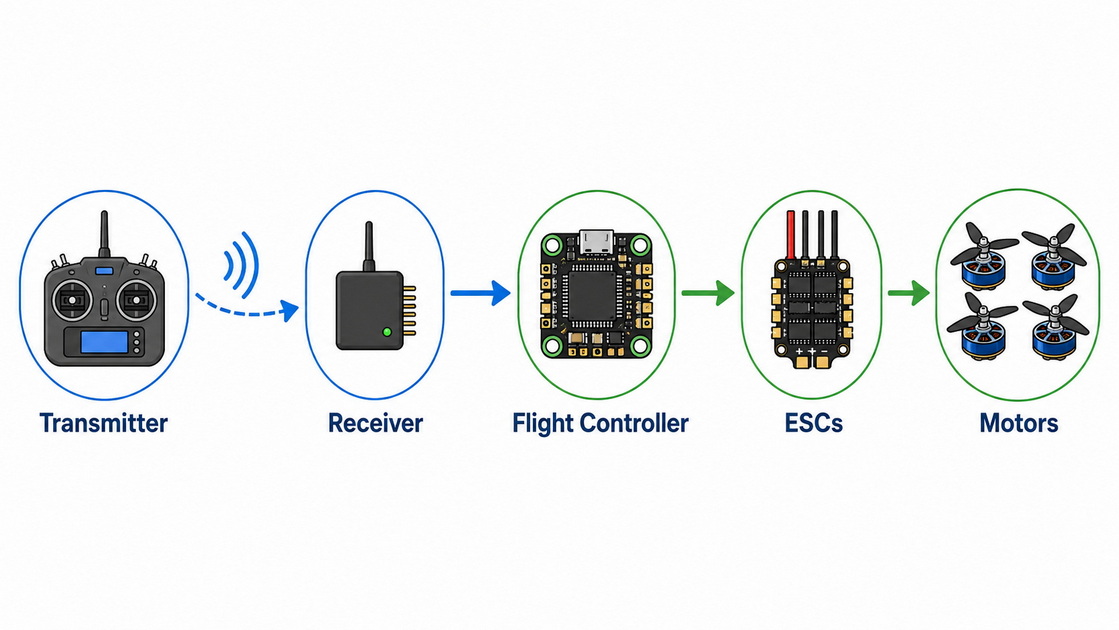
An FPV receiver (RX) is the radio module on your drone that "listens" to your transmitter (TX), decodes your stick inputs, and passes them to the flight controller. The FC then converts those signals into motor outputs, flight modes, and other actions such as arming, beeper, or turtle mode. [mepsking]
You can think of the receiver as the drone's ears and nerve link:
- It receives control signals (channels) from your radio.
- It reports back telemetry like RSSI, link quality, voltage, current, and GPS data if available.
- It decides whether your quad feels locked‑in or sketchy, especially near obstacles or at the edge of range. [youtube]
Even as a motor manufacturer, we often diagnose "motor problems" that turn out to be receiver or link issues—packet loss, low RSSI, or mismatched protocols. [youtube]
In most builds, yes, you still need a dedicated receiver. The main exception is when you use a digital FPV system with integrated control link, such as: [mepsking]
- DJI Air Unit / DJI O3
- Caddx Vista (a smaller version of the original DJI air unit) [mepsking]
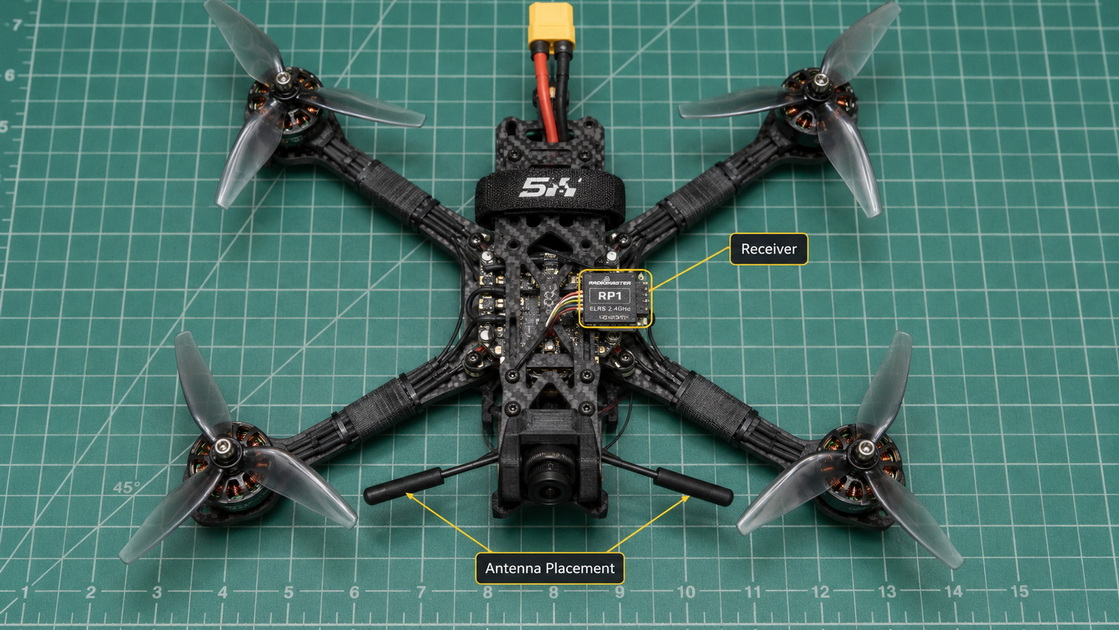
These systems can act as both video transmitter (VTX) and control receiver, but only if you use DJI‑compatible radios. If you want to fly Crossfire, ExpressLRS (ELRS), Ghost, or other protocols, you still install an external RX and wire it to your flight controller. [reddit]
For long‑term flexibility, many experienced pilots and OEM builders prefer separate control link + video link, so they can upgrade each independently. [reddit]
From a systems engineer's perspective, the best FPV receiver is the one that balances latency, range, reliability, and integration effort for your use case. [youtube]
Here are the core parameters to understand:
- Frequency band
- 900 MHz (868/915 MHz) – Better penetration and long‑range, more tolerant of trees and buildings. [youtube]
- 2.4 GHz – Lighter, smaller antennas, very low latency, dominant for racing and freestyle. [mepsking]
- Latency
- Critical for racing and fast freestyle where you feel every millisecond.
- Modern 2.4 GHz systems like Tracer, Ghost, and ELRS can reach ultra‑low latency update rates in the hundreds of Hz. [mepsking]
- Telemetry capabilities
- Sends battery voltage, current, RSSI, link quality, GPS position, altitude, satellites, and more back to your radio. [mepsking]
- Essential for long‑range and high‑value rigs where you cannot afford surprises.
- Size and weight
- Micro ELRS receivers are extremely small and light, perfect for tiny whoops, cinewhoops, and sub‑250 g builds. [mepsking]
- Slightly larger receivers with diversity and better antennas are common on 5‑inch and long‑range drones.
- Channels and switches
- More channels = more options for arming, flight modes, beeper, turtle mode, VTX power, GPS rescue, gimbal control, and more. [mepsking]
When we help OEM customers design new FPV platforms, these parameters are discussed alongside motor KV, prop size, and battery configuration, because they all affect flight envelope and reliability. [youtube]
Today's FPV market is heavily shaped by a few major receiver ecosystems. The table below summarizes the most common options and their best use cases. [reddit]
| Protocol | Frequency | Latency | Typical Range | Best For |
|---|---|---|---|---|
| FrSky / FlySky | 2.4 GHz | Medium | Short | Budget beginners, legacy radios |
| TBS Crossfire | 868/915 MHz | Low | Very long | Long‑range, cinematic, freestyle |
| TBS Tracer | 2.4 GHz | Ultra‑low | Medium | Racing and low‑latency freestyle |
| ImmersionRC Ghost | 2.4 GHz | Flexible | Medium–long | Competitive FPV racing |
| ExpressLRS (ELRS) | 2.4 GHz / 900 MHz | Ultra‑low | Ultra‑long | All‑round pilots, open‑source community |
2026 reality: FrSky and FlySky are considered outdated for new high‑performance builds, while TBS Crossfire and ExpressLRS dominate the control‑link landscape. ELRS, in particular, has set distance records over 100 km in test conditions, highlighting just how far the technology has advanced. [mepsking]
FrSky and FlySky used to be the default for budget FPV radios. They still work for short‑range park flying, but they have notable downsides: [mepsking]
- Older, fragmented firmware (ACCST vs ACCESS) that complicates binding.
- Limited range and robustness compared with modern systems.
- Poor future‑proofing for serious FPV pilots. [mepsking]
We mostly see these in legacy setups or ultra‑low‑budget builds.
Team Blacksheep (TBS) built a reputation for rock‑solid long‑range links. [mepsking]
- Crossfire
- 868/915 MHz band, excellent penetration and long‑range performance.
- Very stable link, widely trusted for long‑range and freestyle. [mepsking]
- Tracer
- 2.4 GHz band, designed for ultra‑low latency.
- A strong choice for racers who want TBS reliability with speed. [mepsking]
A big advantage of TBS: binding is extremely simple and firmware updates are well‑integrated into their ecosystem. [mepsking]
ImmersionRC's Ghost protocol targets competitive FPV pilots with:
- 2.4 GHz operation with dynamic update rates.
- The ability to trade off range vs latency depending on your needs. [mepsking]
Ghost hardware is excellent, but adoption has been limited compared with Crossfire and ELRS, partly because no mainstream radios ship with Ghost built‑in. [mepsking]
ExpressLRS is the newest major player—and at this point, it's arguably the most technically advanced in raw specs. [mepsking]
- Available in 2.4 GHz and 900 MHz variants.
- Extremely high update rates (up to 1000 Hz) and impressive practical range. [mepsking]
- Fully open‑source, with rapid development driven by a global community.
ELRS started out with a reputation for being complex to set up, but the latest versions use Wi‑Fi configuration and binding phrases, making it much easier to deploy on both DIY and OEM platforms. [mepsking]
Ease of binding is a major usability factor—especially for new pilots and large fleets. [youtube]
- Crossfire
- Put TX and RX into bind mode, pair once, and it stays bound unless you reset it. [mepsking]
- Very intuitive for both hobbyists and technicians.
- Tracer
- Very similar to Crossfire, but focused on 2.4 GHz speed.
- ExpressLRS (ELRS)
- Earlier versions required complex flashing and config.
- Now, many receivers open a Wi‑Fi access point when powered; you connect, enter your binding phrase, and save. [mepsking]
- Once set, it behaves similarly to Crossfire—power up and fly.
- Ghost
- Requires firmware alignment between external module and receiver.
- Binding is straightforward once both are on matching firmware. [mepsking]
- FrSky / FlySky
- Require exact firmware match between TX and RX, which is often not true out of the box. [mepsking]
- Flashing can be inconsistent and frustrating for beginners.
From a support standpoint, we see fewer binding‑related tickets when customers standardize on Crossfire or ELRS in their fleets. [youtube]
The right answer depends on what and how you fly. Use this decision flow to narrow it down: [reddit]
- Racing – Latency is everything; you typically fly within line of sight.
- Freestyle / bando – You need a good balance of penetration and responsiveness.
- Long‑range / mountain cruising – Link reliability and telemetry are the top priorities.
- Cinewhoop / indoor – Short range, but you want stability near obstacles.
Look at the protocols your transmitter natively supports:
- Radios like TBS Tango 2 ship with Crossfire built in.
- Radios like Radiomaster Pocket / Boxer (ELRS versions) ship with internal ELRS. [mepsking]
- Others such as Radiomaster TX16S can run external modules for Crossfire or ELRS. [mattyfleisch]
If your radio is locked to a protocol (e.g., Crossfire only), it usually makes sense to stay within that ecosystem for simplicity and cost control.
- If you want the easiest setup and proven long‑range, Crossfire is an excellent choice. [mepsking]
- If you want maximum specs and rapid innovation, ELRS is extremely compelling.
- If you focus on pure racing, Tracer or Ghost are strong contenders.
- 5‑inch and larger frames – Use Nano or full‑size receivers with diversity antennas.
- Tiny whoops / micro quads – Prefer AIO flight controllers with built‑in ELRS or ultra‑small ELRS / Crossfire receivers. [mepsking]
Based on community data and practical experience, here is a scenario‑based summary. [youtube]
- Best for beginners in 2026
- ExpressLRS 2.4 GHz Nano receivers
- Reason: Cheap, reliable, open‑source, and widely supported in modern radios. [mepsking]
- Best for racing
- TBS Tracer Nano RX or ImmersionRC Ghost
- Reason: Ultra‑low latency, highly responsive control. [mepsking]
- Best for freestyle
- TBS Crossfire Nano RX
- Reason: Superb penetration and "locked‑in" feel behind obstacles. [mepsking]
- Best for long‑range
- ExpressLRS 900 MHz
- Reason: Industry‑leading range and excellent telemetry options. [mepsking]
- Best for tiny whoops / micro builds
- AIO boards with built‑in ELRS
- Reason: Minimal weight and wiring, strong performance for indoor and light outdoor flying. [mepsking]
To make your planning easier, here are proven radio + receiver pairs many pilots and OEM builders rely on. [mattyfleisch]
- Radiomaster TX16S + Crossfire Nano RX Pro
- Flexible open radio with a robust long‑range link.
- Radiomaster Boxer ELRS + ELRS Nano RX (Happymodel EP1/EP2, BetaFPV Nano)
- Compact, powerful radio with internal ELRS and tiny RXs for various builds.
- TBS Tango 2 + Crossfire Nano RX
- Integrated Crossfire for compact long‑range setups; popular with freestyle pilots. [mepsking]
- TBS Mambo (Tracer) + Tracer Nano RX
- 2.4 GHz racing‑focused combo with very low latency.
For OEM/ODM drone projects, standardizing on one or two ecosystems (for example, ELRS and Crossfire) simplifies your support, documentation, and long‑term maintenance. [youtube]
When you design or upgrade an FPV platform, don't treat the receiver and the motor system as separate decisions. The quality of your link should match the performance of your motors and ESCs: [youtube]
- Share your frame size, motor KV, prop choice, and flight style with your component supplier.
- Ask for receiver and radio suggestions that match your expected range and latency needs.
- For OEM and ODM projects, work with a partner who can help you co‑design motors, ESCs, and receiver layout to minimize noise and maximize reliability.
With the right combination of high‑quality FPV drone motors, tuned ESCs, and a modern receiver system, your build will feel smoother, safer, and more predictable in every flight envelope. [youtube]
1. Which is better: Crossfire or ExpressLRS?
ExpressLRS now leads in raw specs for range and latency, while Crossfire remains the easiest to set up and is extremely reliable in real‑world long‑range use. [mepsking]
2. Can I use the DJI FPV system with a separate receiver?
Yes. You can run DJI for video and add an external RX (Crossfire, ELRS, etc.) for control, as long as your flight controller supports both connections. [youtube]
3. What frequency is better: 900 MHz or 2.4 GHz?
900 MHz offers better penetration and long‑range performance, while 2.4 GHz provides smaller hardware and lower latency, making it popular for racing and freestyle. [youtube]
4. Is it hard to update firmware on modern receivers?
Crossfire handles updates almost automatically through its ecosystem, while ELRS now uses Wi‑Fi updates and binding phrases, which are much simpler than early versions. [mepsking]
5. What is the best FPV receiver for a complete beginner in 2026?
A 2.4 GHz ELRS Nano receiver paired with a modern ELRS radio is one of the most beginner‑friendly options: affordable, future‑proof, and widely supported. [mattyfleisch]
1. Mepsking. "How To Pick Receiver For Your Fpv Drone?"
https://www.mepsking.shop/blog/pick-receiver-for-your-fpv-drone.html [mepsking]
2. r/fpv – "Figuring out compatibility."
https://www.reddit.com/r/fpv/comments/15pwkiw/figuring_out_compatibility/ [reddit]
3. YouTube – "How Do I Know If Analog FPV Gear Is Compatible?"
https://www.youtube.com/watch?v=R4EfE6UY-zE [youtube]
4. YouTube – "How Do You Get An OEM To Make A Custom Motor For You?"
https://www.youtube.com/watch?v=bVEJuQ6U2wc [youtube]
5. Mepsking / FPV community product references (TX and RX examples).
https://www.mepsking.shop/blog/pick-receiver-for-your-fpv-drone.html [mepsking]
6. Matty Fleisch. "Best FPV Drone Kits for Beginners in 2026 (RTF, DIY & More)."
https://mattyfleisch.com/best-fpv-drones-for-beginners/ [mattyfleisch]


