Language


Views: 222 Author: Yuhang Power Publish Time: 2026-04-24 Origin: Site
The first time I put on FPV goggles, I crashed within five seconds. I armed the quad, punched the throttle, and watched my brand‑new frame lawn‑dart into the grass. That crash cost me a motor, an arm, and one week of waiting for parts. [oscarliang]
Today I work with FPV pilots, racing teams, and industrial clients as part of Zhongshan Yuhang Power Technology Co., Ltd., a Chinese manufacturer focused on FPV drone motors and complete brushless power system solutions for drones, RC vehicles, gimbals, and robots. I see the same story again and again: beginners get overwhelmed by acronyms, buy the wrong FPV drone, or underestimate the importance of motors, ESCs, and batteries. [instagram]
This FPV drone beginner's guide (2026) will walk you through:
- What an FPV drone is and how it differs from a "normal" drone
- The main FPV drone types and which suits your goals
- Core FPV parts (frame, motor, ESC, FC, FPV system) explained in plain English
- BNF, RTF, PNP, DIY – which option fits your skill level and budget
- Realistic FPV costs and how to plan your investment
- How to practice safely in simulators and join FPV communities
- Expert tips on matching FPV motors and batteries for better performance and reliability [news.quadpartpicker]
Short answer: An FPV drone is a drone that streams live video from an onboard camera to your FPV goggles or screen, so you fly from a first‑person view, as if you're sitting inside the quad. [rcvisions]
Instead of watching the drone from the ground like a GPS camera drone, you see exactly what the drone sees. This is what makes FPV:
- More immersive
- More demanding
- And, for many pilots, much more addictive than standard camera drones [blkmktri]
A typical FPV setup includes:
- An FPV drone with a low‑latency camera
- A video transmitter (VTX) sending live video
- FPV goggles or a monitor to view the feed
- A radio transmitter (your controller) to fly the drone [oscarliang]
Most FPV drones are flown in Acro (manual) mode, with no auto‑level or GPS rescue. Every roll, pitch, yaw, and throttle input is 100% under your control. That's what makes FPV challenging—but also why it's the preferred choice for racing, freestyle, and dynamic cinematic shots. [rcvisions]
Normal camera drones (like common GPS quadcopters) are designed for:
- Stability & safety (GPS position hold, auto‑hover)
- Smooth, easy aerial photography
- Beginner‑friendly automated flight modes [rcvisions]
FPV drones are designed for:
- Manual control and agility
- Tight gaps, fast acceleration, and complex maneuvers
- Racing, freestyle tricks, and dynamic cinematics [oscarliang]
In short:
- Choose normal GPS drone if you want stress‑free photography with minimal practice.
- Choose FPV drone if you want full manual control, speed, and immersion, and you're ready to put time into training. [blkmktri]

Before you buy anything, you need to understand what type of FPV drone matches your goals. [news.quadpartpicker]
| FPV Drone Type | Typical Size | Best For | Flying Style | Skill Level |
|---|---|---|---|---|
| Tiny Whoop | 1.6–2.5 inch | Indoor flying, basic training | Slow, stable, crash‑proof | Beginner |
| Cinewhoop | 2.5–3.5 inch | Cinematic close‑range video | Smooth, controlled | Beginner–Intermediate |
| FPV Racing Drone | 5 inch | Racing, freestyle, fast action shots | Very fast, very responsive | Intermediate–Advanced |
| Toothpick Drone | 3–4 inch | Lightweight freestyle, efficient fun | Agile, lightweight | Intermediate |
| Long‑Range FPV Drone | 6–10 inch | Exploration, mountain dives, long range | Stable, efficient | Advanced |
| Size Category | Prop Size | Common Use Cases |
|---|---|---|
| Small FPV Drones | Under 4 inch | Indoor practice, backyard flying |
| Medium FPV Drones | 4–6 inch | Racing, freestyle, cinematic |
| Large FPV Drones | 7 inch and above | Long‑range and professional filming |
When you browse FPV shops, you'll see RTF, BNF, PNP, DIY everywhere. [fpvknowitall]
| Drone Type | Best For | Skill Level | Customization | Ready To Fly? |
|---|---|---|---|---|
| RTF | First‑time pilots | Beginner | Minimal | Yes |
| BNF | Pilots with own radio | Beginner–Intermediate | Limited | Partial |
| PNP | Pilots with gear & RX | Beginner–Intermediate | Medium | No |
| DIY | Experienced hobbyists | Intermediate–Advanced | Full | No |
- Includes drone + radio + goggles (often batteries & charger too)
- Best for: absolute beginners
- Pros: fastest way to start flying
- Cons: limited customization; usually higher upfront price [mattyfleisch]
- Assembled drone with receiver; you bind your own radio
- Best for: pilots who already own a transmitter
- Pros: better radio choice; quicker than DIY
- Cons: requires protocol compatibility and basic setup skills [fpvknowitall]
- Drone without receiver (and sometimes without radio)
- Best for: pilots with existing gear & some build experience
- Pros: more flexible; cost‑effective
- Cons: extra wiring and configuration required [blkmktri]
- You choose every part: frame, motors, ESCs, FC, FPV system, etc.
- Best for: people who want to learn deeply and optimize performance
- Pros: full control over performance, weight, and budget
- Cons: time‑consuming; requires soldering, basic electronics, and troubleshooting [news.quadpartpicker
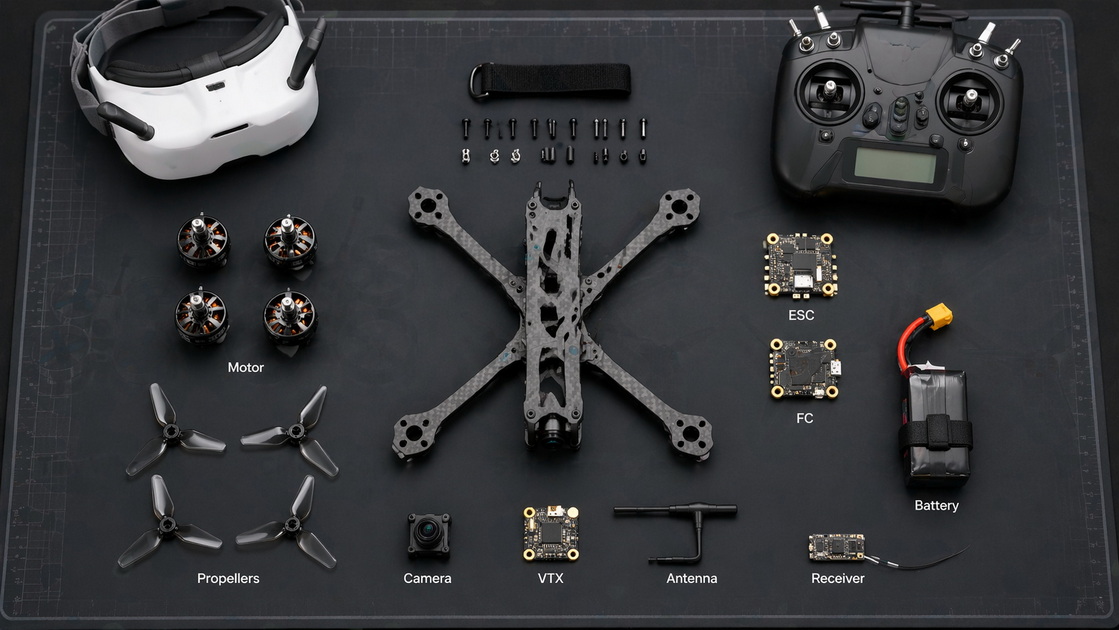
To build or upgrade an FPV drone, you must understand three key systems. [oscarliang]
Controls motion and stability.
- Motors (FPV drone motors): Generate thrust to lift and move the drone. Motor design, stator size, KV, and quality directly affect acceleration, torque, and flight smoothness. [mepsking]
- Propellers: Convert motor rotation into thrust. Size and pitch control speed, agility, and efficiency.
- ESC (Electronic Speed Controller): Regulates power to each motor based on flight controller commands.
- Flight Controller (FC): The "brain" that runs firmware (like Betaflight), stabilizes the quad, and processes input.
- Radio Receiver: Receives commands from your radio transmitter (e.g., ELRS 2.4 GHz). [news.quadpartpicker]
Supplies energy to everything.
- Battery (usually LiPo or Li‑ion): Voltage (S count) and capacity (mAh) determine power and flight time.
- PDB or Power Distribution: Routes battery power to ESCs, FC, VTX, and accessories. [blkmktri]
Provides the first‑person view.
- FPV Camera: Captures real‑time video.
- VTX (Video Transmitter): Sends the video signal.
- Antenna: Affects signal quality and range.
- Goggles / Monitor: Receives and displays the live video feed.
- Optional HD Camera: GoPro or similar for high‑quality recorded footage. [oscarliang]
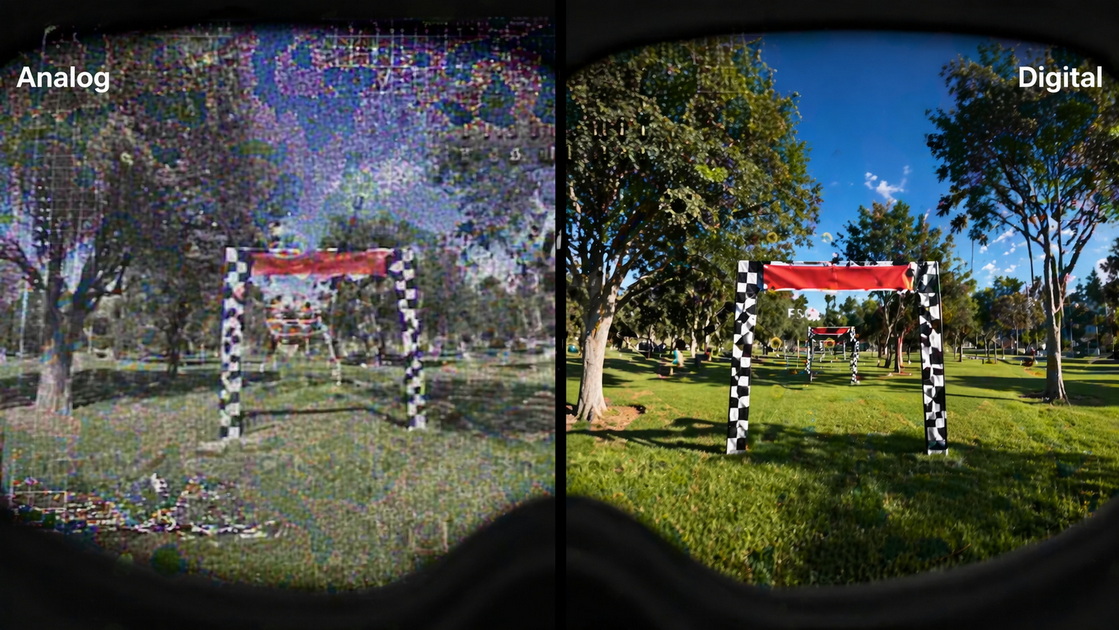
Modern FPV video systems fall into analog or digital (HD). [oscarliang]
Pros:
- Very low latency – excellent for racing and fast freestyle
- Budget‑friendly: cameras and VTX often $12–$40
- Great signal penetration indoors and in trees
- Mix‑and‑match components from different brands [oscarliang]
Cons:
- Lower resolution (typically 480–576p)
- Image can look noisy and less cinematic
Pros:
- HD image quality – up to 1080p 100 fps in some systems
- Clearer details for cinematic flying and precise lines
- Systems get frequent updates and manufacturer support [oscarliang]
Cons:
- Higher cost for goggles + VTX + camera
- Slightly higher latency than analog (though improving)
- Proprietary ecosystems reduce mix‑and‑match flexibility [oscarliang]
| Feature | Analog FPV | Digital FPV (DJI, HDZero, WalkSnail) |
|---|---|---|
| Cost | $12–$40 for core parts | Higher – full system is expensive |
| Resolution | ~480–576p | Up to 1080p @ 100 fps |
| Latency | Very low | Low to moderate, improving |
| Compatibility | Flexible, open | Mostly proprietary |
| Penetration | Strong in obstacles | Can struggle indoors / dense areas |
| Best For | Budget, racing, training | Cinematics, HD racing, pro content |
Beginner tip:
- Start with analog if budget is tight and you primarily want to learn control.
- Choose digital if your main goal is cinematic FPV video and you accept higher upfront cost. [oscarliang]
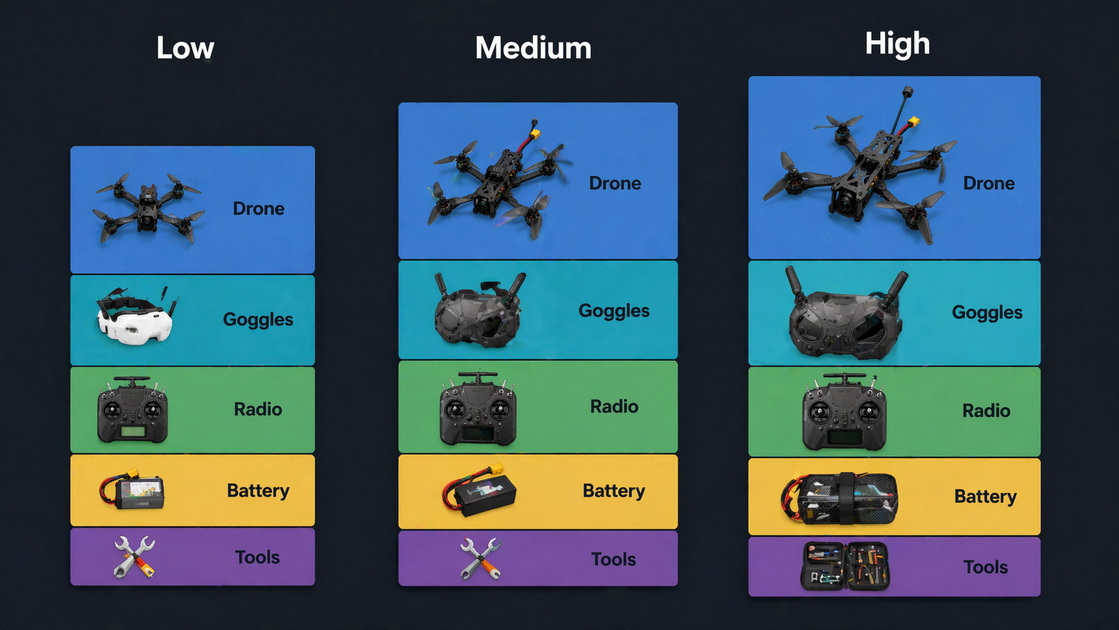
FPV is not cheap—but it doesn't have to be unaffordable. [mattyfleisch]
- RTF beginner kits: around $200–$500
- Pre‑built quads (BNF): approx. $300–$600
- DIY builds: roughly $400–$1800, depending on components and HD vs analog [mattyfleisch]
- Frame: $20–$150
- Flight Controller: $20–$200
- ESC / AIO: $50–$250
- Motors: $20–$50 each
- Props: $2–$15 per set
- Battery + charger: $20–$100+
- VTX: $20–$200
- FPV camera: $30–$100
- Radio + receiver: $50–$300
- FPV goggles: $100–$700
- Tools & misc.: ~$100 [rcvisions]
To progress safely and quickly, you'll need both technical and piloting skills. [blkmktri]
- Basic knowledge of motors, ESCs, FCs, antennas, and batteries
- Ability to assemble or at least configure a drone
- Understanding of soldering basics and electrical safety [mepsking]
Even if FPV is your goal, learn to:
- Take off, hover, land, and move around while watching the quad directly
- Recover and land the quad safely if you lose video feed [oscarliang]
- Fast reactions to avoid obstacles
- Judging distances from the drone's perspective
- Comfort flying at various speeds and heights [blkmktri]
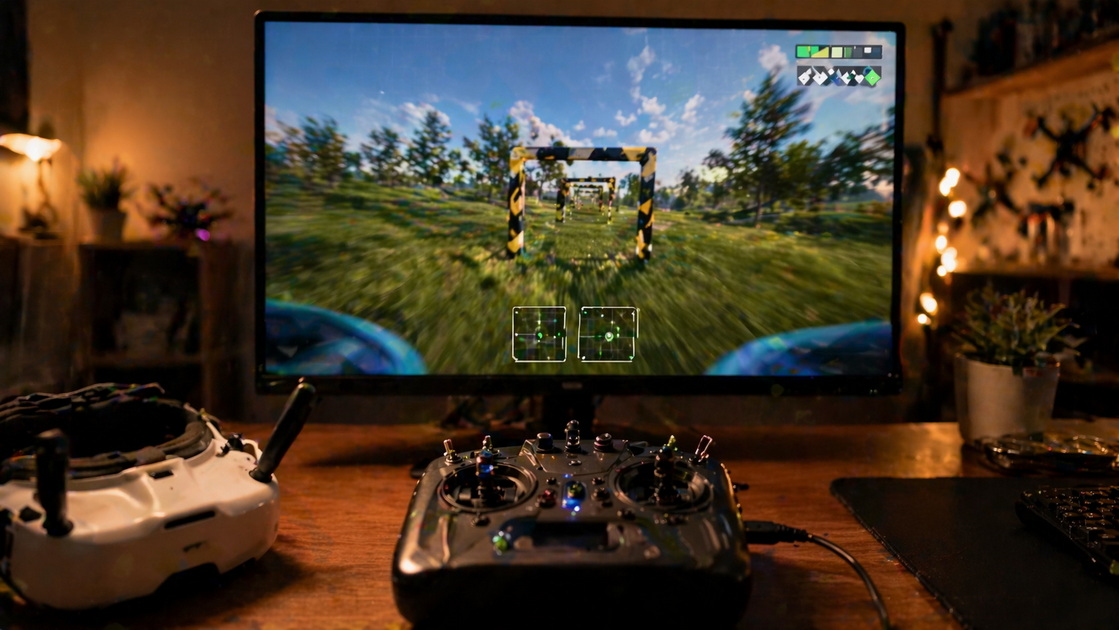
Almost every experienced FPV pilot I know recommends starting with a simulator. [reddit]
FPV simulators (e.g., DRL Sim, Liftoff, Velocidrone) let you:
- Practice acro mode safely
- Build muscle memory
- Test controller rates and stick feel
- Crash endlessly without breaking props [reddit]
Basic roadmap:
1. Buy a radio compatible with simulators (ExpressLRS radios are popular in 2026). [reddit]
2. Install a simulator on PC or console.
3. Fly at least 10–20 hours before committing a real quad to full‑manual acro. [oscarliang]
4. Try training maps (gates, tracks, freestyle parks) to develop control.
FPV is a community‑driven hobby. [blkmktri]
Good starting points:
- Forums: RCGroups, FPVLab, intoFPV
- Reddit: r/fpv, r/Multicopter, r/drones
- Content creators: Oscar Liang, Joshua Bardwell and others provide deep tutorials, builds, and reviews. [oscarliang]
- Manufacturers & shops: many brands maintain blogs and guides—MEPSKING, GetFPV, RaceDayQuads, and others share part lists and tuning advice. [fpvknowitall]
Talking to experienced pilots before buying parts often saves you money and frustration.
From a motor manufacturer's standpoint, the biggest mistake beginners make is mismatching motors, props, and batteries. [oscarliang]
Include:
- Frame
- Motors + ESC or AIO
- FPV system (camera, VTX, antennas)
- Battery
- GoPro/HD cam and mounts
- Screws, TPU parts, wiring [mepsking]
Motor thrust must comfortably exceed AUW; otherwise you get:
- Weak climb
- Overheating motors and ESCs
- Short flight times [oscarliang]
Typical patterns: [mepsking]
- 4S + 2300–2700 KV – standard for many 5‑inch racing drones
- 6S + 1600–1950 KV – popular for high‑efficiency 5‑inch freestyle
- Lower KV with higher voltage = efficiency and cool temps
- Higher KV with lower voltage = punch and acceleration
- Racing: higher KV motors, aggressive props, maximum thrust
- Freestyle: mid‑KV, good balance between power and control
- Long‑range: lower KV, larger props, efficiency‑focused [oscarliang]
As you progress, pay attention to:
- Local regulations: altitude limits, registration, licensing requirements (e.g., TRUST / Part 107 in the US). [faa]
- Battery safety: LiPo handling, charging, and storage.
- Waterproofing: Conformal coating and protective designs can help your electronics survive moisture and light rain. [blkmktri]
Starting FPV is not just about buying a drone—it's about choosing a reliable power system that matches your skills and flying style. Motors, ESCs, and batteries must work together with your frame and FPV system to deliver safe, predictable performance.
As Zhongshan Yuhang Power Technology Co., Ltd., we specialize in FPV drone motors and brushless power solutions for:
- FPV racing and freestyle drones
- Cinewhoops and long‑range platforms
- RC cars and high‑thrust fan systems
- Gimbals, service robots, and underwater robots [instagram]
If you are planning your first FPV build—or designing a custom FPV or robotics platform—our team can help you match motors, ESCs, and batteries to your real‑world use case and regional regulations.
1. Is FPV harder to learn than flying a GPS camera drone?
Yes. FPV drones usually fly in manual acro mode with no auto‑leveling, so they demand more practice, especially early on. Simulators and Tiny Whoops help reduce the learning curve. [rcvisions]
2. What is the best FPV drone type for beginners in 2026?
Most new pilots start successfully with a Tiny Whoop or small cinewhoop plus a simulator, then move to a 5‑inch quad once they're confident in acro. [mattyfleisch]
3. Should a beginner buy an RTF kit or build a DIY drone?
If you are brand new, an RTF or BNF kit is usually the safest path. You can always move to DIY once you understand the components and have basic soldering skills. [news.quadpartpicker]
4. How much should I budget for my first FPV setup?
Expect roughly $300–$600 for a solid entry including drone, radio, goggles and a few batteries. Cheaper is possible, but cutting corners on radio or goggles often hurts the experience. [mattyfleisch]
5. Do FPV drones need to be registered and licensed?
In many countries, yes—especially if the takeoff weight is above a threshold (e.g., 249 g in the US, EU) or you fly commercially. Always check your local aviation regulations. [faa]
1. Mepsking. FPV Drone Beginner's Guide.
https://www.mepsking.shop/blog/fpv-drone-beginners-guide.html [blkmktri]
2. Mepsking. How To Choose FPV Drone Motor – A Detailed Guide 2026.
https://www.mepsking.shop/blog/how-to-choose-fpv-drone-motor.html [mepsking]
3. Oscar Liang. How To Get Started With FPV Drone – The Ultimate Beginner's Guide.
https://oscarliang.com/fpv-drone-guide/ [oscarliang]
4. Oscar Liang. How to Choose FPV Drone Motors.
https://oscarliang.com/motors/ [oscarliang]
5. Matty Fleisch. Best FPV Drone Kits for Beginners in 2026.
https://mattyfleisch.com/best-fpv-drones-for-beginners/ [mattyfleisch]
6. QuadPartPicker. The Beginner's Guide to Picking FPV Drone Parts.
https://news.quadpartpicker.com/the-beginners-guide-to-picking-fpv-parts/ [news.quadpartpicker]
7. RCVisions. Best FPV Drones in 2026: Racing, Cinematic & Beginner Picks.
https://rcvisions.com/blogs/rc-visons-journal/best-fpv-drones-in-2026 [rcvisions]
8. FPV Know‑It‑All. The Ultimate FPV Shopping List.
https://www.fpvknowitall.com [fpvknowitall]
9. FAA UAS Resources (for regulatory background).
https://www.faa.gov/uas [faa]


