Language


Views: 243 Author: Yuhang Power Publish Time: 2026-08-11 Origin: Site
Content Menu
● FPV Motor vs Racing Motor: Main Differences
● KV Rating: Matching Speed to Voltage
● Why Racing Motors Need Fast RPM Changes
● Peak Thrust Is Not the Whole Story
● How to Read a Motor Test Report
● Best Motor Type for Different FPV Builds
>> Cinewhoops and Micro Drones
● OEM Motor Development Considerations
● Common Motor Selection Mistakes
>> Selecting KV Without Checking the System
>> Buying Based on Generic Claims
>> 1. Is a racing motor the same as an FPV motor?
>> 2. Can I use a racing motor on a freestyle drone?
>> 3. What motor size is common for a 5-inch racing drone?
>> 4. Is higher KV always better for FPV racing?
>> 5. Why can two 2207 motors perform differently?
FPV drone builders, product managers, and OEM buyers often use the terms "FPV motor" and "racing motor" as if they mean exactly the same thing. In many product listings, that is understandable. Yet, from an engineering and sourcing perspective, the distinction matters.
A motor designed for a lightweight cinewhoop, a long-range quadcopter, and a 5-inch racing drone may all be called an FPV motor. Their actual performance priorities can be very different. One may emphasize smooth control and efficiency. Another may prioritize rapid acceleration and the ability to withstand repeated high-current bursts.
For drone brands, distributors, and professional system integrators, understanding this difference helps prevent mismatched power systems, excessive heat, weak flight performance, and unnecessary warranty risk.
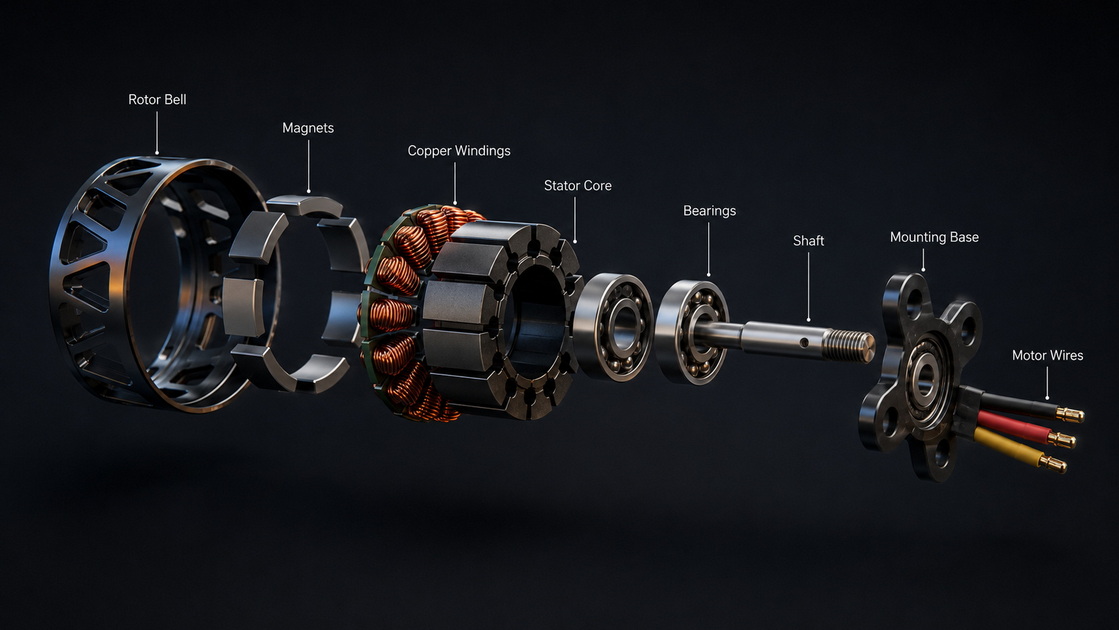
An FPV motor is a brushless motor used to drive the propellers of a first-person-view aircraft. Most FPV drones use compact outrunner brushless motors, where the outer motor bell rotates around a fixed stator.
The term covers a broad range of aircraft and flight purposes:
- Freestyle FPV drones
- Racing quadcopters
- Cinewhoops
- Tiny whoops and micro FPV drones
- Long-range FPV platforms
- FPV fixed-wing aircraft
- Custom UAV projects
An FPV motor should never be selected in isolation. Its real-world performance depends on the complete power system, including the propeller, ESC, battery, frame size, all-up weight, flight-controller settings, and expected operating environment.
For example, a 2207 motor may be suitable for a 5-inch freestyle drone, a race quad, or a general-purpose FPV platform. However, a motor code alone does not reveal the winding specification, magnet performance, bearing quality, rotor mass, cooling design, or recommended propeller load.
Application defines the correct motor more accurately than a product name alone.
A racing motor is an FPV motor developed specifically for high-speed competitive flight. Its job is not simply to generate maximum thrust. It must provide fast RPM changes, predictable throttle control, strong recovery after turns, and reliable operation during repeated high-load bursts.
A well-designed FPV racing motor usually balances several performance targets:
- High torque for aggressive propeller control
- Fast throttle response
- Strong thrust-to-weight performance
- Good thermal resistance
- Low rotating inertia
- Stable bearings at high RPM
- Durable shafts and motor bells
- Consistent output across repeated race laps
Racing pilots repeatedly accelerate, decelerate, turn sharply, and recover from rapid changes in propeller load. A motor that performs well during a short bench test may not necessarily maintain the same behavior during an entire race.
That is why a dedicated racing motor normally focuses on responsiveness as much as peak thrust.
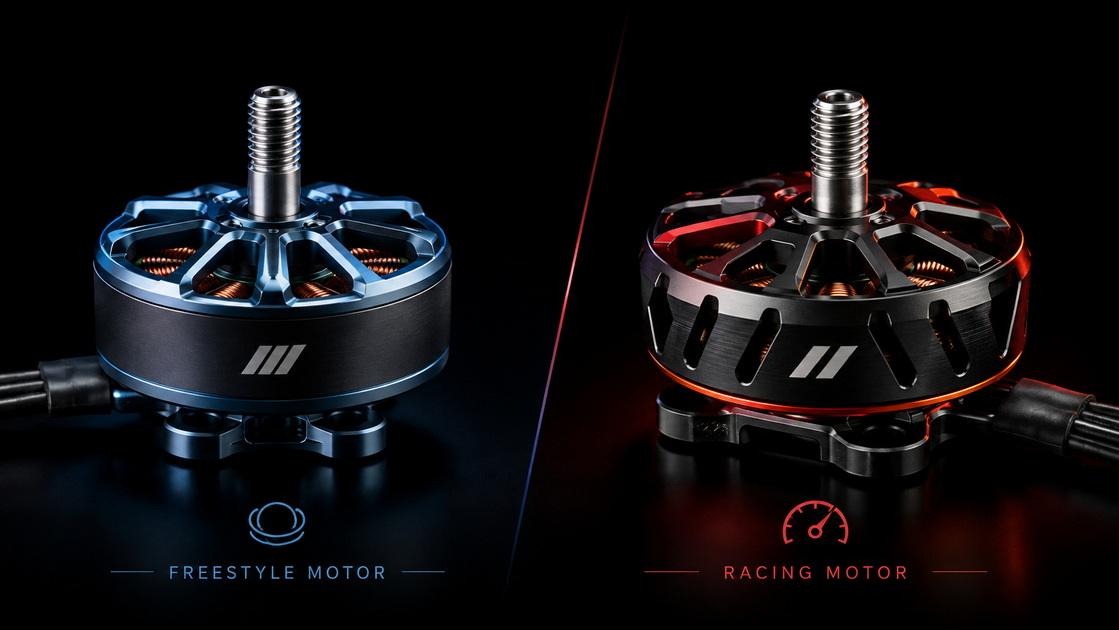
| Feature | General FPV Motor | FPV Racing Motor |
|---|---|---|
| Primary purpose | Broad FPV flight applications | Competitive speed and acceleration |
| Typical flight style | Freestyle, cinematic, cruising, micro flight, long range | High-speed laps, sharp turns, rapid throttle changes |
| Throttle feel | Smooth, balanced, or application-specific | Fast, direct, and highly responsive |
| Efficiency target | Often important for endurance or controlled flight | Balanced with burst performance |
| Torque demand | Varies by aircraft and propeller | Often high for rapid RPM recovery |
| Heat tolerance | Based on intended duty cycle | Designed for repeated high-current operation |
| Rotor design | Can prioritize smoothness, weight, or efficiency | Often optimized for response and durability |
| Suitable buyers | General drone brands and hobby builders | Racing brands, competitive pilots, performance-focused OEMs |
| Common concern | Flight time, smoothness, aircraft weight | Acceleration, consistency, thermal margin |
The simplest way to understand the relationship is this: every racing motor is an FPV motor, but not every FPV motor is a racing motor.
FPV motor specifications often use four digits, such as 2207, 2306, or 1404. These numbers generally describe the stator diameter and stator height.
For example:
- A 2207 motor has an approximately 22 mm stator diameter and 7 mm stator height
- A 2306 motor has an approximately 23 mm stator diameter and 6 mm stator height
- A 1404 motor is smaller and commonly used for lightweight micro FPV platforms
Stator geometry affects torque production, motor weight, propeller compatibility, and heat behavior. In general, a larger stator volume can support greater torque, which is helpful when turning larger or more aggressive propellers.
However, selecting the largest available motor is not always the best decision.
A larger motor may add weight, consume more current, and reduce efficiency when installed on a lightweight aircraft. A motor that is too powerful for the airframe can also make throttle control more difficult.
For racing applications, the goal is normally to achieve sufficient torque without creating unnecessary rotational mass or electrical load.
KV refers to the approximate no-load RPM per volt applied to a brushless motor. It is useful for comparing motor windings, but it is not a direct measurement of thrust, power, or real in-flight RPM.
A simplified formula is:
No-load RPM≈KV×Voltage
A 1900KV motor connected to a 6S battery can theoretically reach a higher no-load RPM than the same motor connected to a 4S battery. In actual use, the propeller load, battery voltage sag, ESC settings, and aerodynamic resistance reduce the final RPM.
As a practical guideline:
- Higher KV is often used with lower-voltage systems or smaller propellers
- Lower KV is often used with higher-voltage systems or larger propellers
- Incorrect KV selection can create excessive current draw and heat
- Propeller pitch and blade count can significantly change the motor load
A 5-inch FPV racing drone may use different KV ranges depending on whether it operates on 4S or 6S batteries. The motor must be selected together with the entire electrical and mechanical system.
KV alone should never be the final purchasing criterion.
During a race, pilots make quick directional changes around gates, flags, and obstacles. The motor needs to speed up and slow down rapidly as throttle input changes.
This depends partly on rotor inertia. Rotor inertia is the resistance of the motor bell and propeller assembly to speed changes. A heavier rotating assembly can feel less responsive. A very light assembly can respond more quickly, but it must still withstand crashes, vibration, and high RPM.
A racing motor often uses a carefully balanced combination of:
- Strong magnets
- Lightweight rotor bell construction
- Efficient winding design
- Stable shaft structure
- Precision bearings
- Controlled air gap
- Durable motor mounting features
The objective is not simply "lighter" or "stronger." It is a controlled engineering balance between response, output, durability, and heat management.
Maximum thrust is useful, but it should not be the only number used to compare FPV motors.
A motor may produce excellent static thrust at full throttle while still being a poor match for a racing build. It may draw excessive current, overheat after multiple laps, create severe voltage sag, or deliver inconsistent throttle behavior.
A practical comparison should also consider:
- Thrust at mid-throttle levels
- Current draw across the throttle range
- Power consumption
- Efficiency in grams per watt
- Motor temperature after sustained operation
- Propeller compatibility
- ESC requirements
- Battery discharge capability
- Overall aircraft weight
Consistency often matters more than a single high peak number.
For example, a motor that produces slightly less maximum thrust but remains cooler and more predictable during repeated bursts may provide a better racing experience than a motor with a more impressive top-line thrust figure.
 xq
xq
Professional buyers should request motor test data based on the exact intended configuration. A useful test report should clearly identify the motor, propeller, voltage, ESC, and measurement conditions.
Review the following items before approving a motor for a new drone platform:
1. Motor model and KV rating
2. Battery voltage or cell count
3. Propeller diameter, pitch, and blade count
4. ESC model and current rating
5. Throttle percentage
6. Thrust output in grams
7. Current draw in amps
8. Electrical power in watts
9. Efficiency in grams per watt
10. Motor temperature and test duration
Two thrust charts cannot be compared fairly if they use different propellers, battery voltages, ESC settings, or test methods.
A motor tested with a more aggressive propeller may show higher thrust. It may also pull substantially more current and generate more heat. This is why buyers should evaluate complete data sets instead of relying only on promotional claims.
Choose a racing-focused motor when the project requires rapid acceleration, sharp directional changes, high thrust-to-weight performance, and strong propeller authority.
Popular racing configurations often use 5-inch propellers and medium-sized motors such as 2207, 2207.5, or 2306. The final selection depends on the chosen battery system, target drone weight, propeller design, and expected race environment.
A race motor should provide a direct throttle feel without placing unreasonable stress on the battery, ESC, or frame.
Freestyle drones also need strong power, but they typically prioritize smooth handling, recovery during acrobatic maneuvers, and durable construction.
A suitable freestyle motor often offers:
- Strong torque for propwash recovery
- Smooth low- and mid-throttle control
- Reliable crash resistance
- Reasonable current consumption
- Stable performance with popular freestyle propellers
A racing motor can be installed on a freestyle drone. However, an extremely aggressive motor and propeller combination may reduce flight time and make the aircraft feel unnecessarily sensitive.
Long-range FPV platforms usually prioritize efficiency, stable cruising, and extended flight time. Their motor selection may favor lower KV options, larger propeller compatibility, and lower heat at cruise throttle.
A dedicated racing motor is not always ideal for long-range aircraft because its design priorities may focus more on short-duration burst performance than energy efficiency.
For a long-range project, the motor should match the expected payload, battery capacity, propeller size, cruising speed, and environmental conditions.
Cinewhoops and micro FPV drones operate with much smaller propellers, lower aircraft weight, and more limited battery capacity.
These builds often require:
- Lightweight motor construction
- Small stator dimensions
- Smooth throttle response
- Suitable KV for small propellers
- Efficient operation at lower thrust levels
- Controlled motor temperatures inside ducts or compact frames
In these applications, a specialized micro FPV motor is generally more suitable than a motor designed for 5-inch racing.
For OEM and ODM projects, selecting a motor begins with the aircraft requirements rather than copying a competitor's specification.
A motor manufacturer should receive clear project information, including:
- Aircraft type and frame size
- Target propeller specification
- Battery voltage and capacity
- Estimated all-up weight
- Required thrust range
- Flight style and duty cycle
- ESC specification
- Motor mounting pattern
- Shaft diameter and mounting method
- Required colors, logo, and packaging
- Durability expectations
- Target market and product positioning
At Zhongshan Yuhang Power Technology Co., Ltd., motor development can be evaluated from the full power-system perspective. The motor, ESC, battery, propeller, and mechanical installation must work together.
Two motors with the same 2207 stator dimensions can deliver very different results. Changes in winding turns, copper fill, magnet grade, stator laminations, bell structure, bearing selection, shaft material, and assembly precision can alter their behavior significantly.
Customization is most valuable when it solves a defined performance or sourcing requirement.
KV must be matched with battery voltage and propeller load. A high-KV motor used with a high-voltage battery and aggressive propeller can draw excessive current and overheat quickly.
Review the full configuration before approving production.
Two motors marked 2207 may have very different efficiency, torque, temperature behavior, and durability.
The stator code is an important starting point, but it is not a complete technical specification.
Short bench tests do not always predict real race conditions. Motors can become significantly hotter during repeated punch-outs, high ambient temperatures, or restricted airflow.
Thermal performance should be reviewed during representative flight cycles.
Words such as "powerful," "professional," or "high performance" do not provide enough information for engineering evaluation.
Ask for measurable specifications, compatible propeller data, and consistent testing conditions.
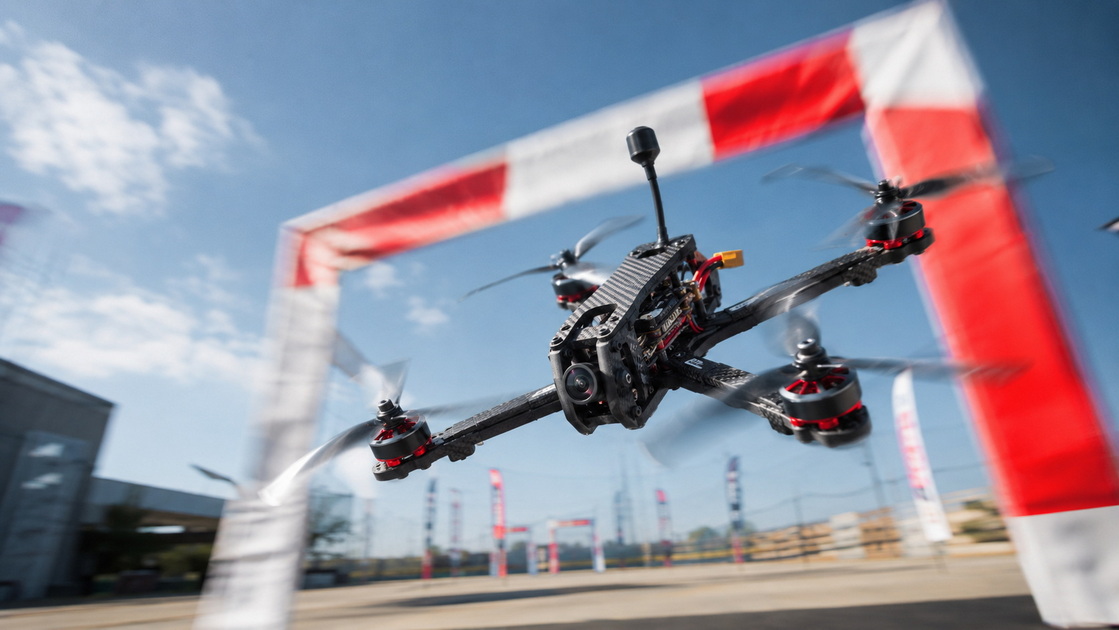
FPV motors and racing motors are related, but their intended performance priorities are different.
An FPV motor is a broad category covering many drone types and flight purposes. A racing motor is a high-performance FPV motor designed for quick throttle response, strong acceleration, repeated power bursts, and demanding race conditions.
The best motor is not always the one with the highest KV, largest stator, or highest advertised thrust. It is the motor that matches the complete aircraft system and delivers stable performance in the intended operating environment.
For brands developing FPV drones, racing quadcopters, RC vehicles, gimbal equipment, underwater robots, or other brushless-power products, a properly matched motor platform can improve product reliability, handling, and long-term user satisfaction.
A racing motor is a specialized FPV motor. It is designed for racing-focused requirements such as rapid throttle response, high burst performance, torque, and durability.
Yes. Racing motors can work on freestyle drones, especially when a pilot wants strong acceleration. However, a dedicated freestyle motor may provide smoother control and more balanced power consumption.
Common options include 2207, 2207.5, and 2306. The right choice depends on the drone weight, battery voltage, propeller specification, and desired throttle response.
No. Higher KV must be matched with the correct battery voltage and propeller. A KV rating that is too high for the system can increase current draw, heat, and battery stress.
Motor size is only one factor. Winding design, magnets, copper fill, stator material, bell weight, bearing quality, shaft design, and manufacturing consistency all affect final performance.
1. Oscar Liang, [How to Choose FPV Drone Motors] — motor size, KV selection, propeller matching, and FPV motor configurations. [oscarliang]
2. EMAX, [ECO II Series 2207 Brushless Motor for RC Drone FPV Racing] — example of a 2207 motor platform available in multiple KV options. [shop.emaxmodel]
3. T-Motor, [Velox V2207 V3 2207 5-Inch Brushless Drone Motor] — product example of different KV versions for 5-inch FPV drones. [shop.tmotor]
4. T-Motor, [F60PRO V 2207.5 Brushless Racing Motor for 5-Inch FPV] — racing-focused motor example with emphasis on thrust, linearity, and durability. [shop.tmotor]
5. T-Motor, [F40 PRO V High Thrust 6S 5-Inch FPV Racing Motor] — product example designed for professional 5-inch racing quadcopters. [shop.tmotor]
6. Grepow, [An In-Depth Guide to Drone Motors] — overview of drone motor stator size, torque, KV, and propeller compatibility. [grepow]
7. Mechtex, [Understanding the Relationship Between KV Rating and Drone Performance] — explanation of KV as a no-load RPM-per-volt constant. [mechtex]


