Language


Views: 213 Author: Yuhang Power Publish Time: 2026-08-24 Origin: Site


Content Menu
● How Fast Can Different Types of Drones Fly?
● FPV Racing Drone Speed: 80–120+ mph
● Consumer Camera Drone Speed: 30–47 mph
● Industrial and Agricultural Drone Speed: 20–35 mph
● What Determines How Fast a Drone Can Fly?
>> Brushless Motor KV, Torque, and Stator Size
>> Battery Voltage and Current Delivery
>> Propeller Size, Pitch, and Blade Count
>> Frame Aerodynamics and Structural Stiffness
>> Weight and Power-to-Weight Ratio
● Extreme Drone Speed: What Record Projects Teach Us
● How to Make an FPV Drone Faster Safely
>> Practical FPV Speed Upgrade Checklist
● Legal Limits and Responsible Flight
● Choose the Right Brushless Motor for Your Application
● FAQ
>> 1. How fast can a typical FPV drone fly?
>> 2. Does a higher-KV motor always make a drone faster?
>> 3. What matters more for FPV speed: motor KV or propeller pitch?
>> 4. Can a camera drone fly as fast as an FPV racing drone?
>> 5. Why does an FPV drone feel slower in cold weather?
How fast can a drone fly? Depending on its design and intended use, a drone may fly at less than 20 mph (32 km/h) or exceed 100 mph (161 km/h). Specialized record-setting quadcopters can reach far higher speeds, but real-world drone performance depends on the complete propulsion system—not just the motor.
For FPV pilots, drone brands, and equipment developers, speed is created by the interaction of brushless motors, battery voltage, ESC capability, propeller design, frame aerodynamics, aircraft weight, cooling, and flight tuning. A high-performance drone needs a balanced power system that delivers acceleration, reliability, controllability, and thermal stability in real operating conditions.
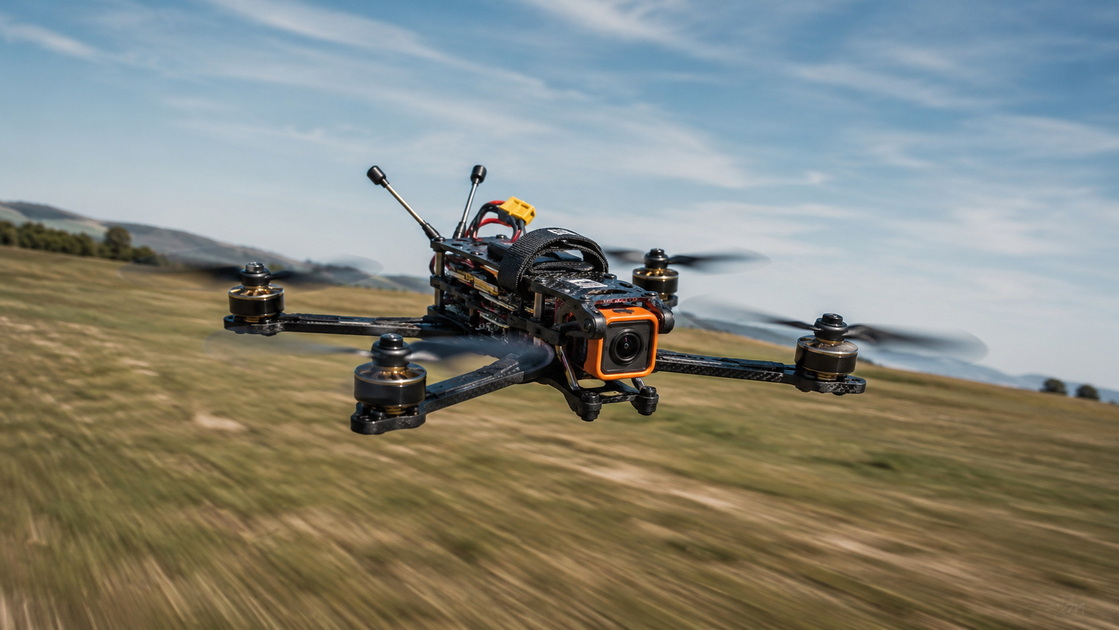
Different drones are built for different missions. A camera drone must prioritize stable footage. An agricultural drone must carry payloads safely and consistently. An FPV racing drone is designed for rapid acceleration, agility, and speed.
| Drone Type | Typical Top Speed | Main Design Priority | Typical Motor Requirement |
|---|---|---|---|
| Consumer camera drone | 30–47 mph / 48–75 km/h | Stable video and safety | Efficient, low-vibration brushless motors |
| FPV freestyle drone | 50–90 mph / 80–145 km/h | Responsive control and durability | Balanced torque, power, and impact resistance |
| FPV racing drone | 80–120+ mph / 130–193+ km/h | Acceleration and maximum speed | High-power motors with fast response |
| Heavy-lift or agricultural drone | 20–35 mph / 32–56 km/h | Payload and stable operation | Large torque-focused motors and propellers |
| Fixed-wing commercial UAV | 30–75 mph / 48–121 km/h | Endurance and route coverage | Efficient propulsion for continuous cruise |
| Specialized high-speed quadcopter | 400+ mph / 644+ km/h | Extreme engineering performance | Custom motor, cooling, and aerodynamic systems |
These figures are useful guides, not fixed promises. Actual flight speed changes with battery condition, air temperature, payload, wind, altitude, flight mode, pilot input, and system configuration.
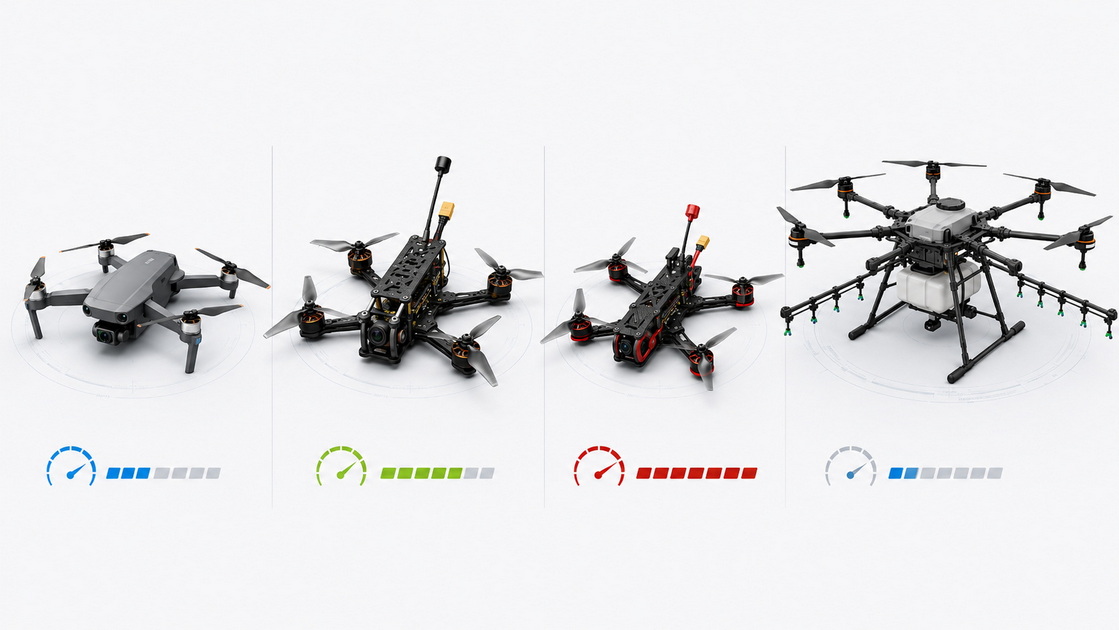
A properly configured FPV racing drone can commonly reach 80–100 mph in suitable conditions. Advanced racing-focused builds may exceed 100 mph when the battery, ESC, brushless motors, propellers, frame design, and tuning are matched carefully.
A fast FPV drone needs a strong power-to-weight ratio. When a quadcopter can hover using relatively low throttle, it has more thrust available for acceleration, climbs, punch-outs, and high-speed forward flight.
However, top speed alone does not define a good FPV setup. A quad that reaches a high speed but suffers from excessive motor temperature, unstable flight behavior, vibration, short battery life, or ESC overload is not delivering useful performance.
For competitive and demanding FPV applications, the most important factors include:
- Fast throttle response
- Strong torque delivery
- Efficient power conversion
- Stable motor temperature
- Reliable bearings and construction
- Consistent quality between motors
- Good compatibility with high-current ESCs
- Predictable flight handling
Consumer camera drones are usually built for smooth and stable video rather than extreme speed. Many models can reach around 40–47 mph (65–75 km/h) in faster flight modes, while normal video modes may be significantly slower.
Manufacturers often limit speed because high-speed flight can reduce image stability, increase stopping distance, shorten flight time, and make obstacle avoidance more difficult. The gimbal, flight-control system, vision sensors, battery management system, and propulsion system must work together to maintain safe and smooth operation.
For camera drones, an effective brushless motor should support:
- Low vibration for clean video
- High efficiency for longer flight time
- Smooth acceleration and braking
- Stable operation under repeated use
- Low noise and controlled heat generation
- Consistent performance across multiple production units
The fastest motor is not always the best motor. For a camera platform, stable footage and flight endurance are often more valuable than a small increase in top speed.
Industrial, agricultural, inspection, delivery, mapping, and heavy-lift drones generally fly more slowly than FPV racing drones. Their design priorities are payload capacity, route accuracy, safety, endurance, and stable operation.
An agricultural drone carrying spray liquid, for example, must maintain consistent altitude, predictable coverage, and reliable control throughout the mission. Flying too fast can reduce spraying precision, increase drift risk, and make obstacle avoidance more difficult.
For heavy-duty applications, the propulsion system should prioritize:
- Continuous torque
- High thrust at lower RPM
- Efficient operation with large propellers
- Thermal stability during extended missions
- Strong resistance to dust, moisture, and vibration
- Long service life
- Reliable load handling
- Stable performance with changing payload weight
Large agricultural and industrial drones often use lower-KV motors with larger stators and larger propellers. This configuration is designed to create strong, efficient thrust rather than extreme top speed.
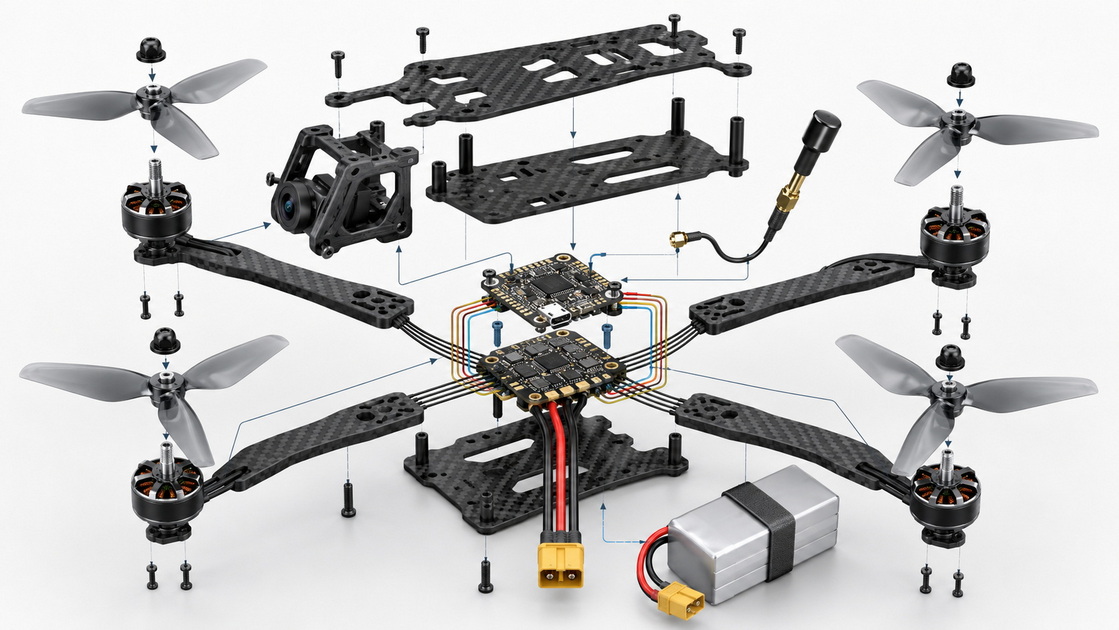
Drone speed is produced by a complete power system. Changing only one component can create a mismatch that reduces efficiency, increases heat, or causes premature component failure.
A motor's KV rating refers to its theoretical no-load RPM per volt. In simple terms, a higher-KV motor can spin faster at a given voltage, while a lower-KV motor is often better suited to larger propellers and higher-torque applications.
But KV is only one part of the equation.
A brushless drone motor should also be evaluated according to:
- Stator diameter and stator height
- Magnet strength and air-gap design
- Winding method
- Maximum current capacity
- Bearing durability
- Heat dissipation performance
- Motor weight
- Compatible battery voltage
- Recommended propeller range
- Expected operating environment
For example, a high-KV motor paired with an oversized, aggressive propeller may draw too much current and generate excessive heat. A low-KV motor paired with a small propeller may not use the available voltage and power efficiently.
The strongest results come from selecting the motor, propeller, battery, and ESC as a single matched system.
Battery voltage has a direct effect on motor RPM potential and available system power. Higher-voltage configurations can deliver more power with lower current for the same wattage, helping reduce resistive loss in wires and connectors.
However, a higher-voltage setup requires every key component to be compatible. The battery, ESCs, motors, capacitors, connectors, wiring, and power-distribution components must all be correctly rated.
A reliable high-performance drone setup usually requires:
1. A battery with sufficient discharge capability
2. ESCs that tolerate real-world current spikes
3. Motors that remain within a safe operating temperature
4. Propellers that deliver thrust without excessive load
5. Correct wire gauge, connectors, and solder joints
6. Clean electrical filtering and stable flight tuning
Bench-test data is valuable, but it does not show the full flight picture. In forward flight, airflow changes propeller load, motor cooling improves, battery voltage drops under load, and aerodynamic drag rises. For this reason, a propulsion system should be tested on the bench and verified in controlled flight.
Propellers transform motor power into thrust. Their size and shape influence acceleration, top speed, efficiency, sound level, responsiveness, and motor temperature.
- Higher-pitch propellers can improve forward speed but often increase current draw.
- Larger-diameter propellers can create more thrust but add more rotational load.
- More propeller blades can improve grip and responsive handling but may reduce efficiency.
- Lower-pitch propellers generally support smoother, more efficiency-focused flight.
For high-speed FPV applications, pilots may use more aggressive propeller pitch. However, the ideal propeller depends on motor KV, battery voltage, frame size, target flight style, and ESC capacity.
A propeller should never be selected only because it produces the highest thrust on paper. It must also match the motor's safe current range, thermal limit, and intended flight duration.
At high speed, aerodynamic drag becomes increasingly important. A clean, compact frame with reduced frontal area can maintain forward speed more effectively than a bulky build with loose wiring, exposed electronics, or poorly positioned accessories.
Frame stiffness also affects flight quality. A flexible frame can create vibration, interfere with gyro data, reduce tuning accuracy, and make the drone less predictable at high speed.
For performance FPV builds, a rigid carbon-fiber frame can help deliver:
- More precise control response
- Reduced vibration transfer
- Better flight-controller data
- More effective filtering
- Improved motor efficiency
- Greater confidence during high-speed turns
A lightweight frame is useful, but strength must not be sacrificed. A frame that saves a few grams but flexes excessively or breaks easily may reduce overall performance and increase maintenance cost.
Every additional gram requires more thrust. A lighter drone usually accelerates faster and has more power reserve for rapid direction changes, climbs, and top-speed runs.
Weight reduction should be practical rather than extreme. Removing essential protection, using undersized wires, or choosing components with insufficient thermal capacity can create serious reliability problems.
A better objective is intelligent weight optimization:
- Use a frame designed for the target propeller size
- Select motors with an appropriate power-to-weight balance
- Keep wiring short, secure, and correctly sized
- Use suitable battery capacity for the mission
- Avoid unnecessary accessories during performance-focused builds
- Maintain protection for critical electronics and antennas
The fastest battery-powered remote-controlled quadcopters demonstrate what can happen when every component is engineered around a single high-speed objective. These specialized aircraft are not typical FPV freestyle drones, camera drones, or industrial UAVs.
Extreme-speed projects require advanced development in several areas:
- Aerodynamic drag reduction
- High-RPM propulsion
- Motor cooling
- ESC current management
- Battery power delivery
- Frame strength
- Propeller structural integrity
- High-speed stability
- Accurate speed measurement
- Controlled flight testing
The most useful lesson is not that every quadcopter should pursue maximum speed. Instead, it is that high performance comes from system-level engineering.
A motor cannot perform at its best if the propeller overloads it. A powerful battery cannot deliver consistent output if the ESC or wiring becomes a bottleneck. A fast airframe cannot remain controllable if frame vibration affects the flight-control system.
For OEM and ODM development, the ideal target is usually a balanced performance range based on the product's purpose: thrust, flight time, payload, noise level, durability, operating temperature, cost target, and service life.
Before upgrading a drone, define the real goal. Do you need a higher top speed, stronger acceleration, faster racing laps, improved freestyle recovery, or better flight efficiency? The correct component choice will vary.
1. Measure the existing configuration. Record flight time, motor temperature, ESC temperature, battery voltage sag, current draw, and handling characteristics.
2. Check motor and propeller compatibility. Select a propeller that works within the motor's recommended operating range.
3. Confirm battery and ESC ratings. Make sure the system can safely handle the selected voltage and expected current demand.
4. Reduce unnecessary weight and drag. Secure wiring, remove unnecessary accessories, and keep the airframe clean without compromising protection.
5. Use a rigid and properly assembled frame. Check motor screws, arm stiffness, stack mounting, and propeller condition before each test.
6. Improve tuning and filtering. A well-tuned drone may gain more usable speed and control confidence than a build upgraded with random high-power components.
7. Monitor temperature after every change. Stop testing if motors, ESCs, batteries, wires, or connectors become excessively hot.
8. Test in an appropriate location. High-speed flight requires a large, clear area away from people, buildings, vehicles, and other aircraft activity.
A drone's technical capability does not automatically determine where or how it may be flown. Flight requirements depend on the country, aircraft category, operating environment, airspace, pilot qualifications, and whether the operation is recreational or commercial.
In many locations, operating rules set limits on maximum speed, altitude, distance, and proximity to people or buildings. Wind can also affect ground speed, stopping distance, and flight behavior, especially for lightweight FPV drones.
Before conducting a high-speed flight, pilots should confirm local requirements and evaluate the operating area carefully. A faster drone has greater kinetic energy, requires more stopping distance, and leaves less time for pilot correction.
Responsible preparation includes:
- Checking local drone operating requirements
- Inspecting motors, propellers, batteries, and wiring
- Confirming failsafe settings
- Testing video transmission quality
- Choosing an open flight area
- Maintaining awareness of wind conditions
- Keeping safe distance from people and property
- Monitoring battery temperature after flight
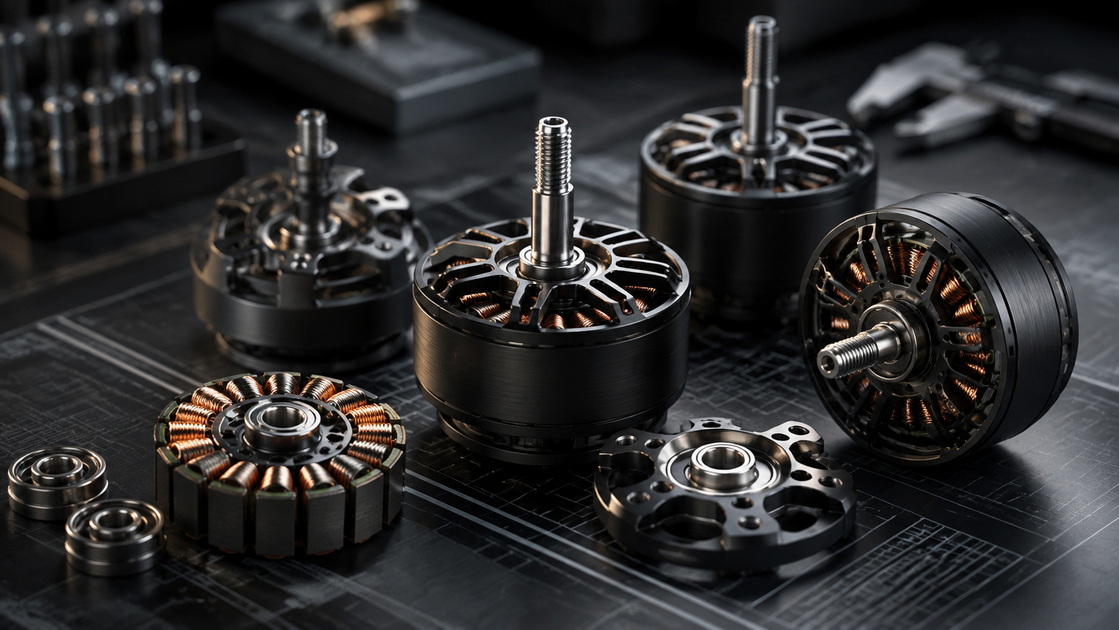
A successful drone motor selection starts with the application, not a single KV rating.
FPV racing drones need responsive power delivery, fast RPM changes, and reliable high-current performance. Camera drones need smooth operation, efficiency, and low vibration. Agricultural and industrial UAVs require torque, thermal control, durability, and consistent output under payload.
Zhongshan Yuhang Power Technology Co., Ltd. develops and manufactures brushless motor solutions for FPV drones, racing drones, RC vehicles, violent fans, gimbal cameras, aircraft, robotic vacuum cleaners, underwater robots, and other professional equipment.
Our engineering process evaluates the complete operating condition, including:
- Required voltage and current range
- Target RPM and torque
- Propeller or transmission load
- Installation dimensions
- Cooling requirements
- Noise and vibration targets
- Expected operating time
- Environmental conditions
- Product durability requirements
- Production consistency and customization needs
Whether you are developing an FPV drone, a professional UAV platform, or a specialized electric-powered device, the right motor solution can improve performance, reliability, and product competitiveness.
Share your application requirements, and our team can help evaluate a suitable brushless motor and power-system configuration for your project.
Drone speed can range from slow, controlled industrial flight to high-speed FPV racing performance. The final result depends on how well the brushless motors, propellers, ESCs, battery, frame, and flight-control system work together.
For FPV drones, high speed requires more than a powerful motor. It requires proper component matching, stable tuning, effective cooling, suitable propeller selection, and safe operating practices. For camera, industrial, agricultural, and robotics applications, the best power solution is usually the one that balances performance, efficiency, noise, reliability, and long-term durability.
A typical 5-inch FPV drone can often reach approximately 50–90 mph (80–145 km/h). Racing-focused builds may exceed 100 mph when the motors, battery, ESCs, propellers, frame, and tuning are correctly matched.
No. A higher-KV motor may provide greater RPM potential, but actual speed also depends on propeller pitch, battery voltage, motor torque, ESC capability, aircraft weight, frame drag, and operating temperature.
Both are important. Motor KV affects RPM potential, while propeller pitch influences how much air the propeller moves during each rotation. The best results come from matching KV, voltage, propeller design, and flight style.
Usually not. Camera drones are designed for stable footage, gimbal operation, flight safety, and battery efficiency. FPV racing drones are lighter, more agile, and built for rapid acceleration and high-speed flight.
Cold weather can reduce battery performance and increase internal resistance. This may cause greater voltage drop under load, reducing the power available to the motors. Cold conditions can also affect propeller flexibility and electronic performance.
1. YAHREE. "[How Fast Can a Drone Fly? A Guide to Types of Drones]"
Original topic reference and industry context.
2. Guinness World Records. "[Fastest Ground Speed by a Battery-Powered Remote-Controlled Quadcopter]"
Record information for battery-powered RC quadcopter speed.
3. Electronic Code of Federal Regulations. "[14 CFR § 107.51 Operating Limitations for Small Unmanned Aircraft]"
U.S. small unmanned aircraft operating limitations.
4. European Union Aviation Safety Agency. "[Drones (UAS) Frequently Asked Questions]"
Information on European drone categories and operational requirements.
5. AirShaper. "[Breaking the World Record for the World's Fastest Drone]"
Engineering perspective on extreme high-speed drone design.


