Language


Views: 222 Author: Yuhang Power Publish Time: 2026-05-17 Origin: Site
When I took my first FPV quad from the simulator to an open field, I was shocked by how different real outdoor FPV flying felt—gusty wind, shaky hands, and a very real fear of losing the quad behind a tree. As a manufacturer working with FPV pilots and OEM partners every day, I now see the same pattern with almost every beginner: choosing the wrong drone size or motor setup makes outdoor FPV much harder than it needs to be. This guide will walk you step‑by‑step through choosing the right outdoor FPV drone size, motor, and setup so you can learn safely, progress faster, and enjoy every battery pack.
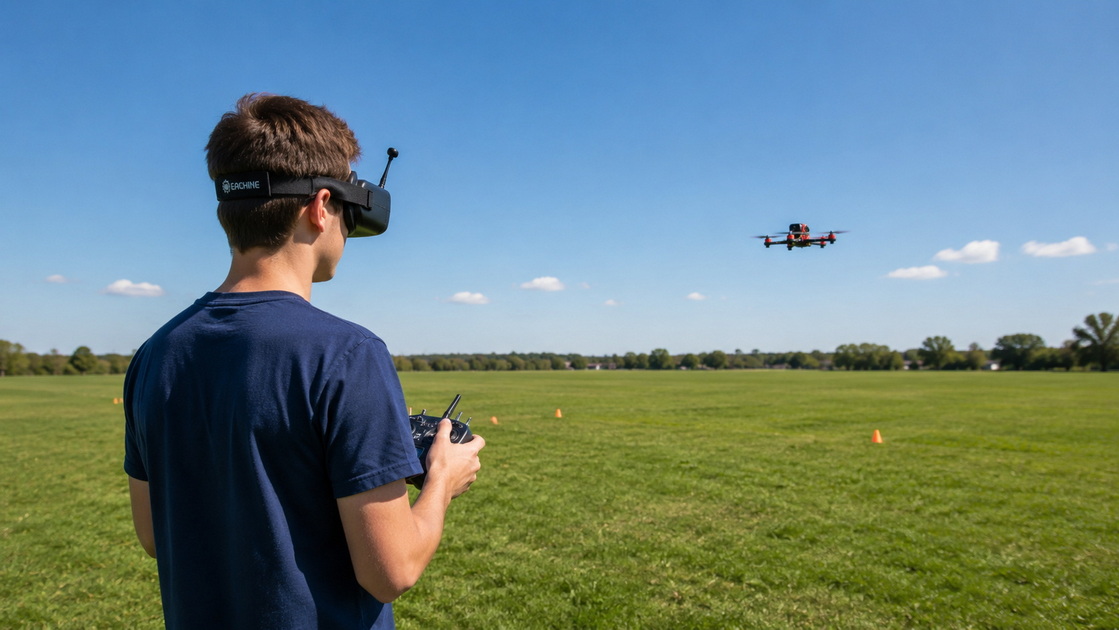
Flying FPV indoors is controlled and predictable: low speed, soft walls, and minimal wind. Once you step outside, everything changes—especially for lightweight micro drones.
Key differences you will notice immediately:
- Wind sensitivity – Even a mild breeze can knock a 2‑inch whoop off line, while a properly powered 5‑inch quad cuts through the same wind with ease.
- Signal range and interference – Outdoor fields tempt you to fly far; your radio link, VTX power, and antenna placement suddenly matter.
- Obstacles and risk – Trees, power lines, and people make line‑of‑sight, failsafe settings, and safety habits critical.
From a beginner's perspective, this means your drone size and motor choice directly influence how "forgiving" your outdoor setup feels. Start too big and powerful, and every mistake is expensive. Start too under‑powered, and the drone gets bullied by the wind and feels uncontrollable.
Most outdoor FPV drones fall into three practical size categories for beginners: micro (2–3 inch), medium (3–4 inch), and standard 5‑inch.
For true beginners, 2–3 inch micro drones are an excellent first step into outdoor FPV. They are small, relatively safe, and much cheaper to repair than full‑size builds.
Why micro FPV drones work so well outdoors for beginners:
- Lightweight and more "crash‑friendly" – Less mass means less kinetic energy when you hit the ground or a tree.
- Durable frames and cheap parts – Micro frames, props, and even motors are inexpensive to replace.
- Quieter flights – You can comfortably fly in a park or backyard without drawing too much attention.
- Compatible with 1S power – Less stress on components and batteries, ideal for early practice.
From the manufacturer's side, we see new pilots who start with micro drones break fewer parts, build confidence faster, and progress to larger outdoor quads more smoothly. That's why many experienced pilots still keep a micro in their backpack for casual park sessions.
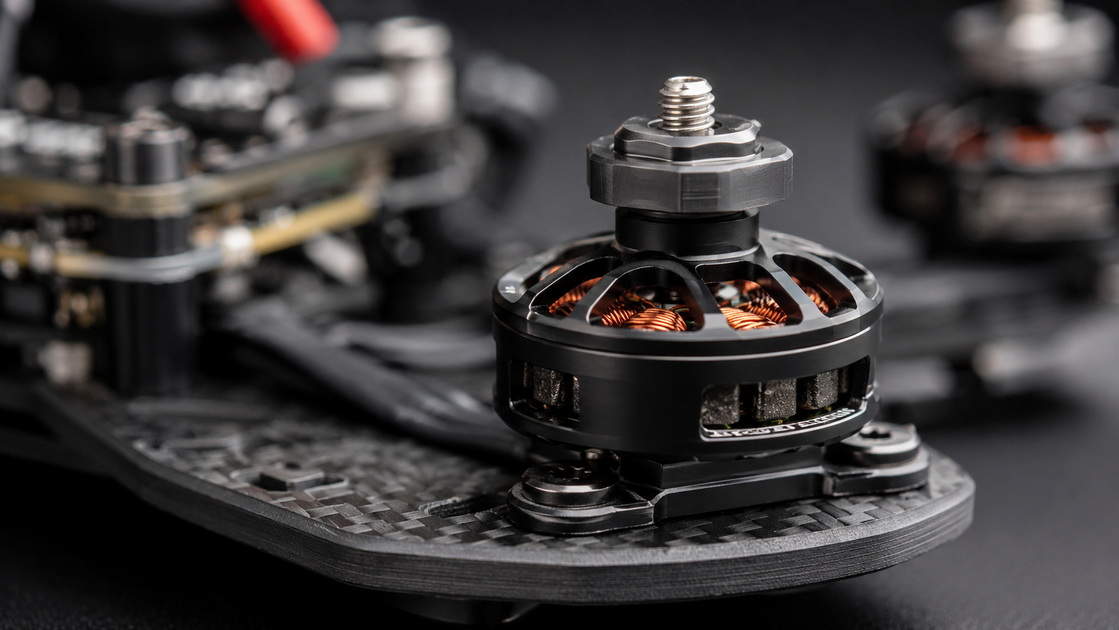
When you build or choose a micro FPV drone, the motor is the heart of the power system. A well‑matched micro motor gives enough thrust to fight light wind, but not so much power that it becomes uncontrollable for a beginner.
For ultra‑light 1S micro builds (65–75 mm whoops and similar), the T‑Hobby M0802 is a practical, budget‑friendly choice for beginners.
Key characteristics of the M0802:
- 8 mm stator diameter / 2 mm height – Designed for small, high‑RPM props on 1S builds.
- Multiple KV options (19000KV, 22000KV, 25000KV) – Lower KV for smoother control and efficiency, higher KV for punchier response and more aggressive indoor freestyle.
- Very low weight (around 1.6 g) – Helps keep all‑up weight down, which is critical for 1S whoops.
From our industry perspective, the M0802 is a solid entry‑level motor: not the most premium component on the market, but a reliable way to build a micro whoop that flies well enough outdoors in calm conditions while still being gentle on batteries and beginner thumbs.
When to choose which KV:
- 19000KV – For smoother, more controllable flights and longer flight times.
- 22000KV – A balanced option for mixed indoor/outdoor flying.
- 25000KV – For pilots who already have simulator experience and want more punch.
If you're starting completely from zero, I recommend a complete micro FPV kit with matched motors, propellers, and 1–2S batteries. Many beginner kits bundle motors like the M0802 with durable frames and pre‑tuned flight controllers, reducing your setup frustration and letting you focus on actual flying.
Once you can comfortably arm, take off, fly a simple pattern, and land your micro quad without constant crashes, it's time to consider 3–4 inch outdoor FPV drones.
These "mid‑size" quads are often underrated, but they are in many ways the ideal outdoor training platform:
- More powerful motors and bigger props – Handle outdoor wind far better than 2–3 inch whoops.
- Longer flight times – Larger batteries mean you get more practice per pack.
- Freestyle‑friendly – Enough thrust to practice flips, rolls, and power loops without the violence of a 5‑inch.
From a user‑experience standpoint, medium drones feel substantial but still manageable. You can see them clearly in the sky, feel momentum in turns, and start understanding how motor KV, prop size, and battery voltage interact in real flight.
For outdoor 3‑inch FPV builds, the SZ1804 brushless motor (18 mm stator diameter, 4 mm height) is a well‑balanced choice that we see many beginner‑to‑intermediate pilots succeed with.
Why an 1804 class motor works so well on 3‑inch builds:
- Balanced power and efficiency – Enough thrust to fight wind and perform light freestyle, without draining your battery in seconds.
- Smooth throttle response – Critical for beginners learning to manage altitude and speed outdoors.
- Compatible with 4S–6S setups – Gives you flexibility to start mild and grow into more power as your skills improve.
In real‑world use, 3‑inch drones with motors in this class survive repeated "training crashes" while giving pilots a first taste of true outdoor performance—large loops, faster dives, and flowing lines across a field.
| Drone size | Typical props | Battery type | Best for | Motor class example |
|---|---|---|---|---|
| Micro | 2–3 inch | 1S–2S | First outdoor flights, parks, backyards | 0802 brushless |
| Medium | 3–4 inch | 3S–4S (up to 6S for advanced) | Outdoor training, early freestyle | 1804 brushless |
| Standard | 5 inch | 4S–6S | Racing, freestyle, cinematic outdoor flying | 2207 / 2306 brushless |
When most pilots say "FPV drone," they mean a 5‑inch quad. This size has become the global standard for good reason, especially outside: power, efficiency, and a huge ecosystem of frames, props, and tuning knowledge.
- High power and top speed – Easily cuts through wind and handles aggressive maneuvers such as dives, split‑S, and power loops.
- Versatile applications – Racing, freestyle, and cinematic FPV can all be built around a 5‑inch platform.
- Strong community support – Most tutorials, tuning presets, and upgrade parts are designed for 5‑inch builds.
However, from both a manufacturer and pilot point of view, a 5‑inch quad is usually too powerful as a "first drone". Mistakes happen at higher speed, and the combination of weight and sharp props can cause serious damage.
For this reason, I strongly recommend:
1. Start with a simulator.
2. Practice on a micro or medium quad.
3. Move to 5‑inch only when you can fly basic patterns confidently.
Once you are ready for your first 5‑inch outdoor quad, motor selection becomes critical. The NEON 2207 FPV brushless motor (22 mm stator diameter, 7 mm height) is designed specifically for 5‑inch builds and offers an excellent balance for freestyle, racing, and cinematic flying.
What a 2207 motor brings to your 5‑inch quad:
- Strong torque and thrust – Supports aggressive punch‑outs, long dives, and precise control in windy conditions.
- Multiple KV options – Lower KV for smooth cinematic cruising on higher voltage, higher KV for full‑throttle racing performance.
- Durable construction – Quality bearings and a robust bell design help the motor survive crashes and high‑stress outdoor use.
In practical terms, a NEON 2207‑class motor gives your first 5‑inch quad "grown‑up" performance without feeling overly sharp or twitchy—especially when paired with a good tune and appropriate propeller.
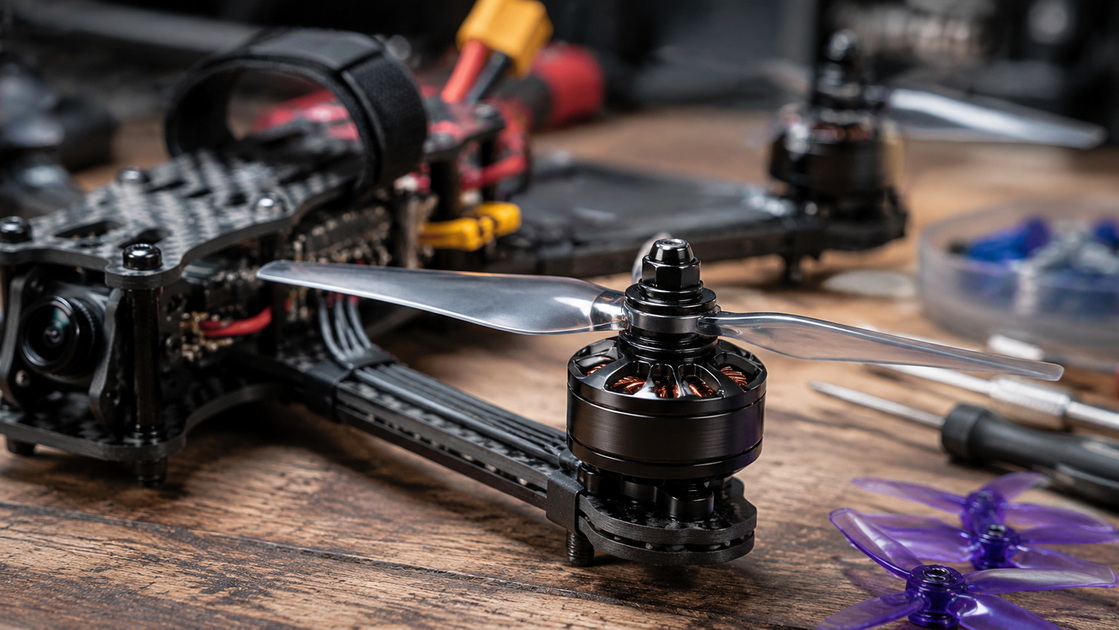
If your long‑term goal is technical freestyle flying—power loops over trees, tight gaps, flowing lines through bando ruins—a freestyle‑tuned motor such as the SZ2306 V2 is a compelling choice.
Why many freestyle pilots prefer 2306‑class motors:
- 23 mm stator diameter / 6 mm height – Slightly different torque profile compared with 2207, often favored for smooth, predictable throttle feel.
- Refined magnetic and mechanical design – Smoother throttle response, easier to hold mid‑throttle, and better control in slow, "floaty" moves.
- Multiple KV options for different styles – You can match the motor to your battery (4S/6S) and your preferred stick feel.
From our conversations with experienced pilots and OEM customers, motors like the SZ2306 V2 perform extremely well in high‑stress outdoor freestyle, withstanding repeated crashes, sharp throttle changes, and long sessions at high current draw.
One of the most common questions beginners ask is: "How do I move from tiny whoops to a full 5‑inch?" Below is a simple, practical progression based on what works best for most new pilots.
- Fly line‑of‑sight at first to understand throttle and yaw.
- Move into FPV once you can take off, hover, and land consistently.
- Focus on gentle turns and slow cruising in a small field or park.
- Use an 1804‑class motor on 3–4 inch props for better wind handling.
- Practice basic freestyle moves: wide turns, gliding dives, and gentle rolls.
- Learn to manage battery voltage and avoid over‑discharging packs.
- Use a realistic FPV simulator with a radio you plan to use in real life.
- Practice emergency disarm, split‑S, and recovery from bad lines.
- Aim for at least 10–20 hours of sim time before committing to a 5‑inch quad.
- Choose a motor like NEON 2207 or SZ2306 V2 tuned for your preferred style.
- Start with conservative rates and expo, then gradually increase responsiveness.
- Begin in wide, empty fields before trying tighter spots and lower altitude lines.
Outdoor FPV flying is exciting, but safety always comes first. As a motor manufacturer supplying power systems for drones used in parks, near homes, and around people, we take safety extremely seriously.
- Choose wide, open fields – Stay away from roads, power lines, buildings, and crowds.
- Respect local laws and regulations – Many countries require registration or certification above certain drone weights or for FPV use.
- Always maintain situational awareness – Even with goggles on, keep a visual line of sight with the help of a spotter whenever possible.
- Use proper protective gear – Quality FPV goggles, reliable radio, and, for higher‑power quads, prop guards during early practice.
- Carry spare props and batteries – Minimizes downtime and keeps your training session productive.
Developing safe habits early makes every later upgrade—more power, heavier quads, longer‑range flying—far less risky and far more enjoyable.
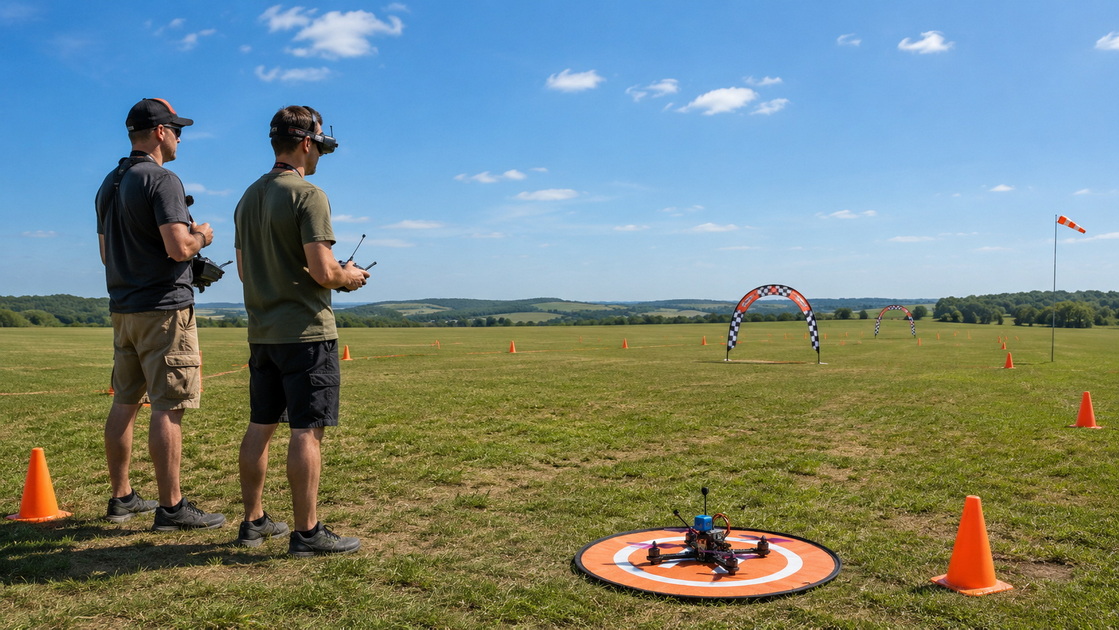
If you're just starting your outdoor FPV journey, the most important decision you will make is not which color frame to buy—it's how you match your drone size, motors, props, and batteries to your current skill level and flying goals.
As a brushless motor manufacturer specializing in FPV drone power systems, we work with pilots and OEM brands to design motors that balance thrust, efficiency, durability, and control across micro, medium, and 5‑inch platforms.
Ready to take the next step?
- Start with a micro setup using a reliable 0802‑class motor for safe outdoor practice.
- Move to a 3‑inch build powered by an 1804‑class motor when you're ready for more wind and more range.
- Upgrade to a 5‑inch quad with 2207 or 2306‑class motors once you have the skills and simulator hours to handle full outdoor performance.
Explore our FPV drone motors, complete power system solutions, and OEM/ODM services to find the right combination for your next build, whether you fly whoops, freestyle quads, or application‑specific drones such as aerial photography rigs, inspection platforms, or even underwater robots. [winstonfrancois]
1: What size FPV drone is best for my very first outdoor flights?
For most beginners, a 2–3 inch micro FPV drone is the safest starting point. It is light, crash‑resistant, and significantly less intimidating than a 5‑inch quad while still allowing you to practice in open fields or parks.
2: Is a 5‑inch FPV drone too powerful for beginners?
In most cases, yes. A 5‑inch quad is heavy, fast, and can cause serious damage if something goes wrong. It is better to start on a simulator and with smaller drones before committing to a 5‑inch build.
3: How do I choose the right motor KV as a beginner?
For your first builds, choose moderate KV values paired with the recommended battery cell count for that motor class. Lower KV gives smoother throttle and longer flight times, while higher KV offers more punch but is harder to control.
4: Do I need a license or registration to fly FPV outdoors?
Requirements vary by country and sometimes by drone weight. Many regions require registration or certifications for heavier drones or commercial use, and some have additional rules for FPV flying. Always check local regulations before you fly.
5: How much simulator time should I have before flying outdoors?
While there is no strict rule, many experienced pilots recommend at least 10–20 hours of simulator time before flying a 5‑inch quad outdoors. This helps you build muscle memory and drastically reduces the number of real‑world crashes.
1. MEPSKING. "Outdoor FPV Flying for Beginners: From Micro to 5‑inch Drones." Original article content and product descriptions consulted for structure and specifications. [https://www.mepsking.shop/blog/outdoor-fpv-flying-for-beginners.html]
2. Venntov. "Experience Matters: How to write content for Google's EEAT guidelines." Used to inform E‑E‑A‑T best practices and emphasis on first‑hand experience and accurate facts. [https://venntov.com/blogs/blog/experience-matters-how-to-write-content-for-googles-e-e-a-t-guidelines] [venntov]
3. IEEE‑USA InSight. "How to Write a Compelling Technical Blog." Referenced for structuring subheaders, story‑driven intro, and use of visuals and citations in technical posts. [https://insight.ieeeusa.org/articles/how-to-write-a-compelling-technical-blog/] [insight.ieeeusa]
4. HubSpot. "Is Your Website EEAT‑compliant? What Developers Should Keep In Mind." Consulted for the role of author expertise, authority signals, and external references in Google's E‑E‑A‑T framework. [https://blog.hubspot.com/website/eeat-compliance] [blog.hubspot]
5. Hammer Missions. "SEO Tips for Drone Operators." Used to align keyword strategy and long‑tail drone‑related search intent with beginner outdoor FPV topics. [https://www.hammermissions.com/post/seo-tips-for-drone-operators] [hammermissions]
6. Winston Francois. "Content Marketing for Drone Tech Companies." Supported positioning of expert manufacturer perspective and educational content approach for drone technology audiences. [https://winstonfrancois.com/blog/content-marketing-for-drone-tech/] [winstonfrancois]


