Language


Views: 259 Author: Yuhang Power Publish Time: 2026-07-05 Origin: Site
Content Menu
● What Is A Torque Motor? Key Definitions And Concepts
>> Direct‑Drive, Brushless, High Torque At Low Speed
>> How A Torque Motor Works (Electromagnetism In Practice)
● Torque Motor vs Conventional Servo: Practical Differences
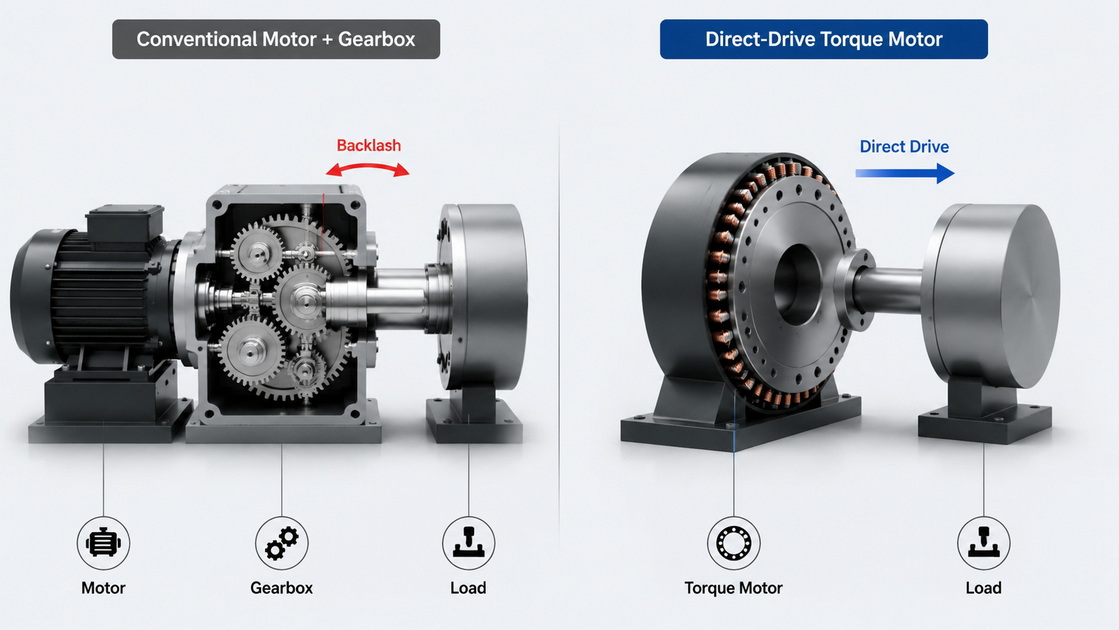
>> Direct Drive vs Gearbox Systems
>> Selection Based On Torque, Not Power
● Gimbal Motors As Torque Motors: Applications And Characteristics
>> Why Gimbal Motors Behave Like Torque Motors
>> Typical Gimbal Motor And Torque Motor Use Cases
● How Torque Motors Work Internally: Key Technical Considerations
>> Motor Construction And Thermal Design
>> Detent Effects, Cogging And Control
● Choosing The Right Torque Motor Or Gimbal Motor For Your Application
>> Step‑By‑Step Selection Framework
>> Example Parameter Table For Gimbal And Torque Motors
● Market And Technology Trends For Torque Motors And Gimbal Motors
● Three Under‑Discussed Mistakes In Torque Motor Projects
>> 1. Selecting On KV And Size Without Torque And Thermal Calculations
>> 2. Underestimating Resistance And Inductance In Control Design
>> 3. Ignoring Mechanical Integration And Structural Stiffness
● How To Communicate Torque Motor Choices To Your Team
● FAQ
When you design a gimbal motor or any direct‑drive axis for drones, robots or cameras, you are effectively working with a class of torque motor. As a motor manufacturer and integrator, I've seen teams underestimate the impact of torque motor selection on stability, efficiency and system lifetime more often than any other component choice. [heidenhain]
A torque motor is a brushless permanent‑magnet synchronous motor optimized to deliver high torque at low or zero speed, often as a direct drive with the load attached directly to the rotor. In this guide, I'll explain how torque motors work, why they pair so well with gimbal motors, and how to choose and apply them in real projects—from drones and cloud gimbals to service robots and underwater platforms. [magneticinnovations]
Torque motors are a special class of brushless permanent‑magnet synchronous motors designed to drive the load directly, without gearboxes or belts. This direct‑drive architecture removes mechanical transmission elements, reducing backlash, compliance and mechanical wear. [alvaindustries]
In practical terms, a torque motor typically offers:
- High continuous torque at zero or very low speed.
- Large format, often frameless (stator and rotor sets) with a wide diameter and hollow shaft. [en.wikipedia]
- Capability to operate indefinitely in stall mode, applying steady torque without damage when properly cooled. [youtube]
This is exactly what a gimbal axis or slow, precise robotic joint needs: smooth torque, minimal mechanical noise, and direct mechanical coupling to the payload.
Inside a torque motor, there are two main components: a stator with windings and a rotor with permanent magnets. When current flows through the stator coils, it generates an electromagnetic field that interacts with the rotor magnets, producing torque. [cubemars]
Compared with conventional high‑speed motors plus gearboxes, torque motors:
- Use many poles and high pole counts to achieve high torque at low speed. [youtube]
- Rely on optimized copper fill and magnetic design to keep torque density high.
- Often use toroidal or pancake geometries to improve heat dissipation. [en.wikipedia]
Because the load is directly connected to the rotor, every unit of torque from the motor goes straight into the axis—no gear ratios, no backlash, no compliance. This is why torque motors are ideal for high‑precision positioning, gimbal stabilization and robot joints.
Traditional servo systems use a high‑speed motor plus a gearbox to achieve required torque at the output shaft. This introduces: [magneticinnovations]
- Backlash and elasticity in the drivetrain.
- Additional friction, mechanical noise and maintenance requirements.
- Complexity in tuning due to non‑linear transmission characteristics.
In contrast, direct‑drive torque motors eliminate the gearbox entirely, driving the load directly. This yields: [heidenhain]
- Higher positioning accuracy and repeatability.
- Lower mechanical complexity and fewer failure points.
- Smoother motion with reduced cogging and non‑linearities, assuming good motor and controller design.
For gimbal motors and robotics, this often translates into more accurate stabilization and smoother motion paths, especially at low speed and micro‑movements.
Torque motors are typically selected based on continuous and peak torque capabilities, rather than just power ratings. This reflects their role as slow, high‑torque actuators rather than high‑speed drives. [alvaindustries]
Key selection parameters include:
- Continuous torque – the torque the motor can deliver indefinitely without overheating. [heidenhain]
- Peak torque – short‑term torque for acceleration or dynamic maneuvers.
- Thermal limits, cooling strategy and mounting conditions.
For gimbal axes and robotic joints, continuous torque is often more decisive, because the axis spends much of its time resisting disturbances rather than executing rapid speed changes.
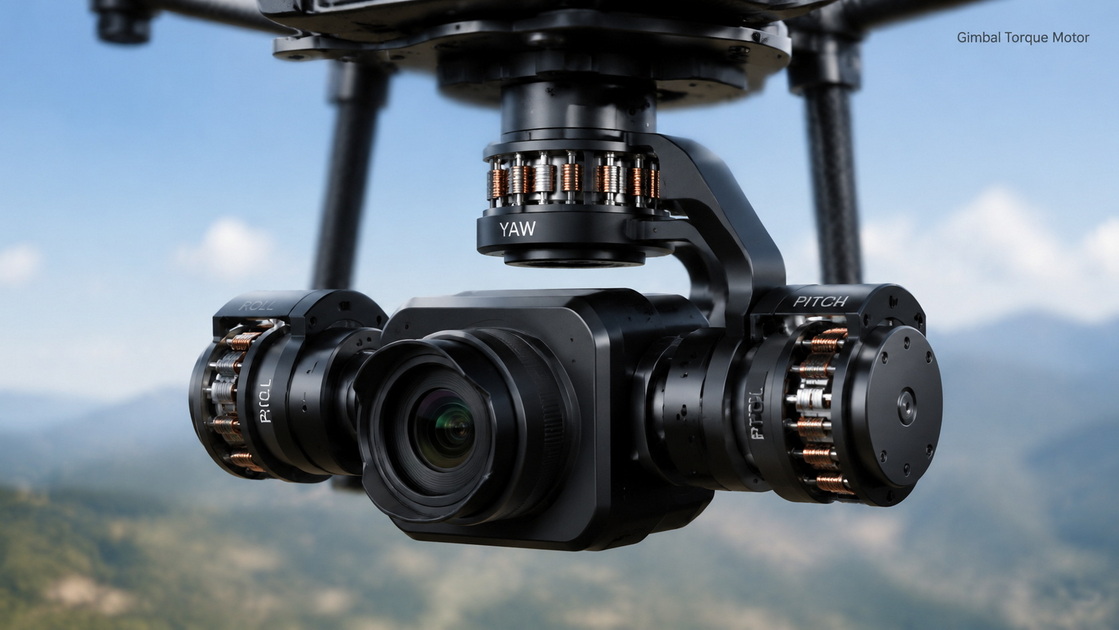
A gimbal motor is usually a 3‑phase brushless motor with many turns on the stator, resulting in higher resistance and inductance, and strong torque at low speed. Tinymovr's documentation, for example, treats gimbal motors as a distinct type with dedicated configuration for resistance, inductance and calibration current. [ligpower]
In practice, gimbal motors for drones and cameras share several traits with torque motors:
- High pole count and windings designed for slow, precise motion.
- Direct mechanical coupling to the camera or sensor payload.
- Focus on smooth torque output and minimal cogging rather than top speed. [tinymovr.readthedocs]
This makes them effectively torque motors optimized for stabilization, with control strategies focused on current (torque) control rather than speed.
Torque motors and gimbal motors are widely used in:
- Drone camera gimbals – stabilizing payloads across pitch, roll and yaw. [aotenjo]
- Industrial inspection gimbals – maintaining line‑of‑sight for sensors on UAVs or ground robots. [ligpower]
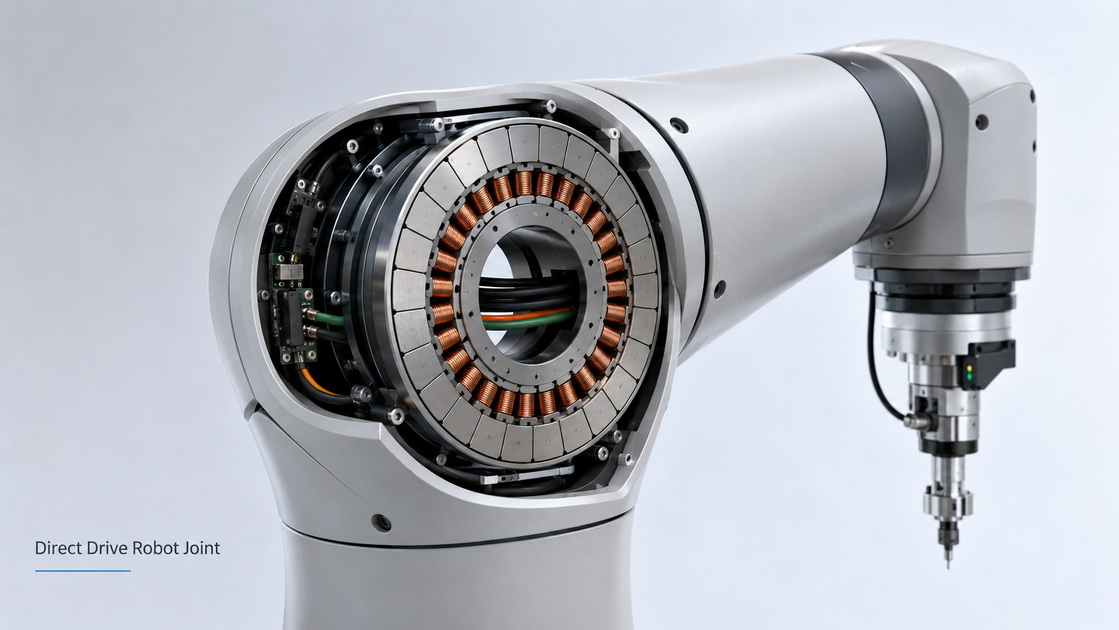
- Robot joints and direct‑drive actuators – smooth, powerful at low speed, ideal for arms and pan‑tilt units. [reddit]
- Precision stages and rotary tables – in semiconductor, machine tools and metrology. [magneticinnovations]
For a manufacturer like Zhongshan Yuhang Power Technology Co., Ltd., which supplies brushless motors and torque/gimbal motors for drones, cloud gimbals, robots and underwater devices, designing each motor as a torque‑optimized direct drive helps ensure consistent performance across diverse applications. [huangchuang.en.made-in-china]
Torque motors often use frameless rotor‑stator sets mounted directly onto host equipment, with large diameter and hollow shafts for cable routing or optics. Toroidal construction allows wider diameters and better heat dissipation compared with compact high‑speed motors. [en.wikipedia]
Important design aspects include:
- Pole count and magnet topology for torque density and smoothness.
- Copper fill and slot geometry for efficient current handling. [heidenhain]
- Thermal path from windings and magnets into the machine structure.
Thermal considerations are critical: the motor must dissipate heat generated by continuous torque without exceeding temperature limits for insulation and magnets. Mounting, cooling and integration all affect continuous torque capability. [alvaindustries]
Torque motors can exhibit detent torque or cogging if magnet and stator design are not optimized. These effects cause non‑uniform motion, especially at very low speeds. Modern designs minimize cogging through: [heidenhain]
- Skewing stator slots or rotor magnets.
- Optimized magnet segmentation and flux distribution.
- Advanced control algorithms using field‑oriented current control.
Control systems must also account for motor constant, resistance, inductance and back‑EMF characteristics to achieve responsive yet stable torque output. [tinymovr.readthedocs]
From a buyer's perspective, choosing a torque or gimbal motor should follow a structured process similar to that used for high‑performance gimbal motors in drones: [ligpower]
1. Define the application and mission
- Aerial imaging, mapping, industrial inspection, robotics, underwater gimbals, etc. [aotenjo]
2. Specify mechanical requirements
- Required continuous and peak torque, load inertia, required angular range and axis configuration.
3. Align electrical parameters
- Voltage range (for example 3–6S LiPo), current limits, motor resistance and inductance. [tinymovr.readthedocs]
4. Check form factor and integration
- Outer diameter, axial height, bore size, mounting pattern, cable routing.
5. Evaluate thermal environment
- Available cooling (conduction to frame, airflow), ambient temperature, duty cycle. [alvaindustries]
6. Review sustainability and reliability
- Expected lifetime, stall operation capability, IP rating for outdoor or underwater use.
Working with an OEM partner that can co‑design rotor/stator sets and test torque performance with your actual payload helps ensure that theoretical specs translate into real‑world results.
Below is a simplified table showing typical parameter ranges you might see when comparing torque/gimbal motors for different applications, based on industry guidance. [ligpower]
| Application | Motor Type | KV Rating (approx.) | Continuous Torque (Nm) | Form Factor Notes |
|---|---|---|---|---|
| Drone camera gimbal | Gimbal torque motor | Low KV (e.g. 50–120) | 0.2–1.0 | Slim, lightweight, multi‑axis use (ligpower) |
| Industrial inspection gimbal | Larger gimbal motor | Low KV | 0.5–2.0 | Robust housing, higher payload capacity (ligpower) |
| Robot joint (small arm) | Frameless torque motor | Very low KV | 1.0–5.0 | Frameless rotor/stator, large bore (alvaindustries) |
| Precision rotary table | Direct‑drive torque motor | Very low KV | 5.0–50+ | Large diameter, integrated cooling (heidenhain) |
These ranges are indicative; actual selection must be based on detailed system calculations and supplier data sheets.
Torque motors and direct‑drive solutions are gaining adoption across industrial automation, robotics, aerospace and precision equipment due to their performance and reliability advantages. Suppliers highlight benefits such as improved positioning accuracy, reduced maintenance and higher energy efficiency compared with gear‑based systems. [magneticinnovations]
In gimbal applications, high‑performance motors are now fundamental for data quality: clearer imagery and more stable sensor readings translate directly into better mapping, inspection and analytics. As drones and robots move into more challenging environments—windy conditions, confined spaces, underwater—torque‑optimized gimbal motors become a critical differentiator. [aotenjo]
From reviewing many direct‑drive projects, these are three common, but under‑discussed mistakes:
Many teams choose gimbal or torque motors based on KV rating and physical size only, ignoring continuous torque and thermal limits. The result is axes that work in lab demos but overheat or saturate under real mission duty cycles. Always: [ligpower]
- Calculate required torque and duty cycle explicitly.
- Confirm continuous torque at your thermal conditions, not just peak values.
Gimbal‑type torque motors often have high resistance and inductance, which significantly influence current control, step response and calibration behavior. Not accounting for these parameters can lead to unstable control or poor torque utilization. [tinymovr.readthedocs]
Controllers should explicitly set motor type, resistance and inductance, and run calibration procedures to determine pole pairs and offset, as recommended in Tinymovr's gimbal motor documentation. [tinymovr.readthedocs]
Even a perfect torque motor cannot overcome a mechanically flexible or poorly mounted structure. If the motor is mounted to a compliant frame, backlash and oscillations will reappear at the system level. In practice, you must:
- Design rigid mounting interfaces and structures appropriate to the torque level.
- Ensure bearings, couplings and payload mounts are aligned and stable.
This is particularly important for multi‑axis gimbal systems carrying heavy cameras or sensors on drones, where frame stiffness and vibration isolation interplay with motor performance. [aotenjo]
In internal documentation and blogs, make torque motor information more digestible by:
- Using clear tables for motor parameters and application fits.
- Adding simple diagrams showing direct‑drive vs gearbox layouts.
- Providing step‑by‑step selection checklists and short case examples.
Visuals showing how the same axis behaves with a gearbox vs a torque motor, or how gimbal footage looks with different torque margins, can help non‑engineers appreciate why torque motors are worth the investment.
1. Can torque motors really operate indefinitely at stall without damage?
Properly designed torque motors can run at stall delivering continuous rated torque, as long as cooling and thermal limits are respected. You must verify continuous torque and thermal performance for your mounting and environment before assuming indefinite stall capability. [youtube]
2. Are all gimbal motors suitable as direct‑drive actuators in robotics?
Many gimbal motors can be used as direct‑drive actuators, but you need to check torque, stiffness, IP rating and bearing arrangements. Some gimbal motors are optimized for light camera loads and may not be mechanically robust enough for heavy robot joints without additional support structures. [reddit]
3. How do I choose between a frameless torque motor and a housed gimbal motor for my axis?
Frameless torque motors offer maximum integration flexibility and torque density, but require more mechanical design and assembly. Housed gimbal motors simplify wiring and mounting but may limit bore size or torque. Your choice should reflect mechanical resources, payload requirements and timeline. [alvaindustries]
4. What control strategy is recommended for torque and gimbal motors?
Field‑oriented current control with accurate motor parameter settings (resistance, inductance, pole count) is widely used for torque and gimbal motors. For gimbal applications, controllers often prioritize torque/current loops and fine angle control rather than speed. [heidenhain]
5. How do torque motors affect overall system efficiency?
Removing gearboxes can reduce mechanical losses and improve efficiency, but torque motors may require higher copper mass and more careful thermal design. In many precision applications, overall efficiency and lifetime improve thanks to lower friction, fewer moving parts and more direct energy transfer. [magneticinnovations]
1. CubeMars. "Torque Motor, How Does It Work?" [cubemars]
2. HEIDENHAIN. "What Are Torque Motors and Why Do They Work So Well?" [heidenhain]
3. Magnetic Innovations. "High Torque Motor, How It Works?" [magneticinnovations]
4. Wikipedia. "Torque Motor." [en.wikipedia]
5. ALVA Industries. "A Beginner's Guide to Torque Motors." [alvaindustries]
6. Tinymovr Documentation. "Gimbal Motors." [tinymovr.readthedocs]
7. LIGPOWER. "High‑Performance Gimbal Motors Designed for Drones." [ligpower]
8. Aotenjo LLC. "Gimbal Motors for Robotics." [aotenjo]


