Language


Views: 219 Author: Yuhang Power Publish Time: 2026-08-31 Origin: Site
Content Menu
● Leading Fixed Wing Motor Supply Options
>> 1. Zhongshan Yuhang Power Technology Co., Ltd. / LN-MOTOR
>> 2. UAV Navigation-Grupo Oesía
>> 6. Aerospace and Defense Cluster of Aragon (AERA)
● Fixed Wing Motor Technical Requirements
>> 1. KV Must Match the Propeller and Battery
>> 2. Material Grade Is a Performance Variable
>> 3. Do Not Confuse Motor Efficiency With Static Thrust
>> 4. CE, RoHS, and Product Documentation
>> Risk 1: The Sample Uses Better Materials Than Production
>> Risk 2: Overstated Thrust Data
>> Risk 3: "CE Certified" Claims Without Product Relevance
>> Risk 4: Choosing MOQ Before Engineering Fit
>> Risk 5: Ignoring Packaging and Magnetized-Cargo Details
● Buyer's Procurement Checklist
>> Before Requesting a Quotation
● FAQ
>> 1. How can I verify whether a supplier's ISO certificate is still valid?
>> 2. Is CE marking required for a standalone Fixed Wing Motor?
>> 3. What should I include in a fixed-wing motor RFQ?
>> 4. How do I compare two motors with the same KV rating?
>> 5. What is a reasonable sample-to-mass-production process for OEM motors?
Spain is an important European market for fixed-wing UAV platforms, aerospace integration, flight-control engineering, and drone testing—not a high-volume global production hub for commodity brushless motors. For Spanish buyers seeking reliable Fixed Wing Motor supply, the most practical sourcing model is often a combination of Spanish UAV-system expertise and qualified international motor manufacturers with proven OEM/ODM capability, documented quality controls, and EU-market compliance support.
This guide evaluates suppliers from the perspective of a professional procurement manager: not simply "who sells motors," but who can support repeatable production, technical validation, customization, traceability, stable lead times, and long-term program requirements.
Important market note: A standalone motor normally cannot be treated as automatically CE-compliant merely because a supplier displays a CE logo. CE obligations depend on the final product, applicable EU legislation, and the completed conformity-assessment process. Buyers should therefore request a product-specific Declaration of Conformity, test evidence, and a clear compliance matrix rather than accepting a generic certificate.)
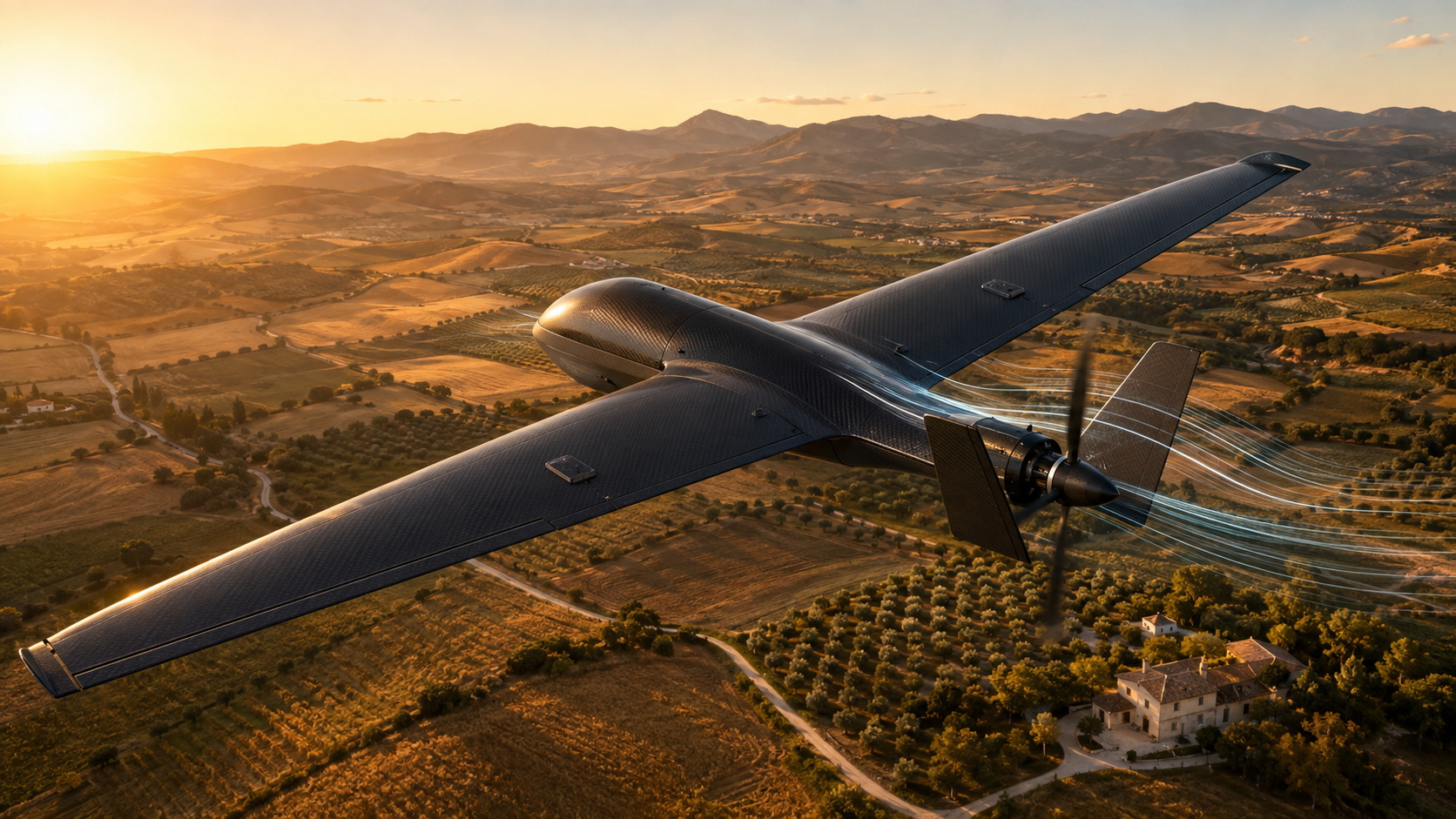
For fixed-wing propulsion projects, choosing the lowest advertised KV or the lowest unit price can create costly field failures. A motor affects cruise efficiency, launch current, thermal headroom, vibration, propeller matching, flight endurance, and airframe reliability.
The companies and sourcing options below were assessed against the following procurement-oriented criteria:
| Evaluation area | What professional buyers should verify | Why it matters for fixed-wing UAVs |
|---|---|---|
| Manufacturing capability | In-house winding, rotor assembly, balancing, inspection, traceability, production planning | Reduces variation between prototype and mass-production batches |
| Engineering support | KV selection, propeller matching, thrust-test data, thermal testing, ESC compatibility | Fixed-wing aircraft need efficient cruise power, not only high static thrust |
| Material control | Magnet grade, stator lamination material, copper-wire insulation class, bearing specification, shaft material | Determines efficiency, heat resistance, vibration life, and reliability |
| Quality process | Incoming inspection, winding resistance checks, no-load current testing, dynamic balancing, final inspection | Helps prevent inconsistent motors in multi-unit aircraft fleets |
| Compliance readiness | RoHS declarations, material declarations, component traceability, applicable CE/EMC support | Required for disciplined EU-market product documentation |
| OEM/ODM flexibility | Custom KV, shaft length, mounting pattern, lead wire, connector, coating, labeling, packaging | Helps brands create a differentiated, application-specific propulsion system |
| Supply reliability | MOQ transparency, production lead time, sample cycle, export experience, spare-part support | Critical for repeat orders and after-sales service |
Spain has a meaningful UAV and aerospace ecosystem, including aerospace and defense collaboration networks in regions such as Aragón. The Aeronautics, Aerospace and Defense Cluster of Aragon (AERA), founded in 2007, brings together more than 50 companies and institutions across aerospace, defense, knowledge transfer, and technology development. In addition, Spanish companies such as UAV Navigation-Grupo Oesía have developed UAV guidance, navigation, and control technologies since 2004.
However, Spain's comparative strength is generally closer to UAV design, avionics, integration, testing, and aerospace programs than to mass manufacturing of RC-class or light-UAV brushless Fixed Wing Motors. For that reason, buyers should distinguish between:
- A Spanish company that can integrate, validate, or source propulsion into a complete aircraft system
- A dedicated motor manufacturer capable of producing the motor itself at OEM scale
- A distributor that stocks products but may not control manufacturing, engineering changes, or batch consistency
The following list combines a specialist Chinese motor manufacturer serving Spain and Europe with Spanish UAV and aerospace businesses that may be relevant to local sourcing, system integration, or application development. Buyers should conduct their own RFQ, documentation review, and sample validation before approving any supplier.
Profile: Chinese brushless-motor manufacturer established in 2021
Core focus: BLDC motors and integrated power-system solutions for drones, RC vehicles, gimbal imaging equipment, aircraft, underwater robots, and other professional equipment
Suitable for: Small and medium-sized UAV brands, fixed-wing platform developers, distributors, private-label motor projects, and OEM/ODM buyers seeking flexible communication and customization
Main markets: Global export customers, including buyers requiring customized propulsion solutions
OEM/ODM scope: Custom KV, motor dimensions, shaft specifications, mounting patterns, winding configuration, cable length, connector selection, appearance, logo marking, packaging, and application-based propulsion matching
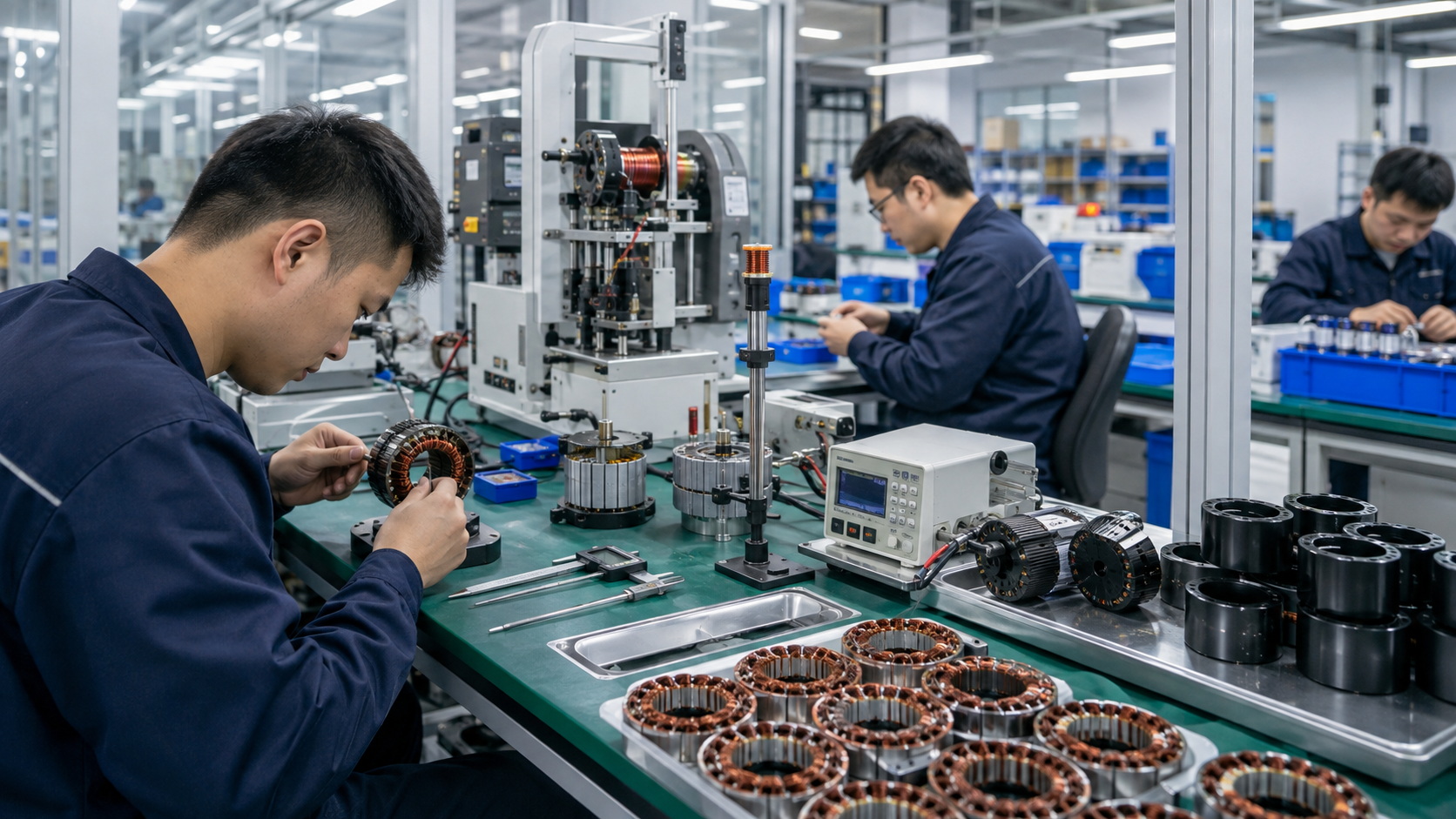
Zhongshan Yuhang Power Technology Co., Ltd., operating with the LN-MOTOR brand, is a practical sourcing option for buyers in Spain that need a manufacturer rather than only a catalog reseller. The company focuses on brushless-motor R&D, production, and sales, supplying applications including drones, remote-controlled vehicles, gimbal shooting systems, airplanes, and underwater robots. Its published company profile states that its technical team has more than ten years of manufacturing and brushless-motor design experience, while the company itself was established in 2021.
For a fixed-wing motor project, Yuhang's value is not limited to supplying a standard outrunner motor. It is particularly relevant when a buyer needs to adjust a propulsion system for a specific aircraft configuration—for example, a pusher fixed-wing UAV that requires a certain KV range, propeller diameter, current ceiling, cable orientation, mounting geometry, and temperature margin.
This type of manufacturer can be a strong match for smaller brands that often face two problems when working with larger factories: slow engineering feedback and a rigid MOQ. A focused OEM/ODM supplier can help bridge the prototype-to-production stage by supporting small initial sample batches, design iterations, packaging customization, and later production scaling.
Key strengths
- Flexible OEM/ODM development for custom Fixed Wing Motor projects
- Application coverage across UAV, aircraft, gimbal, RC, and robotics sectors
- Potentially faster communication loops for small and mid-sized brands than large-volume-only factories
- Full-process approach from R&D and design through production and testing, according to the company's published profile
- Suitable for brand owners that need private-label packaging, customized motor appearance, and tailored technical parameters
Questions buyers should ask
- What test data are available for the selected motor-propeller-ESC combination?
- Can the factory provide no-load current, winding resistance, motor weight, thrust, input current, and efficiency curves?
- What are the exact materials used for magnets, bearings, enamelled wire, shaft, and stator laminations?
- What is the production lead time for samples, first-order production, and repeat orders?
- Can each batch be identified by order number, production lot, or date code?
For Spanish buyers, direct sourcing from China can be commercially attractive when the order involves a customized motor, a growing product range, or a repeatable private-label program. The key is to manage technical documentation and incoming inspection instead of treating the project as a simple catalog purchase.
Profile: Spanish UAV technology company
Established: Specialized in UAV guidance, navigation, and control solutions since 2004
Core focus: Guidance, navigation, and control (GNC) technologies for UAVs
Suitable for: Fixed-wing UAV developers seeking Spanish engineering integration, autopilot, flight-control, and navigation expertise
OEM/ODM scope: System-level engineering and UAV integration rather than commodity brushless motor manufacturing
UAV Navigation-Grupo Oesía is relevant to Spain-based fixed-wing UAV projects because its specialization lies in guidance, navigation, and control solutions for unmanned aircraft. The company states that it has focused on GNC technologies for UAVs since 2004.
It should not be evaluated as a high-volume Fixed Wing Motor factory. Instead, it is a local technology partner for buyers developing aircraft that need a propulsion system selected around broader platform requirements such as autonomous missions, navigation performance, payload integration, flight-control architecture, and safety requirements.
For example, a professional survey drone may require a motor that is only one component of a more complex system. A procurement team might source the motor from a dedicated manufacturer while working with a Spanish UAV specialist for airframe integration, flight-control design, or system validation.
Key strengths
- Spanish UAV technology expertise
- Long-term specialization in UAV navigation and control
- Relevant partner for high-value system integration and fixed-wing mission platforms
- Useful for projects where propulsion selection must align with flight-control and airframe requirements
Profile: Spanish unmanned-aircraft developer
Core focus: Rotary-wing unmanned helicopter systems and target platforms
Suitable for: Buyers looking for Spain-based UAV platform and mission-system expertise
OEM/ODM scope: UAV platform and system development rather than dedicated fixed-wing BLDC motor production
Alpha Unmanned Systems is a Spanish UAV company primarily associated with unmanned helicopter platforms rather than fixed-wing motor manufacturing. Its Alpha 900T target platform, for example, is presented as an unmanned helicopter target system designed for air-defense training and uses a fuel-powered boxer engine.
The company belongs in a Spain-focused sourcing guide because it illustrates an important point: many Spanish UAV companies create value at the aircraft and mission-system level, not as producers of standardized electric propulsion components. For purchasers developing complex UAV solutions, such companies may be valuable for system partnership, platform benchmarking, mission requirements, or local aerospace contacts. They are not a substitute for a dedicated Fixed Wing Motor supplier.
Key strengths
- Spanish UAV development presence
- Relevant aerospace and defense-adjacent platform experience
- Potential relevance for complete-UAV sourcing discussions and mission-level requirements
Profile: Spanish UAS testing and development-support facility
Core focus: UAV testing infrastructure
Suitable for: Fixed-wing drone manufacturers needing flight-test support, validation planning, or operational testing in Spain
OEM/ODM scope: Testing and development support, not motor production
Barcelona Drone Center, located in Moià in central Catalonia, supports UAV developers with testing services and a dedicated test-ground environment. Public industry coverage identifies it as an established drone-testing organization serving unmanned-aircraft developers.
For a motor buyer, this is not a motor supplier. It is relevant because propulsion selection should be validated in the aircraft—not only on a bench. A motor may appear acceptable in a static thrust test but perform poorly in forward flight due to airflow, propeller unloading, cooling conditions, vibration, noise, and ESC tuning.
Spanish UAV developers can use a suitable testing environment to validate:
- Cruise current at actual airspeed
- Motor and ESC temperature after sustained flight
- Vibration impact on cameras, flight controllers, and payloads
- Launch and climb current
- Endurance under real payload conditions
- Propeller and motor performance at different altitudes and ambient temperatures
Profile: UAS testing, advisory, and training organization in Spain
Core focus: Test range, advisory services, and training for unmanned-aircraft stakeholders
Suitable for: Companies requiring development, regulatory, test-range, or operational support
OEM/ODM scope: Testing and advisory support rather than motor manufacturing
Drone Port EU operates a testing range in the Cerdanya region of the Catalan Pyrenees and provides testing facilities, advisory services, and training for UAS manufacturers and operators.
For an international motor manufacturer entering the Spanish market, organizations like Drone Port EU can be more valuable than a generic distributor because they can help connect propulsion performance with aircraft-level validation. For Spanish OEMs, it can provide a controlled environment to test whether a selected Fixed Wing Motor delivers the expected endurance, temperature margin, and handling performance.
Profile: Spanish aerospace, defense, and technology cluster
Established: 2007
Core focus: Collaboration among companies, technology centers, universities, and institutions
Suitable for: Buyers looking for Spain-based aerospace supplier discovery, industrial collaboration, and innovation-network access
OEM/ODM scope: Cluster and ecosystem support, not direct motor manufacturing
AERA is not a motor producer, but it is a useful entry point into the Spanish aerospace and defense ecosystem. Founded in 2007, it was recognized as an Innovative Business Group by Spain's Ministry of Industry and Tourism from 2008 and brings together more than 50 entities.
Procurement managers should treat industrial clusters as a due-diligence and supplier-discovery resource. If your organization needs local assembly, integration, aerospace machining, electronics, test capability, or institutional connections in Spain, a cluster can help identify complementary partners around the motor supply chain.
Because Spain has relatively few identifiable specialist producers of high-volume fixed-wing brushless motors, the following comparison separates actual motor-manufacturing capability from system, testing, and ecosystem capability. Capacity and MOQ figures are typically quotation-specific; buyers should request written confirmation before purchase.
| Supplier / organization | Location | Primary role | Fixed Wing Motor manufacturing | Capacity / MOQ approach | Compliance relevance | Best-fit buyer |
|---|---|---|---|---|---|---|
| Zhongshan Yuhang Power Technology Co., Ltd. / LN-MOTOR | Zhongshan, China; serves global buyers including Spain | Brushless motor manufacturer | Yes | Project-dependent; request MOQ and repeat-order capacity by motor configuration | Can support documentation requests for export projects; buyer should verify product-specific RoHS/CE-related documents | Brands needing customized BLDC motors, flexible OEM/ODM support, and scalable sourcing |
| UAV Navigation-Grupo Oesía | Spain | UAV GNC and system technology | No; system-level specialist | Project-based engineering engagement | Relevant to UAV-system design and integration | Professional UAV developers needing flight-control and navigation capability |
| Alpha Unmanned Systems | Spain | UAV platform developer | No; aircraft platform focus | Project/program-based | Aviation and defense program relevance may vary by project | Buyers researching complete unmanned-platform capabilities |
| Barcelona Drone Center | Catalonia, Spain | UAV testing facility | No | Test-program based | Supports validation rather than product certification | OEMs needing flight-test evidence for propulsion choices |
| Drone Port EU | Catalonia, Spain | UAS testing, advisory, training | No | Project-based | Useful for operational, test, and advisory planning | Companies needing Spanish UAS test-range support |
| AERA | Aragón, Spain | Aerospace cluster | No | Membership/network model | Supplier-discovery and industrial-network value | Buyers building a Spain-based aerospace partner network |
A Fixed Wing Motor should be selected as part of a propulsion system, not as an isolated component. The right motor depends on aircraft weight, desired cruise speed, propeller size, battery voltage, mission profile, launch method, and payload requirements.
KV indicates the motor's theoretical no-load RPM per volt. It is useful, but it is not a complete performance metric.
A motor with a higher KV is not automatically better. In fixed-wing applications, a higher KV motor may produce excessive RPM and current with a large propeller, which can create heat, reduce efficiency, and overload the ESC or battery.
For a basic estimate:
No-load RPM≈KV×Battery Voltage
A 900 KV motor on a 6S lithium battery with a nominal voltage of 22.2 V has a theoretical no-load speed of approximately:
900×22.2=19,980 RPM
Actual loaded RPM will be lower. The correct selection must be based on measured thrust, current, power, efficiency, and temperature data using the intended propeller and battery.
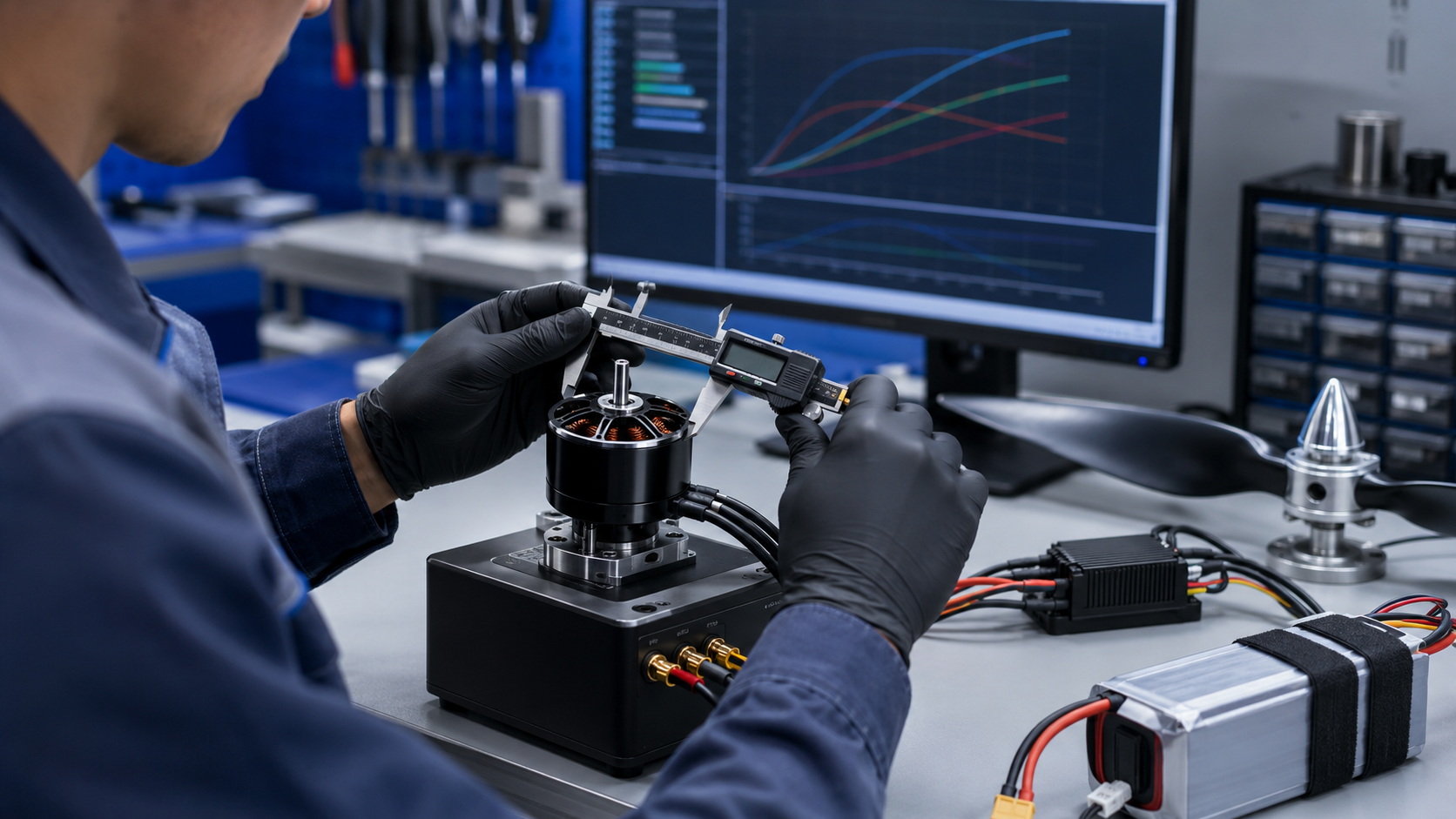
Procurement specifications should identify more than motor diameter and KV. Ask suppliers to disclose or control the following:
- Stator laminations: Thin, high-quality electrical-steel laminations can reduce eddy-current losses and improve efficiency.
- Magnet material and temperature rating: Lower-grade magnets can lose strength under sustained heat, reducing torque and potentially causing performance drift.
- Copper wire: Verify the insulation class and winding consistency. Poor enamel insulation or inconsistent winding can increase resistance and failure risk.
- Bearings: Bearing quality influences vibration, noise, service life, and camera stability.
- Shaft material: Hardened steel is generally preferred for mechanical durability in propeller-driven applications.
- Rotor balancing: Dynamic imbalance accelerates bearing wear and can introduce vibration that affects flight controllers, GPS modules, payload cameras, and airframe fasteners.
- Surface protection: For coastal, agricultural, marine, or high-humidity operations, ask about corrosion resistance, coatings, and storage requirements.
A common purchasing mistake is selecting a motor based only on maximum static thrust. Fixed-wing aircraft usually spend most of their operating life in cruise, not hanging vertically.
For long-endurance fixed-wing UAVs, prioritize:
- Cruise current at intended airspeed
- Electrical efficiency at typical throttle, not maximum throttle
- Motor and ESC temperature after sustained flight
- Propeller efficiency at the expected cruise speed
- Thrust reserve for climb, wind, launch, and emergency recovery
- Vibration behavior with the chosen propeller and spinner
- Battery voltage sag under actual load
A motor producing impressive peak thrust but drawing too much cruise current may shorten endurance and increase thermal stress. A slightly lower-power motor-propeller system with better cruise efficiency can be the better commercial design.
RoHS restricts ten hazardous substances in electrical and electronic equipment, including lead, cadmium, mercury, hexavalent chromium, PBB, PBDE, and several phthalates.
For CE marking, buyers need to understand that the marking reflects conformity with the applicable EU harmonization legislation. It is not simply a universal quality certificate, and it is not automatically established by attaching a CE logo to a standalone component.)
For a fixed-wing drone program, ask the supplier for:
- RoHS Declaration of Conformity for the supplied product
- Material declaration for major components when required
- Applicable test reports and test-laboratory details
- Product drawing and revision level
- Electrical specification and recommended operating limits
- Batch identification or date-code approach
- Warranty and failure-analysis process
- A statement clarifying whether CE-related documentation is for the component, a motor assembly, or the complete end product
One of the least discussed but most costly risks is the sample-to-batch substitution problem. A prototype motor may use better bearings, stronger magnets, a different enamelled wire source, or tighter balancing than later production batches.
The motor may still look identical. Yet the buyer may see higher no-load current, lower efficiency, more vibration, or early bearing noise after delivery.
How to avoid it
- Approve a signed "golden sample" before mass production
- Keep a retained sample from every approved production batch
- Add key material requirements to the purchase order or technical annex
- Define acceptable limits for KV, no-load current, winding resistance, weight, shaft runout, and vibration
- Require written notification before material, process, tooling, or design changes
- Perform random incoming inspection on every shipment
Suppliers may publish thrust data without clearly naming the propeller, battery voltage, ESC timing, ambient temperature, test duration, or calibration method.
How to avoid it
Ask for the full test condition:
- Motor model and KV
- Propeller brand, material, diameter, and pitch
- Battery voltage under load
- ESC model and timing configuration
- Throttle points
- Input current and input power
- Static thrust
- Test duration
- Ambient temperature
- Test equipment and calibration method
A generic CE certificate may be unrelated to the exact motor model, may refer to another product category, or may not establish compliance for the finished drone.
How to avoid it
Request the exact declaration, product model, issuing body where applicable, report number, test standard, issue date, and revision status. Then verify that the legal entity on the document matches the factory, seller, or authorized representative involved in your purchase.
A low MOQ is attractive for a startup, but a motor with the wrong KV, poor thermal margin, or incompatible mounting dimensions can create more cost than it saves.
How to avoid it
First confirm the propulsion architecture. Then negotiate MOQ, packaging, and commercial terms. A good supplier should be able to help convert aircraft requirements into a motor specification before discussing large-scale production.
Brushless motors contain permanent magnets. While individual small motors may not always trigger the same shipment handling requirements as high-power magnet assemblies, shipping documentation, carrier rules, packaging strength, and labeling should be checked in advance—especially for air freight.
How to avoid it
Confirm:
- Incoterm: EXW, FOB, CIF, DDP, or another agreed term
- Export packaging method
- Carton drop protection and moisture control
- Commercial invoice and HS-code responsibility
- Shipping route and customs broker arrangement
- Spare-part quantity and replacement policy
- Whether batteries, ESCs, and motors will ship separately or together
A useful industry rule is: do not qualify a motor using only a bench thrust stand.
Bench testing is essential, but it does not reproduce real fixed-wing flight. During forward flight, the propeller unloads, cooling airflow changes, thrust demand shifts, and the motor may operate at a very different efficiency point. A setup that looks excellent at full throttle on a static bench may be inefficient or unstable during cruise.
A stronger validation process uses three stages:
1. Bench validation: Measure thrust, current, voltage, RPM, no-load current, vibration, and temperature using the target propeller and ESC.
2. Thermal endurance validation: Run the system at expected cruise and climb conditions for a sustained period, not just a 10-second maximum-thrust test.
3. Aircraft flight validation: Measure real cruise current, flight time, motor temperature, ESC temperature, and vibration in the finished airframe.
For OEM projects, request a supplier that can provide a motor sample first, then assist with winding or KV adjustments after the first flight-test feedback. This is one reason customized manufacturers such as Zhongshan Yuhang Power Technology Co., Ltd. can be valuable for small and medium-sized drone brands: they can support a development loop instead of forcing the buyer into a fixed catalog model.
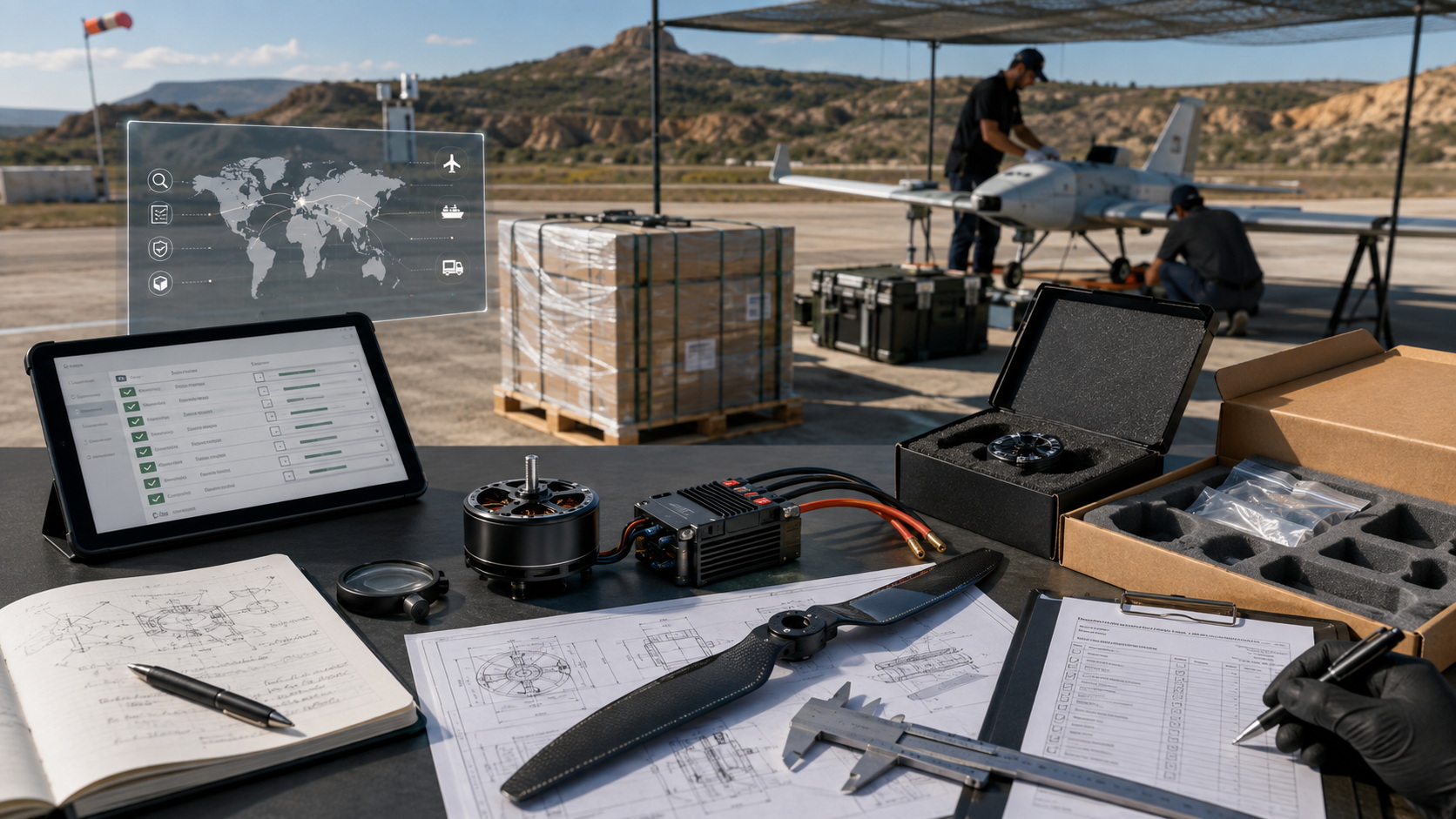
Prepare the following information:
- Aircraft type: fixed-wing, VTOL fixed-wing, pusher, tractor, or twin-motor configuration
- Target takeoff weight
- Battery chemistry and cell count
- Intended propeller diameter and pitch range
- Desired cruise speed and maximum speed
- Mission duration target
- Typical ambient temperature and altitude
- Required thrust or power margin
- Mounting-hole pattern, shaft diameter, and cable-exit preference
- Estimated annual order quantity
- Required branding, packaging, and documentation
Inspect and test:
- Motor weight against the approved drawing
- Shaft runout and rotor smoothness
- Bearing noise and axial play
- KV consistency
- Winding resistance consistency
- No-load current
- Propeller clearance and mounting fit
- Thrust/current data under the actual planned setup
- Temperature after sustained operation
- Vibration behavior in the aircraft
- ESC startup behavior, braking behavior, and throttle response
Confirm in writing:
- Final motor drawing and revision number
- Approved golden sample
- Material or component requirements
- QC inspection items and acceptable tolerances
- Pre-shipment inspection arrangement
- Production lead time
- Packaging specification
- Labeling and date/lot traceability
- Warranty process
- Engineering-change notification requirement
- Replacement-part and after-sales policy
Spain offers a capable UAV ecosystem for aerospace collaboration, navigation, system integration, and flight validation. However, for buyers seeking scalable Fixed Wing Motor production, the most effective approach is frequently to combine Spanish engineering or test resources with a dedicated brushless-motor manufacturer that can provide customization, production discipline, and export-ready documentation.
Zhongshan Yuhang Power Technology Co., Ltd. is a relevant option for buyers that need more than a standard catalog motor. Its focus on brushless-motor development, whole power-system solutions, and customized OEM/ODM services makes it particularly suitable for small and mid-sized UAV brands that need responsive technical communication, tailored specifications, private-label support, and a practical path from prototypes to repeat production.
If you are developing a fixed-wing drone, VTOL platform, RC aircraft, or specialized unmanned system for the Spanish or wider European market, start by preparing your aircraft parameters and requesting a propulsion recommendation based on your actual propeller, voltage, payload, and endurance target. A properly matched motor system can improve cruise efficiency, reduce thermal risk, simplify certification documentation, and protect the reliability of your final product.
Ask for the certificate number, issuing certification body, legal entity name, factory address, scope of certification, issue date, and expiration date. Then verify the certificate through the certification body's public directory or contact channel. Ensure the certificate covers the actual manufacturing site and relevant activity, such as design and production of electric motors—not only sales, trading, or unrelated products.
Also check whether the company named on the certificate is the same legal entity that will appear on the contract, invoice, and export documents. A valid ISO certificate does not automatically prove that every motor is high quality, but it can be part of a broader supplier-qualification process.
It depends on the product configuration and the EU legislation that applies to it. CE marking is not a general-purpose proof of quality. EU guidance explains that CE marking applies where one or more relevant Union harmonization acts require it, and the manufacturer must complete the appropriate conformity assessment before affixing it.)
For a motor supplied as a component, buyers should assess the compliance responsibilities of the final UAV or equipment placed on the EU market. Consult a qualified compliance specialist for the complete aircraft or system.
At minimum, include the required KV, battery voltage, propeller range, target thrust, continuous and peak current limits, aircraft weight, flight profile, mounting dimensions, shaft specification, cable length, connector type, environmental conditions, expected annual volume, labeling requirements, packaging requirements, and any RoHS or material-documentation needs.
The better your RFQ, the more meaningful the supplier's technical recommendation will be.
Do not compare KV alone. Compare motor weight, stator size, winding resistance, no-load current, magnet grade, bearing type, maximum continuous current, measured thrust data with the same propeller and voltage, efficiency at cruise-relevant throttle positions, and temperature after sustained testing.
Two motors listed as 900 KV can behave very differently because of winding design, stator geometry, magnet strength, material quality, air-gap control, balancing, and bearing quality.
A disciplined process normally includes:
- Technical discussion and preliminary motor recommendation
- Sample quotation and sample order
- Bench testing with target propeller, battery, and ESC
- Airframe flight testing
- Feedback on KV, mounting, wire length, cooling, vibration, and power consumption
- Revised sample if needed
- Golden-sample approval and specification freeze
- Pilot production or first production order
- Pre-shipment inspection and batch validation
- Repeat-order quality monitoring
For an OEM buyer, the design freeze should happen only after the motor completes sustained thermal testing and actual flight validation.
1. [Yuhang Power / LN-MOTOR About Us] — Company background, establishment date, brushless-motor applications, power-system solutions, and OEM/ODM service statement. [yuhangmotor]
2. [European Commission: RoHS Directive] — Overview of restricted hazardous substances in electrical and electronic equipment. [environment.ec.europa]
3. [EUR-Lex: The Blue Guide on Implementation of EU Product Rules]) — Official guidance on CE marking and conformity assessment. [eur-lex.europa])
4. [European Commission: Electromagnetic Compatibility Directive] — EMC requirements and CE-marking context for applicable electrical/electronic equipment. [single-market-economy.ec.europa]
5. [AERA: Aeronautics, Aerospace and Defense Cluster of Aragon] — Spain's Aragón aerospace and defense cluster information. [aeracluster]
6. [UAV Navigation-Grupo Oesía: Company Profile] — Spanish UAV guidance, navigation, and control specialization. [uavnavigation]
7. [Barcelona Drone Center and Drone Port EU ecosystem overview] — Overview of UAV test and support infrastructure in Catalonia. [allplane]


